REVIEW · NATIONAL PARKS
2hours Drift ice walk guided tour in Shiretoko National Park
The sea turns into a frozen footpath. This two-hour outing in Shiretoko National Park lets you walk across floating sea ice in a warm, buoyant dry suit, with guides focused on safety and the strange life tied to the ice. I like the small maximum of eight people and the clever 360-degree theme, which looks above, around, and beneath the ice. The main concern is simple: drift ice is never guaranteed, even during the short winter season.
The experience costs $54.08 per person, a fair price for specialized clothing, guide support, and access to a rare seasonal activity. I also like that the tour is designed for ordinary visitors rather than expert athletes. You need moderate fitness, the ability to follow instructions, and a height between 130 and 190 centimeters, with a weight of no more than 110 kilograms.
Key things to know before you book
- Only about six weeks each year: This activity runs during the coldest part of winter, when the ice is expected to be stable.
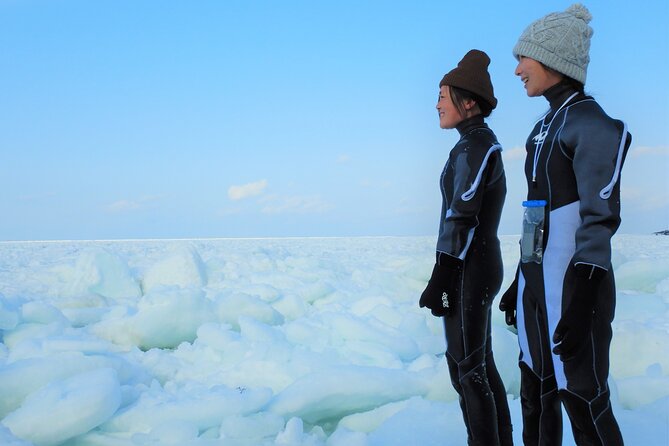
- A dry suit keeps you afloat: The suit provides heat retention and buoyancy, making the walk possible in a cold, wet setting.
- Small groups matter: The maximum group size is eight, giving the guide room to watch everyone closely.
- The 360-degree idea adds variety: You are not simply walking on ice. The guide uses images and cameras to show the world from an eagle’s view and from below the ice.
- Wildlife is part of the story: Drift ice supports Shiretoko’s animals, and you might spot creatures such as a clione if conditions are right.
- Weather can change the plan: If poor weather cancels the outing, you can accept another date or receive a full refund.
Walking across Shiretoko’s winter sea
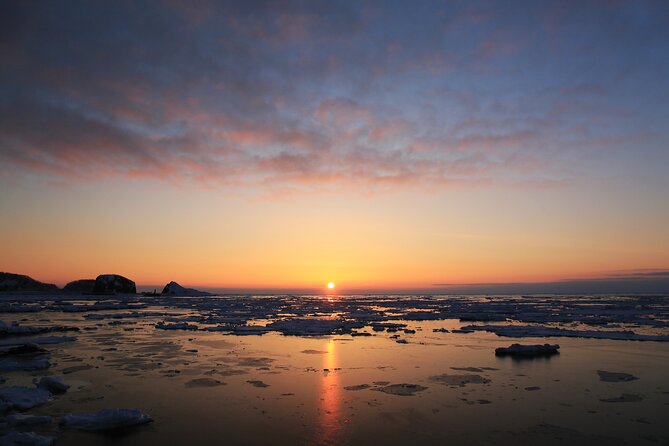
Shiretoko is one of Japan’s great places for seeing nature in a raw, seasonal form. In midwinter, the sea near Utoro can fill with drift ice, turning open water into a shifting field of white and blue. This tour gives you a rare chance to step onto that frozen sea rather than simply view it from shore.
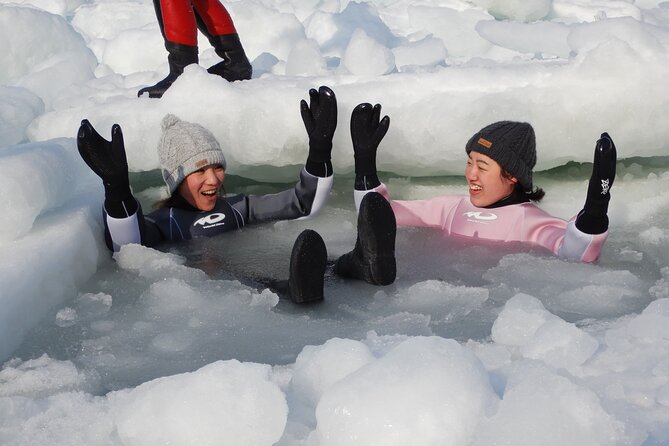
The important word is floating. This is not a paved ice rink or a solid glacier. Drift ice moves with the sea, and the guide decides how and where the group can proceed. The special suit is what makes the activity possible. It is built for cold and wet conditions, with insulation and buoyancy if you enter the water.
I like that the tour does not pretend the ice is just a backdrop for photographs. The guide explains its role in the local environment. Shiretoko’s drift ice supports small marine life, which in turn connects to the larger food chain. Stepping onto the ice means entering the habitat of animals that depend on this short winter season.
The setting can feel almost unreal. You may be surrounded by broken plates of ice, open patches of dark water, and wide views across the sea. Since the ice changes from year to year, the exact appearance is part of the experience. That same uncertainty is also the tour’s chief weakness.
More Guided Trips in the world:
- From Split: Plitvice Lakes National Park Guided Tour
★ 5.0 · 3,002 reviews - From Split: Plitvice Lakes National Park Guided Tour
★ 5.0 · 2,355 reviews - 2-Hour Gettysburg Battlefield Guided History Bus Tour with a National Park Guide
★ 4.5 · 2,201 reviews
Meeting at Utoro-Shirietoku roadside station
The stated meeting point is Roadside Rest Area Utoro-Shirietoku at 186-8 Utoronishi, Shari, Shari District, Hokkaido 099-4354. The activity begins and ends there, which makes the logistics fairly tidy. The location is near public transportation, and pickup is offered, but you should confirm the pickup arrangement rather than assume it comes automatically.
Allow enough time to arrive, find the meeting area, and be ready for the clothing change. The tour itself lasts about two hours, but the practical time commitment includes preparation before the ice walk and changing afterward.
The return to the same point is useful in winter. You do not have to arrange a second meeting place in a cold area or wonder where your belongings will be collected. Keep anything you need before or after the tour organized, since the activity is built around a fixed meeting location.
Getting into the winter dry suit
One of the most useful details about this experience is that you do not need to arrive dressed like an Arctic explorer. The clothing instructions indicate that ordinary clothing is generally enough underneath the supplied dry suit. That makes packing easier, especially if this is one activity in a longer Hokkaido trip.
The suit itself is reportedly thick and rubber-like, and it can feel stiff when you first put it on. That is not a fashion problem so much as a practical one. The material is meant to keep cold water out and help you stay afloat. Expect a bulky fit rather than the freedom of movement you would have in normal winter clothing.
The guide handles the fitting process and explains how to use the equipment. Pay close attention here. The tour requires you to follow instructions and manage your own safety, so this is not an activity where you can simply wander off and let the guide make every decision.
The age range is 6 to 75 years old. The stated height range is 130 to 190 centimeters, and the maximum weight is 110 kilograms. These limits are important because dry suits need to fit properly for warmth, movement, and buoyancy. Check your measurements before booking.
A two-hour route built around the ice
The tour has one main setting rather than a series of formal stops. After changing, you head out with the guide onto the drift ice near Utoro. The pace and route depend on the condition of the ice and the weather on the day.
At first, the novelty is simply putting your feet on the frozen sea. The suit changes how you move, and the uneven ice calls for care. You will need to watch your footing, listen to the guide, and keep your attention on the conditions around you.
The experience then broadens into the tour’s 360-degree approach. The guide uses views and images to frame the ice from different angles. One angle gives you the broad view, similar to seeing the area from above like an eagle. Another points toward the world below the ice, using the perspective of a small marine creature such as a clione.
This approach gives the outing more purpose than a short walk followed by a photo stop. You are asked to notice how the ice looks from different positions and how it connects the sea, sky, and wildlife. The result should appeal to curious visitors who enjoy learning through observation rather than simply collecting a dramatic photograph.
Still, keep expectations sensible. The information promises the chance to see fascinating sights and perhaps encounter wildlife, not a guaranteed animal sighting. A clione or another creature may appear, but nature controls the schedule. You should book this for the setting and the guided access first, with wildlife as a bonus.
A few more park trips around the world worth a look
- Miami: Everglades National Park Airboat Tour & Wildlife Show
★ 4.5 · 7,296 reviews - Chiang Mai: Doi Inthanon National Park Eco-Friendly Tour
★ 4.6 · 6,667 reviews - Tenerife: Teide National Park Sunset & Stargazing Tour
★ 4.2 · 3,812 reviews - Discover Rocky Mountain National Park
★ 5.0 · 3,419 reviews
The animals behind the frozen sea
Drift ice may look empty at first. In Shiretoko, it is part of a living system. Small organisms can gather around the ice, and larger animals depend on the food chain that develops there. The guide uses the walk to connect what you see underfoot with the animals that live around it.
The clione, often called a sea angel, fits the tour’s unusual point of view. The creature is tiny and easy to miss, which is why the guide’s explanation and camera work matter. You might not see one directly, but the idea helps you understand that the ice is not lifeless pavement.
The seal comparison in the Japanese-language feedback captures the mood of the activity well. Wearing a bulky suit and moving across the frozen sea can make you feel like a creature adapted to this environment. It is playful, but it also points to the odd physical experience of being protected from the cold while standing in a place humans normally cannot enter.
I value this environmental angle. You are not only taking pictures of blue ice. You are learning why the ice arrives, what depends on it, and why the season matters. That makes the tour more meaningful for families and nature-minded visitors.
Safety, group size, and physical demands
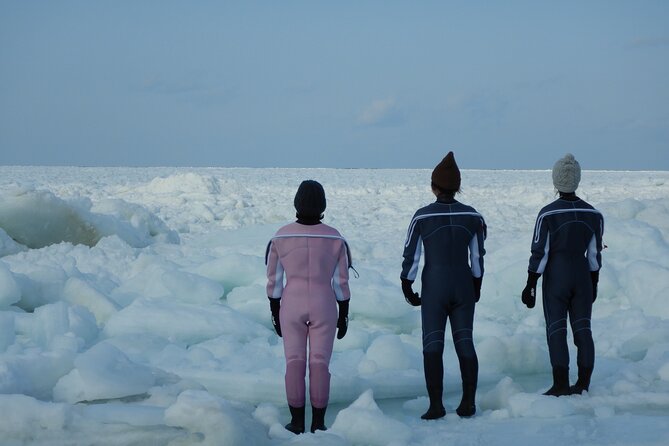
A maximum of eight people is one of the tour’s strongest features. A small group makes it easier for the guide to give clear instructions and keep an eye on everyone near changing ice and water. It should also make the experience less rushed than a large commercial outing.
The dry suit provides buoyancy, but it does not remove the need for judgment. You must be able to follow directions and take responsibility for your own safety. Moderate physical fitness is required, so the activity is not designed for someone who struggles with walking, balance, or wearing bulky clothing.
The age range is broad, from six to 75, but age alone does not decide suitability. A child must meet the height requirement and be able to listen carefully. An older participant should feel confident moving on uneven ice and managing the suit.
The guide’s role is central. The guide leads the route, watches the conditions, and explains the strange world around you. One particularly positive comment praised the guide and looked forward to receiving the photographs. That tells you where much of the tour’s value lies: a good guide turns a cold walk into an understandable experience.
The biggest risk: there may be no ice
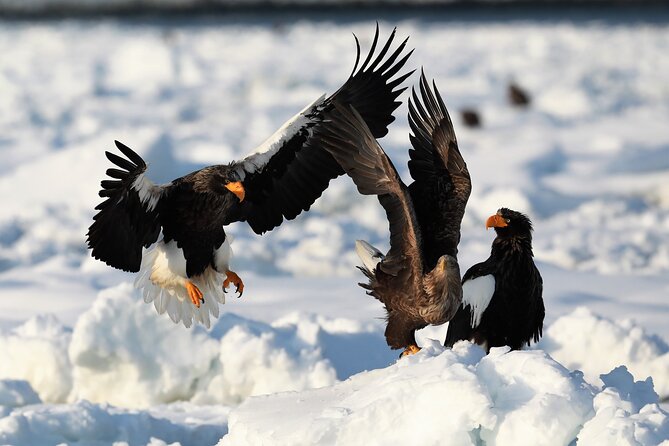
This is the point I would stress before you pay. The activity depends on natural conditions, and one recent outing had no drift ice at all. The operator apologized, offered other alternatives, and kept the person informed. That is responsible handling, but it cannot replace the main experience if walking on ice is your reason for coming.
The short season makes planning harder. The activity is possible for only about one and a half months, and even within that window the amount and position of ice can change. Global warming and shifting winter conditions add another layer of uncertainty, though no operator can promise a particular ice cover on a particular day.
The good news is that poor weather cancellations come with a choice of another date or a full refund. You can also cancel for a full refund if you do so at least 24 hours before the start time. Changes or cancellations made inside that period are not accepted, and the local time cutoff applies.
I would schedule the tour early in your Shiretoko stay if possible. That leaves room for another date if weather disrupts the outing. It also gives you a better chance to adapt if the operator reports that the ice has not formed as hoped.
Is $54.08 good value?
At $54.08 per person, I consider this a reasonable price for a specialized winter activity. The fee covers guide support and use of a dry suit that would be difficult and expensive to obtain on your own. You also get a small group and a highly seasonal experience that is not available year-round.
The value depends on what you want from Shiretoko. If you only want a quick view of drift ice from a roadside stop, this may feel like extra effort. If you want to understand the ice by standing on it, seeing it from several angles, and learning about the wildlife connected to it, the cost makes more sense.
The price does not buy certainty. You are paying for a guided chance to encounter the ice under suitable conditions. Since the ice can fail to appear, I would treat the operator’s weather updates as important rather than as a minor detail.
Who will enjoy this most?
I would recommend the tour to families with children who meet the size requirements, couples seeking an unusual winter activity, photographers, and visitors who like nature with a hands-on element. The short duration also works well if you have other plans in Utoro.
It suits people who can accept a little discomfort. The suit may feel stiff, the ice may be uneven, and the weather may be severe. If you need a warm, dry, perfectly predictable excursion, choose a viewing experience from land instead.
You should also think about your expectations for wildlife. The guide may show you the world from the viewpoint of an eagle or a clione, and you may be lucky enough to see a real creature. There is no promise of a close encounter, so do not book this as a guaranteed animal-watching tour.
Should you book the Drift Ice Walk?
Book it if you are visiting Utoro during the short ice season, meet the height and weight limits, and want a small-group activity that feels genuinely tied to Shiretoko. The dry suit removes much of the fear of cold water, while the guide and 360-degree format give the walk more depth than a simple outing on the ice.
I would hesitate only if your schedule cannot handle a weather change or if seeing solid drift ice is non-negotiable. In that case, ask about conditions before setting out and keep the cancellation terms in mind.
For most suitable visitors, this is a worthwhile gamble on nature. You may get a surreal walk across a frozen sea, useful wildlife context, and memorable photographs. You may also get a changed plan if the ice refuses to cooperate. That uncertainty is part of the reality of Shiretoko in winter.
FAQ
Where does the Drift Ice Walk begin and end?
The tour begins at Roadside Rest Area Utoro-Shirietoku, 186-8 Utoronishi, Shari, Shari District, Hokkaido 099-4354, Japan. It ends back at the same meeting point.
How long does the tour last?
The activity lasts approximately two hours.
How much does the tour cost?
The listed price is $54.08 per person.
Is pickup available?
Pickup is offered, but you should confirm the details when booking. The stated meeting point is the Utoro-Shirietoku roadside rest area.
What ages can join?
Participants must be between 6 and 75 years old.
Are there height and weight requirements?
Yes. Participants must be between 130 and 190 centimeters tall and weigh no more than 110 kilograms.
What happens if poor weather cancels the tour?
You will be offered another date or a full refund if the activity is canceled because of poor weather.
Can I cancel for a full refund?
Yes. You can cancel at least 24 hours before the experience start time for a full refund. Cancellations or changes made less than 24 hours before the start time are not accepted.
Just added around the world
- Udawalawa National Park Day Tour★ 4.5 · 5 reviews
- Udawalawa National Park Safari Day Tour★ 5.0 · 12 reviews
- Two day Kruger National Park Safari from Johannesburg★ 5.0 · 19 reviews
- Guided Wilderness Mindfulness Experience with Nature Meditation★ 5.0 · 3 reviews
- 1 Day tour to Yala National Park or Udawalawe National Park★ 4.5 · 3 reviews
- Bathongo Rhino & lion park nature reserve tour★ 5.0 · 3 reviews
- Safari Pilanesberg Nature Reserve & Monkey Sanctuary★ 5.0 · 6 reviews
- Pilanesberg National Park Safari, BIG 5 Full Day★ 5.0 · 4 reviews
Guided, compared.
From Split: Plitvice Lakes National Park Guided Tour
Read our review →From Split: Plitvice Lakes National Park Guided Tour
Read our review →
2-Hour Gettysburg Battlefield Guided History Bus Tour with a National Park Guide
Read our review →
Plitvice Lakes National Park Guided Day Tour from Split
Read our review →
Krka National Park Tour with tour Guide & Wine tasting from Split & Trogir
Read our review →
Ajaccio/Porticcio: Scandola Nature Reserve Guided Boat Tour
Read our review →
Skadar Lake National Park: Guided Boat Tour to Kom Monastery
Read our review →