REVIEW · NATIONAL PARKS
Tel Aviv: Masada National Park and Dead Sea Excursion
The desert tells its story in layers. This full-day trip from Tel Aviv brings together Masada’s cliff-top fortress, Qumran’s Dead Sea Scrolls connection, and a float in the mineral-heavy Dead Sea. I especially like the cable-car ride to Masada, which saves your legs for exploring the plateau, and the chance to pair major archaeological sites with time in the water.
The professional English-speaking guide adds useful context as you cross the Judean Hills and descend below sea level. The main concern is the listed price of $1,604 per person, which is very high for a one-day excursion, so you should confirm exactly what is included and whether that figure reflects your selected date, group, or booking conditions before paying.
Key details worth knowing
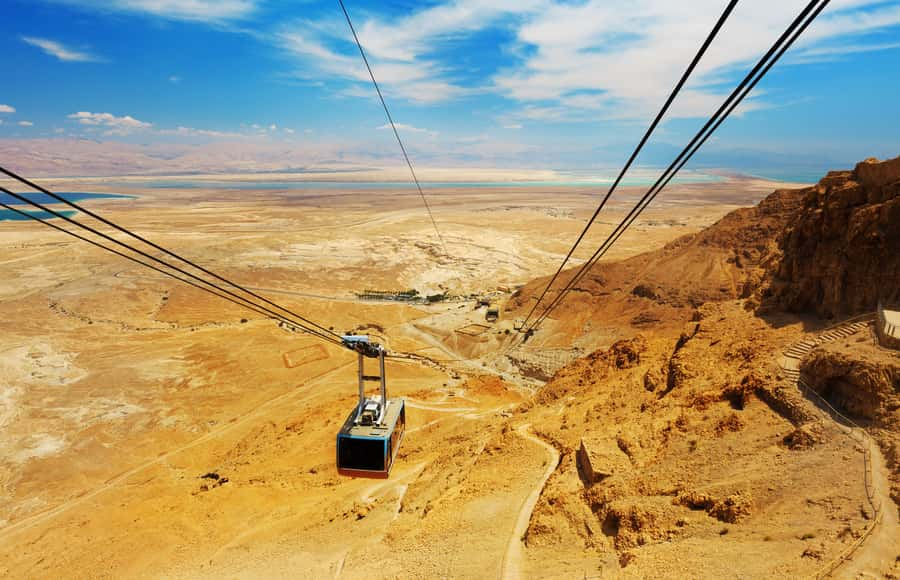
- Masada by cable car: You reach Herod’s fortress without tackling the steep Snake Path, then see the palace remains, swimming pool, synagogue, and wide views over the Dead Sea and Rift Valley.
- A route filled with biblical sites: The drive passes the Inn of the Good Samaritan, offers views toward Jericho, and continues by Ein Gedi, where David is said to have hidden from King Saul.
- Qumran is part of the story: The site is linked to the discovery of the 2,000-year-old Dead Sea Scrolls in nearby hillside caves, though the description says both visit and pass by, so confirm the exact stop.
- A proper Dead Sea stop: You have time to enter the salt-rich water and float, with swimwear and comfortable shoes required.
- Simple transport arrangement: Meet at the Dan Tel Aviv Hotel on HaYarkon Street and travel in an air-conditioned vehicle with a professional guide.
- Flexible booking terms: You can cancel up to 24 hours in advance for a full refund, and reserve now while paying later.
Leaving Tel Aviv through the Judean Hills
The tour starts at the Dan Tel Aviv Hotel, at HaYarkon Street 99. From there, you head east through the Judean Hills before descending toward the Dead Sea. The change is gradual but striking: the city gives way to dry hills, open desert, and a route that drops below sea level.
I like this opening because the drive is part of the lesson, not just dead time between attractions. Your guide explains the area’s biblical and historical links while you watch the terrain change. Since the tour is conducted in English, you can expect the main commentary and explanations in that language.
The schedule is described only as a one-day outing, with starting times available according to the date you choose. That means you should check the departure hour carefully. The route combines several distant sites, so this is not a slow, unhurried day in one location. You will spend a fair amount of time in the vehicle, but the long drive is what allows Masada, Qumran, and the Dead Sea to fit into one trip.
An early roadside stop offers views across the desert toward Jericho. The Inn of the Good Samaritan is also pointed out along the way. These details matter because they give the journey a sense of place. You are not simply heading to a famous fortress. You are crossing a route shaped by religious stories, trade, conflict, and movement through one of the world’s most unusual regions.
A few more park trips around the world worth a look
- Miami: Everglades National Park Airboat Tour & Wildlife Show
★ 4.5 · 7,296 reviews - Chiang Mai: Doi Inthanon National Park Eco-Friendly Tour
★ 4.6 · 6,667 reviews - Tenerife: Teide National Park Sunset & Stargazing Tour
★ 4.2 · 3,812 reviews
Seeing Jericho from the desert route
The view toward Jericho is one of the quieter moments of the day. You do not go into the city according to the stated program, but you can see it in the distance from the desert. The stop gives you a chance to stretch, take in the broad view, and understand how closely the old settlements sit within the dry terrain.
The Inn of the Good Samaritan adds another layer to the route. It connects the drive with the biblical story of the Good Samaritan and helps explain why this corridor has long mattered to people crossing the Judean wilderness.
Do not expect a long independent visit at every roadside point. The tour’s main time is reserved for Masada and the Dead Sea, while stops along the route are there to frame the larger story. If you prefer a trip built around long museum visits or plenty of free time, this may feel brisk. If you like seeing several important sites in one day, the variety is a strong point.
Masada by cable car, not the Snake Path
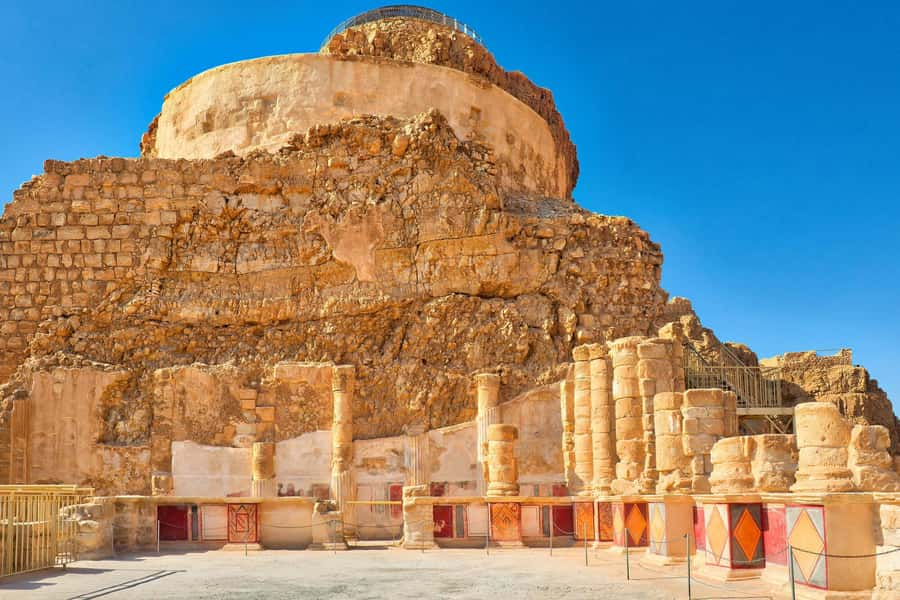
Masada is the centerpiece of the excursion. The fortress sits on a high plateau above the Dead Sea, and the tour includes the cable car to the top. That is a practical choice. The ancient defenders and Roman soldiers dealt with the mountain on foot, but you do not need to spend your sightseeing energy on the climb.
At the summit, the guide explains how King Herod built a fortified palace complex here. The remains include a swimming pool and a synagogue, details that make the site more than a bare military ruin. You can picture Masada as a place designed for power, comfort, defense, and display, all perched above the desert.
The views are a major part of the experience. From the plateau, you look across the Dead Sea and toward the Rift Valley. The height helps you understand the position of the fortress in a way that maps cannot. The stark setting also explains why Masada has such a strong presence: the site is both an archaeological place and a dramatic piece of scenery.
The cable car is included, along with entrance fees. That keeps the visit straightforward, though the ascent and descent still depend on the day’s operating arrangements and the group’s pace. You should wear comfortable shoes even though you are not hiking the Snake Path. The plateau is a historical site, not a polished city sidewalk, and you will want footwear that feels secure.
One limitation is the amount of time available. The excursion also includes Qumran and the Dead Sea, so Masada cannot receive the same attention as it would on a dedicated half-day visit. I see that as a fair trade for a first visit, especially if your goal is to cover the area’s main sights in one day.
Along the Dead Sea coast toward Ein Gedi

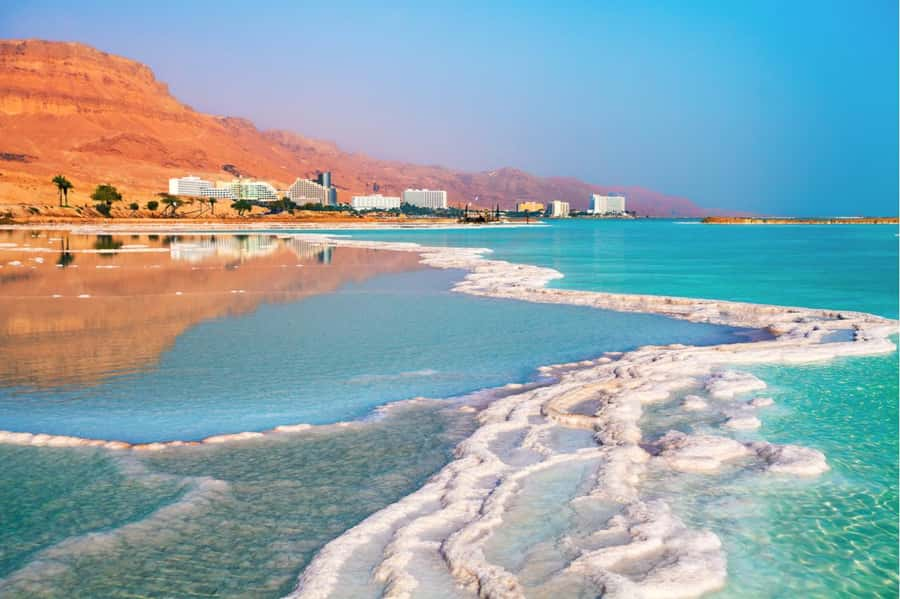
After Masada, the route continues along the Dead Sea. The shore is marked by salt deposits, and the water’s mineral content is visible in the crusted edges. This is one of those places where the physical setting feels almost strange. The sea is below sea level, the air is dry, and the bright water sits beside harsh desert slopes.
The route passes Ein Gedi, a desert oasis known for foliage and waterfalls. It also carries a biblical connection: David is said to have hidden there from King Saul. The program does not say that you stop for a hike or a waterfall visit, so treat Ein Gedi as a passing point rather than a separate excursion.
That distinction matters when you plan your expectations. You will see and hear about several places that are important, but not all of them are full stops with time to explore. The best way to enjoy this day is to see the route as a connected story, with Masada and the Dead Sea as the major hands-on experiences.
Same corner of the map, a different park:
- Discover Rocky Mountain National Park
★ 5.0 · 3,419 reviews - Mt. Rainier National Park Highlights Tour
★ 5.0 · 3,156 reviews - Grand Canyon National Park South Rim Bus Tour from Las Vegas
★ 4.5 · 3,071 reviews - Wilderness, Wildlife, Glacier Experience from Anchorage
★ 5.0 · 3,004 reviews
Qumran and the Dead Sea Scrolls
Qumran is connected with the discovery of the Dead Sea Scrolls in hillside caves. These 2,000-year-old manuscripts changed the study of ancient religious texts and made the area famous well beyond Israel.
The activity description presents Qumran in two slightly different ways: one section says you visit Qumran, while the detailed route says the tour passes by it. I would confirm the precise arrangement before booking, especially if Qumran is one of your main reasons for choosing the trip. You may see the area and receive an explanation without having a long archaeological-site visit.
Even a brief look gives useful context. The caves, the dry hills, and the nearby Dead Sea all help you understand why old documents could survive in this region. The setting is not separate from the story. The dry conditions are part of what made the discovery possible.
If you are especially interested in the scrolls, ask whether entrance to a Qumran site is included in your departure’s program. The stated inclusions cover entrance fees generally, but they do not specify a separate Qumran admission. It is better to settle that question ahead of time than to assume every mentioned place receives the same length of visit.
Floating in the Dead Sea
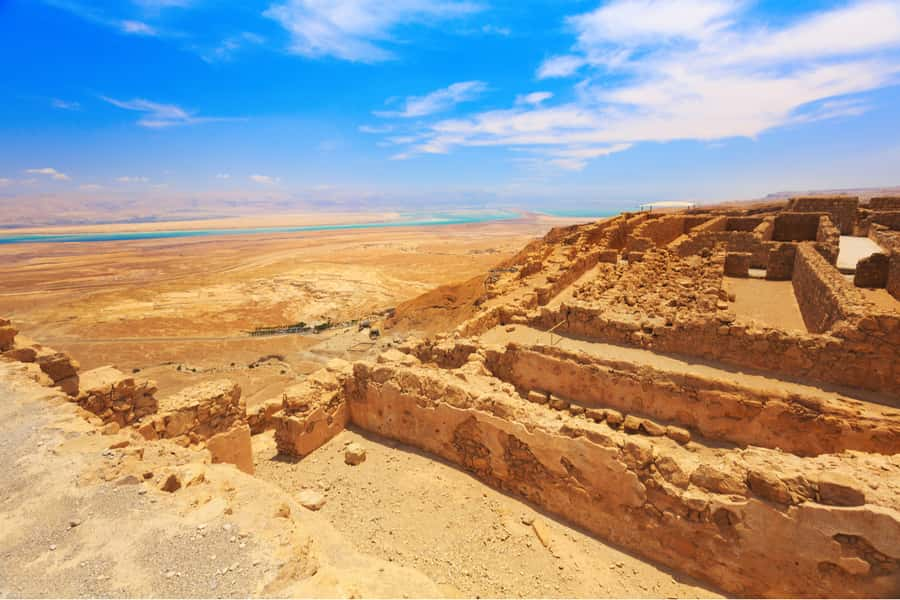
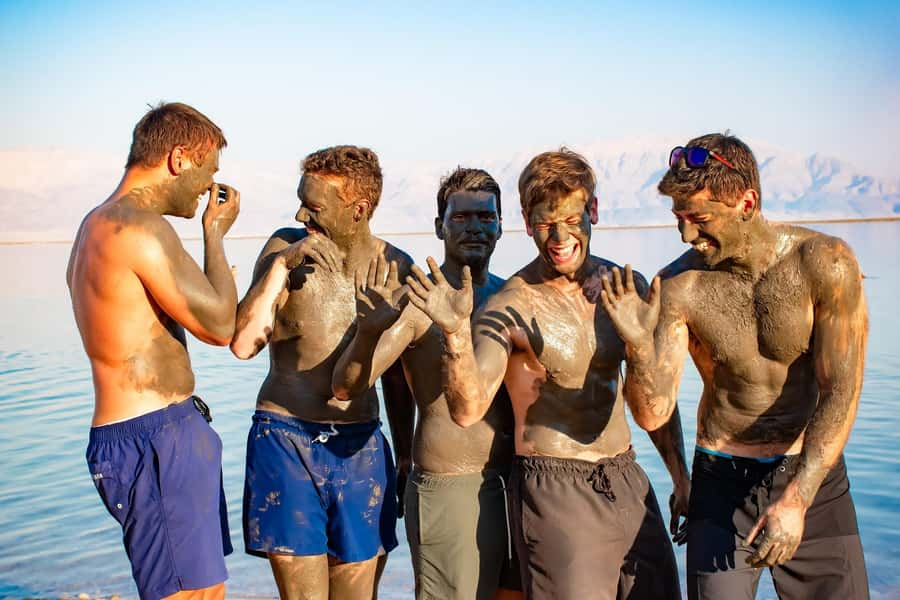
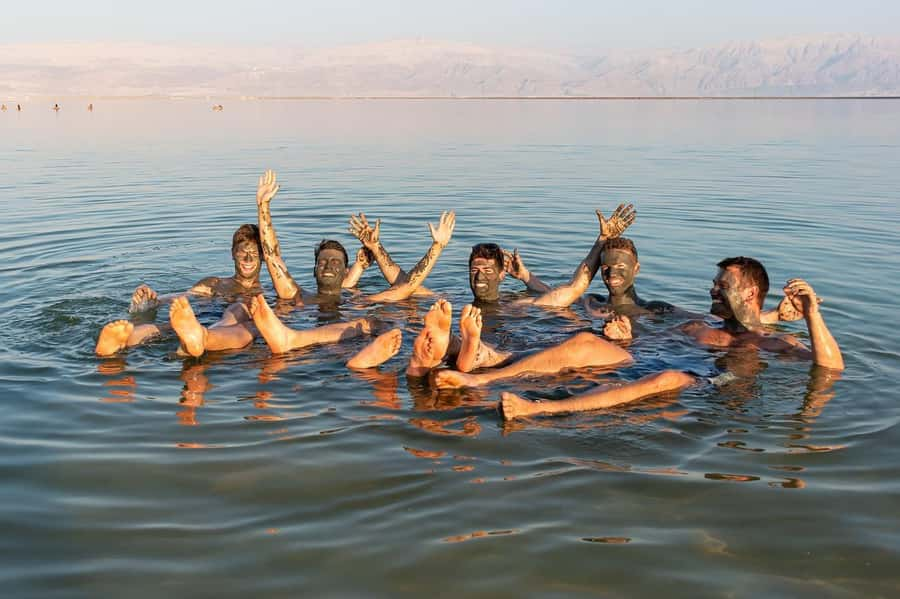
The final major experience is time at the Dead Sea. You can enter the salt-rich water and float, then relax after a long day of sightseeing. This is not a normal swim. The water’s mineral content makes floating the main attraction, and the shoreline’s salt deposits reinforce just how unusual the place is.
You need swimwear and comfortable shoes. Food and drinks are not included, so plan accordingly within the arrangements of the day. The program does not specify a particular beach facility, changing-room setup, towel policy, or shower arrangements. Those are useful questions to ask before departure.
The Dead Sea stop works well at the end because it changes the pace. Masada asks you to look, listen, and think. The water gives you a chance to slow down. After the long drive and several historic references, floating for a while can feel like a simple reward.
Still, keep your expectations practical. The experience is described as a swim and float, not as a spa treatment or organized wellness session. The water is famous for its therapeutic mineral content, but no medical benefits are promised. Follow the guide’s instructions and use care around the water and salt-encrusted shore.
What the price includes, and what it does not

The listed price is $1,604 per person. At that amount, the value depends heavily on what the booking screen shows for your specific date and party. The package includes a professional guide, air-conditioned transportation, the Masada cable car, and entrance fees. Those inclusions cover the central transport and sightseeing costs.
Food and drinks are not included, and insurance is also excluded. Since the outing lasts a full day, you should account for those expenses. The description does not name a meal stop or state how much free time you have to buy food, so ask about the day’s arrangements.
For me, the price is the biggest question mark. The route is appealing and the cable car saves you from a strenuous ascent, but $1,604 per person is a premium price for a single-day trip. I would compare it with other Masada and Dead Sea options and confirm whether this is a private arrangement, a special departure, or a price affected by group size. If it is a standard shared excursion, the cost deserves careful checking.
The reserve-now-and-pay-later option and free cancellation up to 24 hours before departure reduce some booking risk. Foreign passport holders and people with three-month entry permits may be exempt from VAT under Israeli law, but you need to provide valid passport details to avoid being charged VAT. That is a practical point to handle before the tour date.
Who will get the most from this day
I would choose this excursion if you have limited time in Israel and want the main Dead Sea region sights in one organized day. It suits you if you prefer an English-speaking guide, included transport, and a clear route rather than arranging several long transfers yourself.
It is also a good fit if you want to see Masada but do not want to hike the Snake Path. The cable car makes the fortress accessible without removing the drama of reaching the high plateau.
You may want a different arrangement if you prefer a slow archaeological visit, a dedicated Qumran tour, or a lot of personal time at the Dead Sea. The day covers several places, so the pace is likely to feel full. The exact duration of each stop is not stated, and the route’s breadth means you should not expect hours at every site.
The high price also makes this a poor choice for a casual budget day unless the booking details explain the premium. For a solo visitor or small party, comparing the cost with other guided options is sensible. For someone who values one vehicle, one guide, and a single organized route, the convenience may justify more expense.
Practical tips before you go

Wear comfortable shoes, even though the cable car carries you to Masada. You will still be walking around an ancient plateau and other outdoor locations.
Bring swimwear for the Dead Sea stop. The tour does not list food or drinks as included, so check whether you should bring something or plan to buy refreshments along the route.
Use the exact meeting point, the Dan Tel Aviv Hotel at HaYarkon Street 99. Check the available starting time for your date, since the tour is a full-day outing and the departure hour affects how the day feels.
Ask two specific questions before booking: Does the itinerary include entry to the Qumran site, or only a pass-by and explanation? Also, what explains the $1,604 per-person price? Those answers will help you judge the value more accurately.
The experience has earned a strong 4.8 rating from 12 recorded ratings, with praise focused on clear explanations, beautiful places, and a complete day. One French-speaking comment singled out a guide named Norbert for a very good day and strong guiding. The guide’s role matters here because the route contains many references that are easy to miss without explanation.
Should you book this Masada and Dead Sea tour?
Book it if you want a single, guided day from Tel Aviv that combines Masada, the Dead Sea, desert viewpoints, and the Qumran story. The cable car, air-conditioned vehicle, included entrance fees, and professional English-speaking guide make the plan easy to follow.
Before committing, verify the unusually high price and ask exactly how Qumran is handled. If the cost is correct for your booking and you value convenience over economy, this is a strong overview of southern Israel’s desert sites. If you are watching your budget or want more time at one place, compare other options first.
FAQ
Where does the tour meet in Tel Aviv?
The meeting point is the Dan Tel Aviv Hotel at HaYarkon Street 99, Tel Aviv-Yafo, Israel.
How long does the excursion last?
It is a one-day, full-day excursion. The specific starting time depends on availability for your chosen date.
What language is the tour conducted in?
The live tour guide provides the tour in English.
Is transportation included?
Yes. Transportation is provided in an air-conditioned vehicle.
Is the Masada cable car included?
Yes. The cable car up to Masada is included, as are entrance fees.
Do I need to hike up Masada?
No. The tour uses a cable car to reach the top rather than having you climb the Snake Path.
What should I bring?
Bring comfortable shoes and swimwear.
Are food, drinks, and insurance included?
No. Food and drinks are not included, and insurance is also not included.
Just added around the world
- Udawalawa National Park Day Tour★ 4.5 · 5 reviews
- Udawalawa National Park Safari Day Tour★ 5.0 · 12 reviews
- Two day Kruger National Park Safari from Johannesburg★ 5.0 · 19 reviews
- Guided Wilderness Mindfulness Experience with Nature Meditation★ 5.0 · 3 reviews
- 1 Day tour to Yala National Park or Udawalawe National Park★ 4.5 · 3 reviews
- Bathongo Rhino & lion park nature reserve tour★ 5.0 · 3 reviews
- Safari Pilanesberg Nature Reserve & Monkey Sanctuary★ 5.0 · 6 reviews
- Pilanesberg National Park Safari, BIG 5 Full Day★ 5.0 · 4 reviews
Tours, compared.
Miami: Everglades National Park Airboat Tour & Wildlife Show
Read our review →
Chiang Mai: Doi Inthanon National Park Eco-Friendly Tour
Read our review →
Clear Kayak Tour of Shell Key Preserve and Tampa Bay Area
Read our review →
Tenerife: Teide National Park Sunset & Stargazing Tour
Read our review →
Yosemite Highlights & Giant Sequoias Day Tour from San Francisco
Read our review →
Grand Canyon National Park South Rim Bus Tour from Las Vegas
Read our review →