
REVIEW · SOUTH KOREA
Bukhansan National Park- The Summit Course
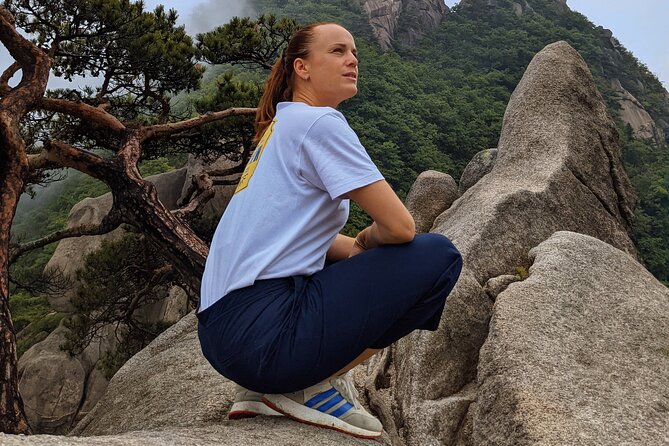
Seoul has a serious mountain in its backyard. Bukhansan’s Baegundae Peak rises to 836 meters, and this guided route reaches it in about four hours instead of the usual six. I like the efficient route and the chance to finish with a local tofu lunch, but the steep ascent is harder than the word moderate may suggest.
I also like having guide Koa manage the route, pacing, and safety on a mountain where hundreds of people are rescued each year. The main caution is clear: 600 meters of climbing in 2.1 kilometers means a long, rocky uphill push, plus a rope-assisted section that can unsettle anyone uneasy with heights.
Key points to know before booking
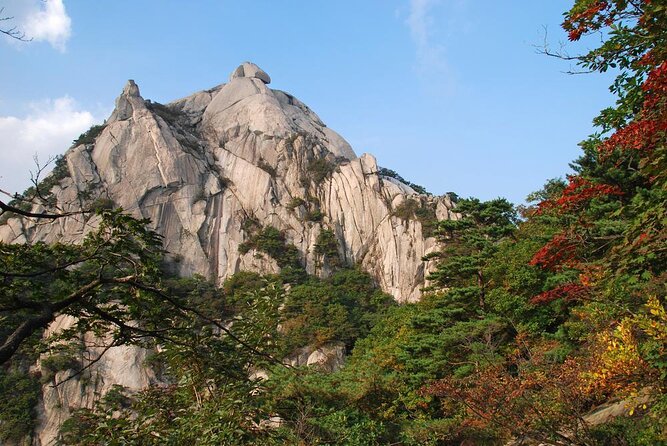
- The summit is Baegundae Peak, Seoul’s highest point at 836 meters.
- The steep climb comes early and lasts, with about 600 meters of elevation gain in 2.1 kilometers.
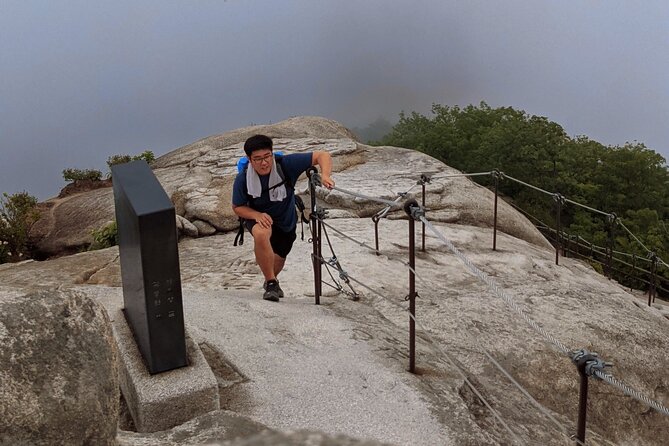
- The final 20 to 30 minutes involve ropes and 25 to 45-degree rock sections, though you can rest and skip this part.
- Guide Koa is a major part of the experience, helping with pace, route choices, safety, and group spirit.
- Lunch is optional, costs about 9,000 to 15,000 Korean won, and focuses on handmade tofu dishes, with meat available.
- Meet outside Exit 2 of Bukhansan Ui Station at 8:15 a.m., not at Bukhansan Bogungmun Station.
Why Bukhansan is worth your morning
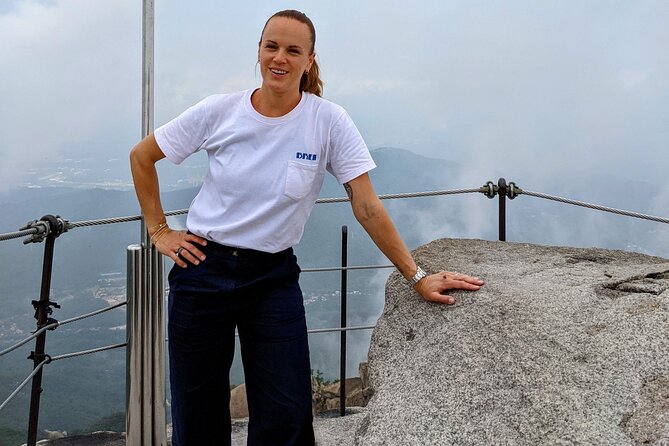
Bukhansan National Park sits right on Seoul’s edge, giving you a rare chance to trade subway access for granite peaks and serious mountain air without leaving the city area. The summit course is not a casual city walk. It is a proper mountain hike compressed into a half-day outing.
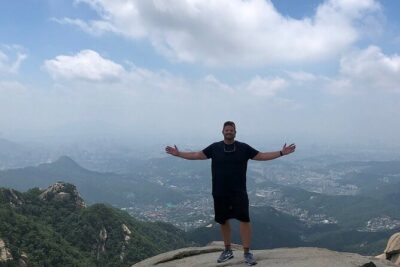
At 836 meters, Baegundae is the highest peak in Seoul. Reaching it gives you a strong sense of place: you are not simply looking at Korea from a palace courtyard or shopping street. You are working your way above the capital and seeing why Bukhansan is such an important outdoor escape for people living nearby.
I like the way this tour uses time. The route is designed to reach the summit in about four hours rather than the normal six, making it easier to fit into a Seoul itinerary. That efficiency comes from taking a direct route up and returning along the same general way, not from making the mountain easier.
The mountain’s popularity also creates a practical reason to start early. One morning group found the early departure especially useful because the mountain becomes busier later. The group leaves at 8:15 a.m. sharp, so this is not the sort of outing where you casually wander out of bed and hope the guide is still waiting.
A few more park trips around the world worth a look
- Miami: Everglades National Park Airboat Tour & Wildlife Show
★ 4.5 · 7,296 reviews - Chiang Mai: Doi Inthanon National Park Eco-Friendly Tour
★ 4.6 · 6,667 reviews - Tenerife: Teide National Park Sunset & Stargazing Tour
★ 4.2 · 3,812 reviews
Getting to the correct station and meeting Koa
Your meeting point is outside Exit 2 of Bukhansan Ui Station. This detail matters because there is another station with a similar name, Bukhansan Bogungmun. Go to the wrong one and you will not be a few steps late. You will be in the wrong place.
Use Naver Map the night before and check your route from your accommodation. The instructions allow only 15 minutes for late arrivals, and the group leaves at 8:15 a.m. sharp. I would plan to reach the station early enough to buy water and find the exit without rushing.
Your English-speaking guide is Koa. His role goes beyond pointing at the trail. He sets the pace, gives advice for climbing and descending, checks that people are safe, and keeps conversation moving within the group. One especially appealing detail is his habit of remembering names and speaking with different people along the route.
The experience is described as a small-group activity, which makes a difference on a narrow, steep trail. A small group can move more cleanly than a large tour, and you are more likely to get direct help when the rocks become awkward.
The first climb: 600 meters in 2.1 kilometers
The main physical test is the ascent. You gain about 600 meters, or roughly 2,000 feet, in only 2.1 kilometers, or 1.3 miles. The uphill section normally takes 100 to 120 minutes.
That is a steep ratio. To put it in ordinary terms, the tour compares the effort to going up and down about 200 floors of stairs. It is a useful warning, especially if you come from a country where a hike labeled moderate usually means a gentle path with a few hills.
The trail is rocky, and the climb requires steady effort rather than a quick burst. You should be moderately fit and comfortable walking uphill for a sustained period. Bad knees, limited conditioning, or trouble with steep descents could make this a poor choice.
Still, the route has an important safety feature: you return by the same way. If you cannot continue, you can stop, rest, and have the guide meet you on the way back. That does not make the climb easy, but it does make turning around more manageable than on a route where the group must complete a long loop.
Koa’s pacing is one of the strongest reasons to choose a guide. The group can climb at a controlled rate, take needed pauses, and receive tips for moving over the rocks. Several people especially liked his energetic manner and his attention to each person in the group.
The final rope section at Baegundae Peak
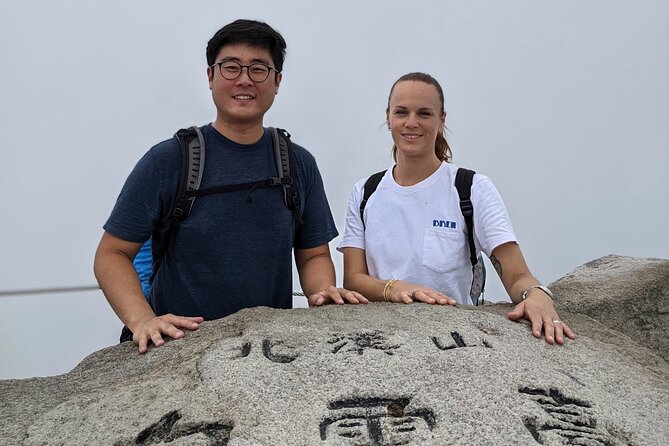
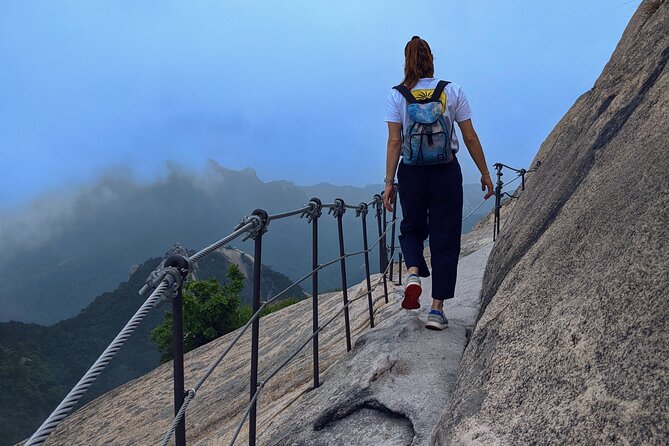
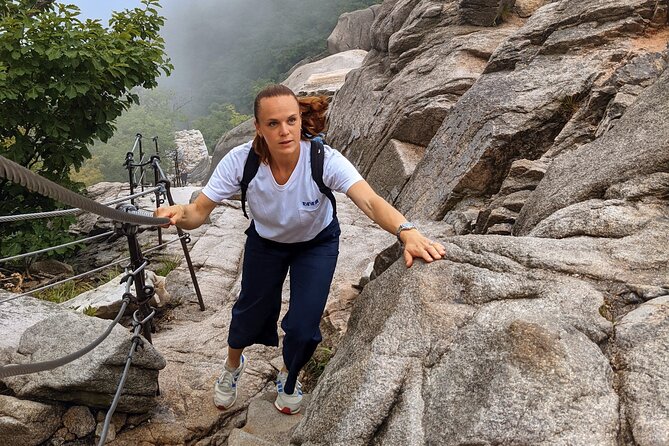
The last part is the section to take most seriously. Reaching Baegundae involves about 20 to 30 minutes of climbing at angles ranging from 25 to 45 degrees. Ropes are always available to help.
This is not technical rock climbing, but it is much more exposed and physical than a normal park trail. You may need to use your hands, place your feet carefully, and stay focused on the next few moves. The final push is also the most rewarding part for many people because it feels like a real summit finish rather than a viewpoint beside the path.
If you are afraid of heights, you can avoid this section and take a break. That option is valuable. You do not have to treat the summit as an all-or-nothing test, and a guide can help you make the call based on how you feel that morning.
People who completed the full route described the final climb as challenging but manageable. One fit hiker still found parts scary, which is a useful reminder that regular exercise does not automatically prepare you for steep, rocky terrain with open drop-offs.
Once you reach the top, you have conquered the highest peak in Seoul. The reward is not just the elevation number. It is the sense that you have crossed from urban sightseeing into a genuine mountain outing, with the capital below and the granite summit under your feet.
Same corner of the map, a different park:
- Discover Rocky Mountain National Park
★ 5.0 · 3,419 reviews - Mt. Rainier National Park Highlights Tour
★ 5.0 · 3,156 reviews - Grand Canyon National Park South Rim Bus Tour from Las Vegas
★ 4.5 · 3,071 reviews - Wilderness, Wildlife, Glacier Experience from Anchorage
★ 5.0 · 3,004 reviews
What the descent feels like
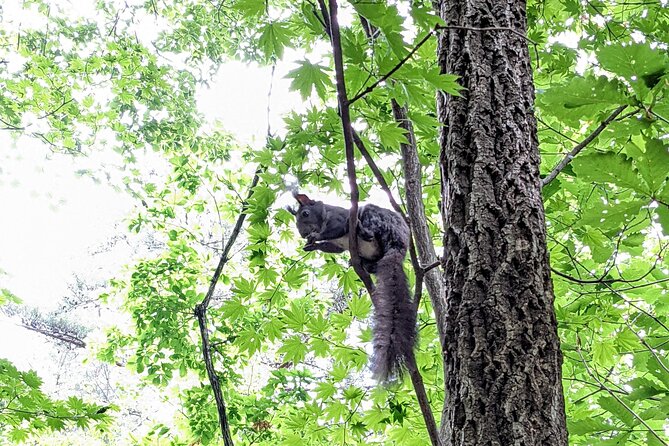
The way down uses the same route, so the return is easier to understand than a changing trail. You already know where the steep rocks and rope sections are, but descending can be hard on knees and thighs.
Take the downhill seriously. Rocky steps that felt manageable while climbing can become slippery or awkward on the return. Move slowly, keep your balance, and use the guide’s advice. Hiking poles can be borrowed at about the one-third point of the route, and they may help on both the ascent and descent.
Crampons can also be borrowed when needed. The supplied information does not specify seasonal conditions, so ask the guide about equipment at the start. Bug spray, a first aid kit, and a raincoat are provided if necessary, which gives you some backup for changing conditions.
This is one of the better reasons to join rather than attempt the route without preparation. Bukhansan is close to Seoul, but its steep terrain should not be mistaken for an urban park stroll. The tour’s warning about frequent rescues is a reminder to respect the mountain, not a reason to panic.
The optional tofu lunch after the hike
If your schedule allows, the outing ends with an optional meal at a restaurant specializing in tofu dishes. The tofu is made from scratch, and the meal costs about 9,000 to 15,000 Korean won per person.
I like this addition because it gives the half-day a local finish. You are not simply grabbing a snack from a convenience store after an exhausting climb. You can sit down, eat a proper Korean meal, and try tofu prepared as a central dish rather than a minor side.
Meat is available, so the meal is not limited to vegetarians. The restaurant is also described as vegan and vegetarian friendly, making it useful for a mixed group with different diets. Since lunch is optional, you can skip it if you have another appointment or need to return to Seoul quickly.
The meal also adds a social note to the experience. Groups have enjoyed eating together and sharing food and makgeolli after the climb. That kind of ending can turn a physically demanding morning into one of the more memorable social moments of a Seoul visit.
Do not assume lunch is included in the $67 price. It is paid separately, and the guide can include it if time permits. Bring enough Korean won for the meal, and buy water at the convenience store near the beginning of the route.
Is the $67 price good value?
At $67 per person, this is not the cheapest way to walk in Bukhansan. You are paying for more than transportation to a trailhead, since the guide handles route planning, group pacing, safety support, and English communication.
The route choice is part of the value. A typical summit outing may take around six hours, while this plan aims for about four hours of hiking within a 4.5-hour activity. That matters if you have only a few days in Seoul or want to keep the afternoon open.
You also receive access to basic support items: bug spray, a first aid kit, and a raincoat if needed. Hiking poles and crampons can be borrowed along the route. Water is not included, but it can be purchased at the start.
For a confident local hiker who already knows Bukhansan, the price may feel unnecessary. For you, the value depends on how much you want help with navigation, pacing, and the steep summit section. If you are visiting Seoul and want to attempt the mountain without spending time researching the simplest route, the cost is more reasonable.
The optional lunch improves the value for me, but only if you want that meal and have time for it. Treat it as a pleasant extra, not part of the basic booking price.
Who should book this summit course?
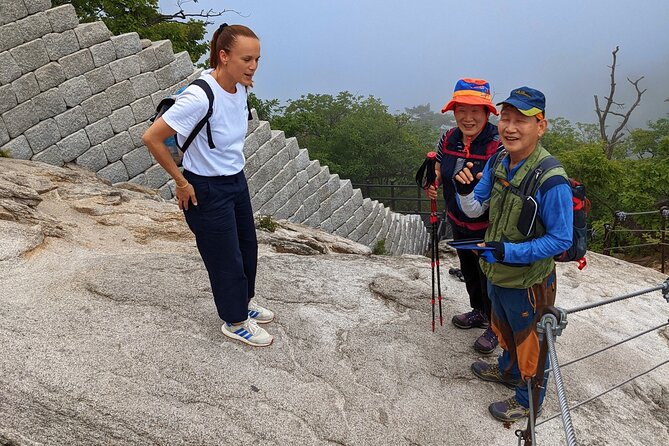
This hike suits you if you are moderately fit, enjoy a serious uphill challenge, and want a mountain experience close to Seoul. It is a strong choice for people who prefer active sightseeing and do not mind sweating through part of the morning.
It also suits solo visitors and people who like meeting others. The small-group format creates room for conversation, and Koa’s friendly style helps people connect. Hikers have made friends within the group, which is a nice bonus on a demanding route.
You should think twice if you have a strong fear of heights. The final rope-assisted section can be skipped, but the mountain still includes steep and rocky ground. You should also reconsider if you have bad knees or poor fitness, since the climb is much harder than a gentle interpretation of moderate might suggest.
The route may work for you even if you cannot reach the summit. Because the group returns by the same way, you can stop and have the guide meet you later. But book it with the understanding that the full course requires sustained effort, not just enthusiasm.
Practical details that affect your decision
The advertised activity lasts 4.5 hours, with the hiking route itself described as about four hours. Start times should be checked when booking, though the meeting instructions specify an 8:15 a.m. departure for this outing.
The live guide speaks English. The tour ends back at the original meeting point, outside Bukhansan Ui Station.
Free cancellation is available up to 24 hours before departure for a full refund. You can also reserve now and pay later, which is helpful if your Seoul plans are still changing.
The rating is 4.9 from 20 reviews, and the praise is remarkably consistent about three things: Koa’s energy, his attention to safety, and the satisfaction of completing the summit. The most useful criticism is equally consistent: the route is genuinely hard, and the steep final section is not ideal for anyone afraid of heights.
Should you book Bukhansan’s summit course?
Book it if you want Seoul’s highest summit, a direct route, and a guide who can manage the difficult parts without turning the outing into a rushed race. Koa’s pacing, humor, English, and safety focus add real value, particularly if you are unfamiliar with Korean mountain trails.
Skip it if you want a relaxed nature walk, dislike steep exposed sections, or have knee problems. The optional summit bypass helps, but it does not remove the long 600-meter ascent.
For the right person, this is one of the strongest active half-day choices near Seoul. Start early, bring water, arrive at the correct station, and treat the mountain with respect. You will earn the lunch.
FAQ
How difficult is the Bukhansan summit hike?
The ascent gains about 600 meters over 2.1 kilometers and usually takes 100 to 120 minutes. The full route requires moderate fitness, and the tour compares the effort to going up and down about 200 floors of stairs.
Does the hike include climbing with ropes?
Yes. The final 20 to 30 minutes toward Baegundae Peak include 25 to 45-degree climbing sections with ropes for assistance. You can avoid this part by taking a break if you are uncomfortable with heights.
Where do I meet the guide?
Meet guide Koa outside Exit 2 of Bukhansan Ui Station. Do not confuse it with Bukhansan Bogungmun Station. The group leaves at 8:15 a.m. sharp and waits only 15 minutes for late arrivals.
Is lunch included in the price?
No. Lunch is optional and costs about 9,000 to 15,000 Korean won per person. The meal focuses on handmade tofu dishes, with meat also available, and is described as vegan and vegetarian friendly.
What equipment can I borrow?
Crampons and hiking poles can be borrowed at about one-third of the route. Bug spray, a first aid kit, and a raincoat if needed are included. Water can be purchased at a convenience store near the beginning.
Can I cancel or pay later?
You can cancel up to 24 hours in advance for a full refund. You can also reserve now and pay later.
Just added around the world
- From Galway: Connemara, Kylemore Abbey or National Park Tour★ 4.7 · 7 reviews
- From Flores: Tikal National Park All Inclusive★ 5.0 · 5 reviews
- From Flores: Tikal National Park Private Day Trip with Lunch★ 5.0 · 2 reviews
- From Flagstaff: Grand Canyon National Park Tour★ 4.9 · 106 reviews
- From Ella – Yala National Park Leopard Safari Tour★ 3.8 · 5 reviews
- From Ella: Udawalawe National Park Safari Tour★ 5.0 · 12 reviews
- From Diani or Mombasa: Tsavo East National Park Day Trip★ 5.0 · 4 reviews
- From Ella: All Inclusive Udawalawe National Park Safari★ 4.8 · 19 reviews
South Korea National Park Tours, compared.
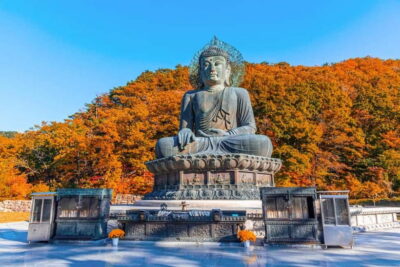
Seoul: Mt. Seoraksan National Park Autumn Foliage Day Tour
Read our review →
Busan: Naejangsan National Park Autumn Foliage One Day Tour
Read our review →Browse the lists this tour appears in