
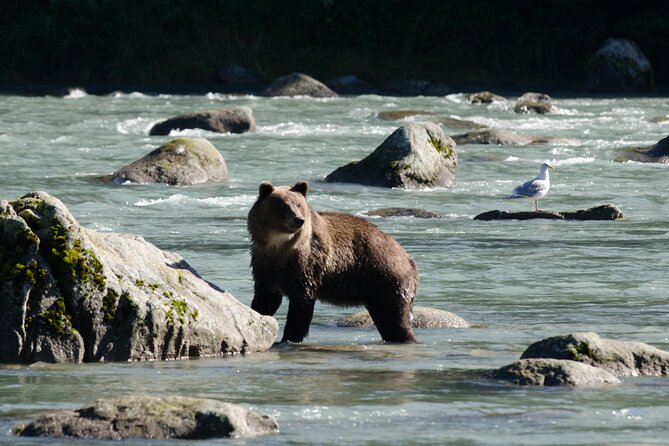
REVIEW · USA
4 hours Chilkoot Lake Nature and Wildlife Viewing
Wildlife follows its own calendar here. This four-hour Haines outing takes you from the cruise dock or local lodging toward Chilkoot Lake, with an expert naturalist guide explaining the Lynn Canal ecosystem, bear safety, plants, birds, salmon, and the animals that depend on them. I like the small group of up to 14 people and the use of a powerful spotting scope, which can turn a distant eagle or mountain goat into a clear sighting. I also like that lunch, admission, and pickup are included. The main drawback is timing: early July may be too soon for the salmon run and the bears that follow it.
This is not a guaranteed bear encounter. It is a nature trip in a place where weather, salmon, and wild animals set the schedule. That uncertainty is part of the deal, but it matters when you are paying $154 and have only one day in Haines.
Key points to know before booking
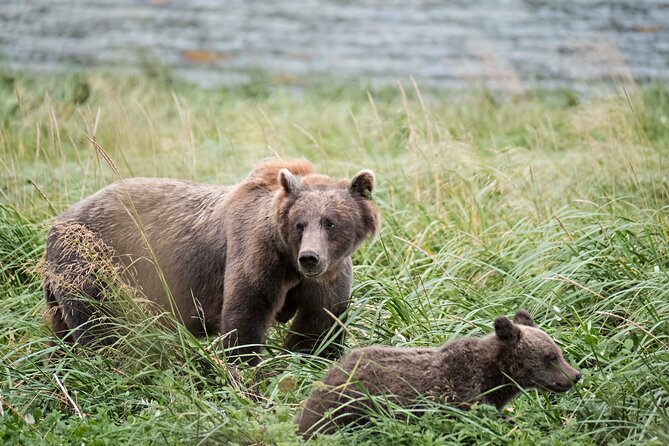
- Salmon timing shapes the wildlife show: Bear sightings become more likely from early August through late September, when salmon fill the Chilkoot River.
- The spotting scope is a real asset: Your guide can help you see distant eagles, mountain goats, and other animals without relying on luck alone.
- The scenery works in every season: May, June, and July bring peak wildflowers, while the Chilkoot corridor offers mountain, river, lake, and coastal views.
- Lunch is simple and practical: You receive a turkey sandwich, fruit, cookie, and water, with vegetarian, vegan, and gluten-free choices available if requested at least 48 hours ahead.
- Pickup is easy for cruise passengers: Meet near the information booth at the Haines cruise dock, or arrange pickup at many hotels and B&Bs.
- The tour is educational even without bears: Guides explain how salmon, eagles, bears, plants, and the river fit together in one working ecosystem.
Why Chilkoot Lake is Haines’ best short wildlife outing
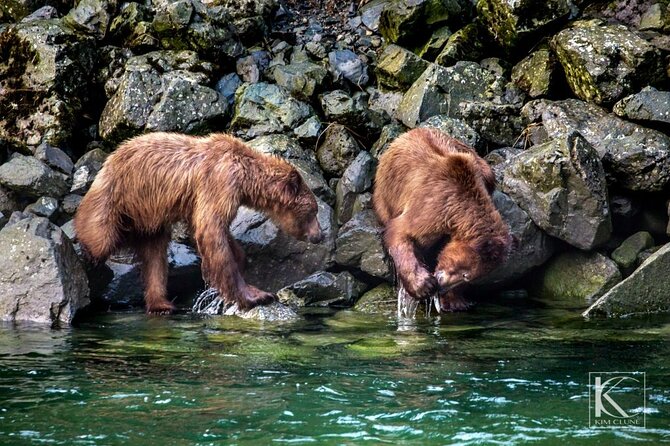
Haines gives you unusually quick access to wild country. You do not spend the entire morning reaching a remote viewing site. Instead, the route moves from town toward the Chilkoot corridor, with the guide using the drive to explain what you are seeing.
That matters on a four-hour tour. Part of your time is spent traveling between pickup and drop-off, but the drive is not treated as dead time. You hear about the Lynn Canal ecosystem and learn how to behave in bear country before reaching the river. For a first visit to Southeast Alaska, this background helps you read the place rather than simply point a camera at it.
The experience suits you best if you want scenery and interpretation along with wildlife. It is less suitable if you want a guaranteed bear sighting or a long hike. The supplied information describes viewing stops, driving, a portable lunch, and short pauses rather than strenuous walking.
A maximum of 14 people keeps the van and stops reasonably manageable. That is large enough to provide a social outing, but small enough for a guide to set up the scope and answer questions. The guide’s role is important here. You are not simply driven to a river and left to scan the bushes.
More Wildlife and Elephant Encounters in the USA:
- Miami: Everglades National Park Airboat Tour & Wildlife Show
★ 4.5 · 7,296 reviews - Wilderness, Wildlife, Glacier Experience from Anchorage
★ 5.0 · 3,004 reviews - Kenai Fjords National Park Glacier & Wildlife Cruise
★ 5.0 · 1,756 reviews
Starting near Tanani and learning bear-country basics
The first planned stop is Tanani, where the guide introduces Haines as a place of unusually intact wild country. This is where you get context about local plants, wildlife, and ecosystems before reaching Chilkoot Lake State Recreation Site.
The pause lasts about 15 minutes, and there is no separate admission charge. Its practical value is the safety briefing. You learn how to act in bear country before the trip reaches the places where bears may feed.
That preparation is not filler. The Chilkoot River is a working habitat, not a wildlife park. Bears may be feeding on salmon later in the season, but they can also search for dandelions, insect larvae, or shellfish at other times. The guide’s explanation helps you understand why animal sightings vary from month to month.
I appreciate this early introduction because it sets fair expectations. You are being taken into a wild ecosystem, not to a scheduled animal performance. It also gives the guide a chance to explain what signs to watch for and why the river matters.
Chilkoot River: the key stop for bears and salmon
The Chilkoot River is the main wildlife focus. You spend about an hour here, and the seasonal difference is substantial.
In May, June, and July, wildflowers are at their best, and bald eagles are busy tending young in their nests. You may see an eagle even when salmon and bears are not yet active, but the number and closeness of sightings can vary sharply.
From late July onward, salmon begin filling the river. As the run builds, brown bears have a stronger reason to come down to the water. The strongest period for bear sightings is described as early August through late September, when salmon numbers increase.
This is the most useful booking advice in the entire experience. If bears are your main goal, choose the later season when possible. A July 2 departure can be too early for the show many people picture when they hear Chilkoot wildlife. One early-season outing produced only one clear bald eagle and distant shapes that may have been eagles. The scenery and instruction were still worthwhile, but the wildlife payoff was limited.
I would not dismiss May through mid-July entirely. The guide explains that bears can feed before salmon arrive. They may eat dandelions along the road in May, turn over rocks for insect larvae in June, or search the beach for shellfish in July. Still, these sightings are less predictable than bears gathered near salmon.
The river stop also gives you a useful lesson in animal behavior. When bears appear, you are not just looking at a large animal. You are seeing a predator respond to food, water, tide, season, and competition. The guide interprets that behavior and explains how the animals fit into the Chilkoot system.
Chilkoot Lake State Recreation Area and the spotting scope
The tour continues through Chilkoot Lake State Recreation Area, with about an hour devoted to scenic and wildlife stops. Your guide chooses places to pause based on current conditions and the chance of seeing animals.
The supplied information specifically highlights a powerful spotting scope. This is one of the tour’s strongest features. Wildlife often stays far from roads and viewing areas, and a good scope can make the difference between a clear sighting and a tiny dot in a tree.
A guide has also learned where to look. One especially strong outing included eagles, seals, spawning salmon, and a mother bear with four cubs feeding on salmon. Another used the scope to locate mountain goats and eagles. Those sightings cannot be promised, but the equipment and local knowledge improve your odds.
Bring a camera, but keep your expectations sensible. You may get memorable images of distant animals, river scenes, mountains, and the town of Haines across the water. You may also spend time watching empty shoreline or a quiet river. That is normal for wildlife viewing.
The recreation area gives the tour more range than a single roadside bear stop. You see how the lake, river, forest, and mountains connect. The guide discusses plants and animal behavior, so the hour has value even when the animals stay out of sight.
Same corner of the map, a different park:
- Clear Kayak Tour of Shell Key Preserve and Tampa Bay Area
★ 5.0 · 5,800 reviews - Yosemite Highlights & Giant Sequoias Day Tour from San Francisco
★ 4.5 · 3,455 reviews - Discover Rocky Mountain National Park
★ 5.0 · 3,419 reviews - Mt. Rainier National Park Highlights Tour
★ 5.0 · 3,156 reviews
Nukdik Point and lunch with a view
Nukdik Point is a scenic lunch stop lasting about 30 minutes. Across the water, Haines spreads out beneath the Chilkat Mountains. This is a good pause after the river and recreation area, especially if you have spent the morning standing near the roadside or looking through the scope.
Lunch is portable and included in the price. The standard meal is a turkey sandwich on organic whole wheat bread, fruit, a freshly baked cookie, and bottled water. Vegetarian, vegan, and gluten-free options are available, but you need to request them at least 48 hours in advance.
This is not a gourmet meal, and it is not meant to be. The point is convenience. You do not lose more time searching for food during a four-hour outing, and the simple meal fits a day built around driving and viewing.
If you have dietary needs, make the request when booking rather than hoping it can be changed at the last minute. The stated notice period is 48 hours.
Fort William H. Seward and Haines’ military past
The route also includes a view of Fort William H. Seward, which overlooks the Port Chilkoot cruise ship dock. Built by the US Army in 1904, the fort has a notable past and is now privately owned and maintained.
The fort adds a layer of local history to a tour otherwise centered on nature. You see how Haines combines a working port, a historic military site, and access to wild country within a compact area.
The information provided does not list a separate stop length for the fort, so think of it as part of the drive and sightseeing rather than a full museum visit. If you want an extensive fort tour, this outing is not presented as that. Its value is in giving you another piece of Haines as you return toward the dock or lodging.
What the $154 price really covers
At $154 per person, this is not the cheapest way to spend four hours in Haines. The price includes pickup, admission fees, lunch, and an experienced driver-guide. You are also paying for the vehicle, the small-group format, the guide’s local wildlife knowledge, and the spotting scope.
The value depends heavily on what you want from the outing. If you want an organized route to Chilkoot Lake without arranging transportation, the price is easier to justify. Cruise passengers especially benefit because the tour begins at the ship dock and returns you to the same general area.
The value is also stronger if you care about interpretation. A bear sighting is exciting, but the guide’s explanation of salmon runs, eagle nesting, plant life, and bear feeding patterns gives the trip substance when the animals remain hidden.
The value is weaker if you measure success only by the number of bears seen. Nature can refuse to cooperate. Early July may offer flowers, scenery, and instruction but no salmon run, few eagles, and no bears. The company does not control the timing of the run or the movement of wild animals.
For me, the honest way to judge the price is to ask whether you would still enjoy a scenic and educational drive if the wildlife highlight never appears. If the answer is yes, the outing offers fair value. If the answer is no, book during the stronger salmon period or choose an activity with a more predictable focus.
Pickup details that matter on a cruise day
Cruise passengers meet their guide ashore near the information booth. The guide holds a sign with the company logo. If you do not see the guide 15 minutes before departure, the instructions say to call the operator.
Hotel and B&B pickup is also available at many local lodgings. You must provide the lodging name when booking, and you should watch for the van with the company logo. This is useful in Haines because it removes the need to arrange separate transport to the cruise dock.
The tour is offered in English and uses mobile tickets. Confirmation arrives within 48 hours of booking, subject to availability. Since the outing is booked an average of 122 days ahead, advance planning makes sense, especially for a cruise date with limited time ashore.
Children must be accompanied by an adult. Most people can participate, service animals are allowed, and the tour operates near public transportation. The maximum group size is 14.
Free cancellation is available up to 24 hours before the start time. Cancellations or changes inside that 24-hour window are not accepted for a refund, with cut-off times based on local time.
The best season for your priorities
Choose May if flowers and spring scenery appeal to you and you are comfortable with less predictable bear activity. Bears may be feeding on roadside plants, but salmon are not yet the main attraction.
Choose June for a mix of early summer scenery and eagle activity. Bears may be searching for insects or other food, but the river may still be quiet.
Choose July with care. Late July can bring the beginning of the salmon movement, but an early July date may be too soon. If your schedule gives you only July 2 or another early date, treat the outing as a scenic nature trip rather than a bear tour.
Choose August through late September if bears and salmon are your top priorities. The river is more likely to hold migrating salmon, and brown bears are more likely to come down to feed. Sightings still depend on conditions, but the timing is more favorable.
This season advice is not a guarantee. It is simply the best way to improve your odds while respecting the fact that the animals remain wild.
Who should book this Chilkoot experience?
I would recommend it to you if you want:
- A guided half-day outing from Haines
- A small group rather than a large coach
- Wildlife explanation along with scenery
- A chance to see eagles, mountain goats, seals, salmon, or bears
- A simple included lunch
- Pickup from a cruise dock, hotel, or B&B
- A flexible nature experience that does not require strenuous activity
I would hesitate if you need guaranteed animal sightings, dislike driving between stops, or have only one chance to see a bear and cannot visit during the stronger salmon season.
The guide matters greatly. The highest praise is directed at guides who were personable, clear, and able to use the scope well. Jeanette helped one outing find many eagles and a mother bear with four cubs. Garrett led an early July trip that produced fewer animals but still provided pleasant, informed commentary. The difference between those days shows both the value of the guide and the limits of the season.
Should you book the 4-hour Chilkoot Lake tour?
Book it if you want a well-organized introduction to Haines’ natural world and can accept wildlife as a possibility rather than a promise. The route combines Chilkoot River, Chilkoot Lake State Recreation Area, Nukdik Point, and views of Fort William H. Seward, with food and transport handled for you.
For the best chance of bears, target early August through late September. For flowers and eagle activity, May through July can still be worthwhile, but do not expect every early-season departure to produce salmon or bears.
At 91 percent recommended and a 4.5 rating, the experience has a strong record, but the mixed outcomes are important. You might see a mother bear with four cubs, spawning salmon, seals, and eagles. You might instead get one eagle, distant birds, beautiful scenery, and a useful lesson in an ecosystem still waiting for the salmon. If you can enjoy both possibilities, this is a sensible and rewarding use of four hours in Haines.
FAQ
How long is the Chilkoot Lake wildlife tour?
The experience lasts approximately four hours. The available time includes driving from pickup to drop-off, along with the stops at Tanani, Chilkoot River, Chilkoot Lake State Recreation Area, and Nukdik Point.
Where does the tour depart in Haines?
Cruise passengers meet the guide near the information booth at the cruise ship dock. Pickup is also available from many local hotels and B&Bs if you provide the lodging name when booking.
What wildlife might I see?
Possible sightings include bald eagles, brown bears, salmon, seals, mountain goats, and other local wildlife. Sightings are not guaranteed because animals, weather, and seasonal conditions vary.
When is the best time to see bears?
Bear sightings are more likely from early August through late September, when migrating salmon fill the Chilkoot River. Bears can also appear earlier while feeding on plants, insects, or shellfish.
What lunch is included?
Lunch includes a turkey sandwich on organic whole wheat bread, fruit, a freshly baked cookie, and bottled water. Vegetarian, vegan, and gluten-free options are available with at least 48 hours advance notice.
How many people can join the tour?
The tour has a maximum group size of 14 people.
Can I cancel for a full refund?
You can cancel for a full refund up to 24 hours before the experience start time. Cancellations or changes made less than 24 hours before departure are not accepted for a refund.
Just added around the USA
- Guided Wilderness Mindfulness Experience with Nature Meditation★ 5.0 · 3 reviews
- Yellowstone National Park – Lower Loop Adventure★ 5.0 · 6 reviews
- Yellowstone National Park – PRIVATE Full-Day Lower Loop Tour from Jackson Hole★ 5.0 · 35 reviews
- Yellowstone & Grand Teton National Parks – Ultimate Wildlife Safari★ 5.0 · 4 reviews
- Self-Guided Grand Teton National Park Driving Tour★ 3.0 · 5 reviews
- Private 4 hour Snowshoe in Grand Teton National Park★ 5.0 · 8 reviews
- Private Sundowner Dinner Experience in Grand Teton National Park★ 3.0 · 2 reviews
- Best of Yellowstone Private National Park Safari Tour★ 5.0 · 120 reviews
Wildlife and Elephant Encounters, compared.
Miami: Everglades National Park Airboat Tour & Wildlife Show
Read our review →
Wilderness, Wildlife, Glacier Experience from Anchorage
Read our review →
Kenai Fjords National Park Glacier & Wildlife Cruise
Read our review →
Kenai Fjords National Park Glacier & Wildlife Tour from Seward
Read our review →
Nairobi: National Park & Optional Elephants & Giraffe Center
Read our review →
Addo Elephant National Park All Inclusive Full-Day Safari
Read our review →
Jasper National Park: Evening or Morning Wildlife Watch Tour
Read our review →
Jackson: Grand Teton National Park Guided Wildlife Tour
Read our review →Browse the lists this tour appears in