
REVIEW · USA
Alaska Ocean Wilderness Expedition
Wildlife decides where this boat goes. That makes Out to Sea Expedition Company’s Alaska Ocean Wilderness Expedition a refreshing change from a fixed sightseeing route. You ride an open Zodiac through the waters around Ketchikan, looking for whales, eagles, sea lions, seals, otters, seabirds, and intertidal life. I especially like the small-group format and the thoughtful local guiding from people such as Delaney, Eric, and naturalist Jenny. The main drawback is simple: wildlife is never guaranteed, and the open boat can feel cold or wet without proper layers.
I also like that the trip is not just a fast ride past the shore. Guides explain the Tongass Narrows, local habitats, marine species, birdlife, tides, and the working waterfront. You receive rain gear, overboots, a dry bag, and a life jacket, which takes much of the worry out of Southeast Alaska weather. Still, you should understand that this is an ocean expedition, not a river trip, and the rougher conditions may not suit everyone.
Key points at a glance
- Small Zodiac groups: The boat carries a maximum of 12 travelers, giving the crew time to answer questions and adjust the pace.
- A flexible wildlife route: The captain follows tides, weather, and animal activity instead of chasing a fixed destination.
- Strong wildlife potential: Possible sightings include humpback whales, orcas, sea lions, harbor seals, porpoises, eagles, otters, deer, and many coastal birds.
- Rain gear is provided: You receive bibs, a jacket, overboots, a dry bag, and a USCG-approved life jacket.
- A local, educational approach: Delaney, Eric, Jenny, and the wider crew bring local ecology, birding, photography, and conservation interests to the trip.
- A two-and-a-half-hour outing: The tour includes equipment, a safety briefing, about two hours and 20 minutes on the water, and a return to Thomas Basin.
Why this Ketchikan boat trip feels different
Many Ketchikan excursions are built around a clear destination. This one is built around the conditions of the day. That is a good fit for an ocean wildlife trip, because tides, weather, feeding activity, and recent sightings matter more than a line on a map.
The captain may head south of Ketchikan, explore the Tongass Narrows, follow the shoreline, or stop in a productive tidal area. You are not promised a particular cove or whale encounter. Instead, the crew has room to change course when the water provides a better opportunity.
I like that honesty. A promise of orcas would be silly, since even experienced guides cannot control the animals. The company notes that orcas appear on only about 15 percent of trips, so seeing them is a special bonus rather than an expectation. Humpback whales, seals, eagles, and smaller sea life may be more realistic possibilities, but every outing will be different.
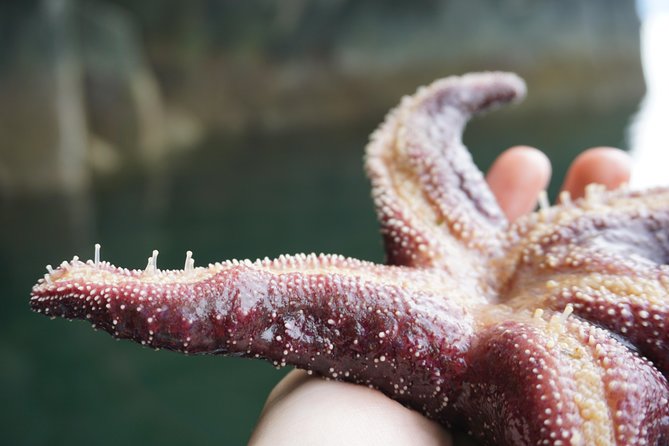
The small boat also changes the feel of the trip. You are close to the water and shoreline, rather than looking down from a large vessel with dozens of other people. The Zodiac can approach rocky coastal areas where you might spot sea stars, anemones, sea urchins, mussels, crabs, sea cucumbers, nudibranchs, and kelp.
A few more park trips around the USA worth a look
- Miami: Everglades National Park Airboat Tour & Wildlife Show
★ 4.5 · 7,296 reviews - Discover Rocky Mountain National Park
★ 5.0 · 3,419 reviews - Mt. Rainier National Park Highlights Tour
★ 5.0 · 3,156 reviews
Starting on Thomas Street in downtown Ketchikan
You meet the crew at 124 Thomas Street, in a hospitality space on historic Thomas Street. Plan to arrive 15 minutes before departure. From Berths 1 through 3, the walk is about 10 to 15 minutes. From Berth 4 or the Ward Cove shuttle stop, allow about 20 minutes.
Transportation from the downtown cruise ship docks can be arranged if requested at least 48 hours ahead. If your ship uses Ward Cove, the company provides ship-specific transportation instructions. This detail matters, because cruise schedules and dock locations can make a short Ketchikan walk less simple than it first appears.
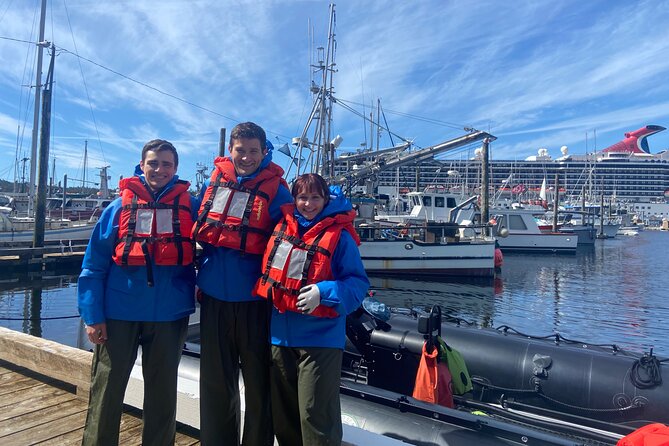
At the shop, the crew outfits you for the water. The supplied gear includes waterproof bibs and a jacket, overboots, a dry bag for personal belongings, and a life jacket approved by the United States Coast Guard. The equipment is reported to be clean and well maintained, with sizes available for a wide range of body types.
You should still wear warm layers underneath. Rain gear keeps water out, but it does not create much warmth on its own. Wool or other insulating layers are a smart choice, particularly if the day is cool, windy, or wet. Bring only what you need, since the dry bag is useful but not a substitute for a large piece of luggage.
The safety briefing and the open Zodiac
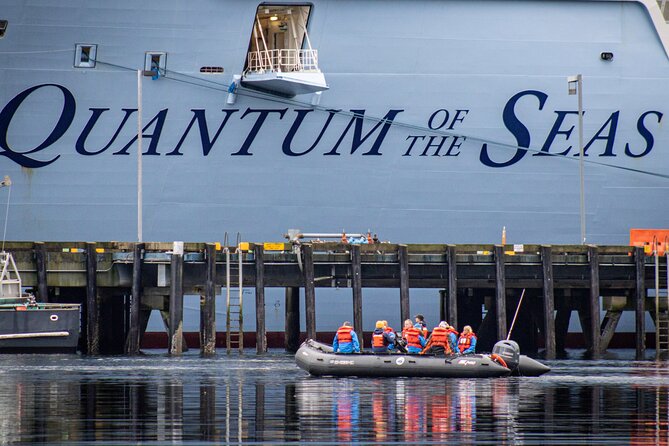
After everyone is outfitted, the captain gives a short safety briefing. You then walk to the nearby Thomas Basin Boat Harbor and board the Zodiac.
The open design is one of the experience’s strengths. You have an unobstructed view in every direction, and the boat can get close to shore. You hear the water, feel the weather, and have a better chance of spotting a bird or mammal than you would through a cabin window.
It is also the part that requires the clearest expectations. An open boat exposes you to rain, wind, and cold air. Even with good clothing, you may not feel as comfortable as you would on a covered sightseeing vessel. The company’s gear helps greatly, but you should dress for Alaska rather than for a mild cruise-deck afternoon.
The boat is intended for most people, and the company says most travelers can participate. Service animals are allowed. Still, you should consider whether you are comfortable boarding a small boat and spending about two hours and 20 minutes on the water in changing conditions.
Through the Tongass Narrows and away from town
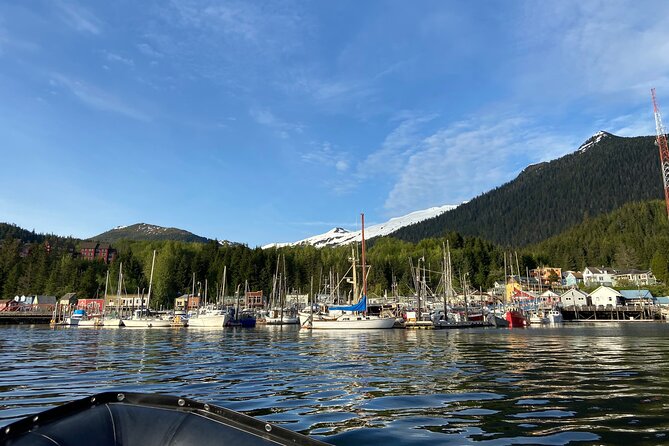
As the Zodiac leaves Thomas Basin, the crew introduces Ketchikan and its colorful past. You get a look at the working waterfront as the town begins to recede, then enter the Tongass Narrows and the protected waters of the Inside Passage.
This opening section gives the trip some useful context. Ketchikan is not only a cruise port with shops and excursion docks. It is an island community shaped by fishing, marine travel, forest, tides, and access to the water. The return route may also provide views of working boats, fishing activity, and the shoreline near Saxman Totem Village.
I like this part because it keeps the outing connected to Ketchikan itself. You are not simply transported to an anonymous wildlife-viewing area. The boat ride shows how the community works and how closely local life is tied to the sea.
Same corner of the map, a different park:
- Clear Kayak Tour of Shell Key Preserve and Tampa Bay Area
★ 5.0 · 5,800 reviews - Yosemite Highlights & Giant Sequoias Day Tour from San Francisco
★ 4.5 · 3,455 reviews - Grand Canyon National Park South Rim Bus Tour from Las Vegas
★ 4.5 · 3,071 reviews - Wilderness, Wildlife, Glacier Experience from Anchorage
★ 5.0 · 3,004 reviews
Searching the shoreline for birds and land animals
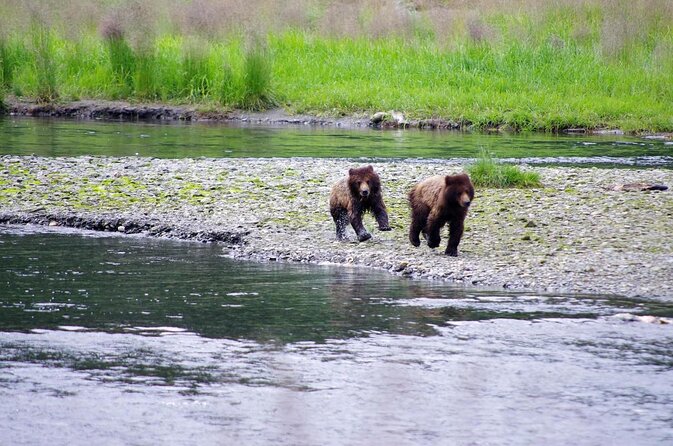
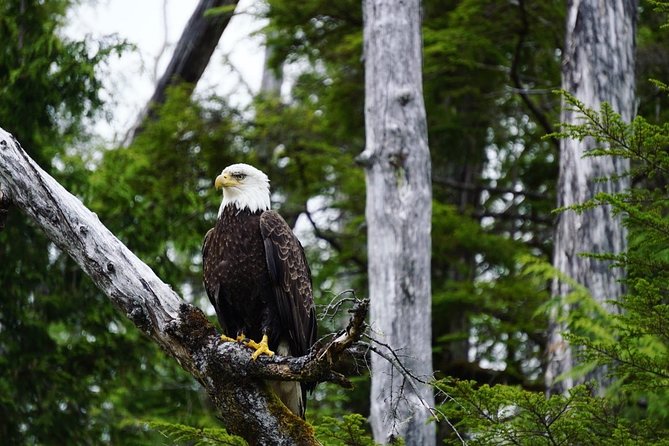
The captain follows rocky beaches and forested edges, where the search broadens beyond whales. Look toward the shoreline for Sitka black-tailed deer, river otters, and mink. Bald eagles may perch in the tall evergreens of the Tongass National Forest or appear near nests.
The birding can be especially rewarding. Sightings recorded on these trips have included kingfishers, pelagic cormorants, common murres, blue herons, Canada geese, and other resident or migratory birds. One especially memorable possibility is seeing adult eagles near a nest with young birds.
You do not need to arrive as a bird expert. Guides can help identify species and explain why the nutrient-rich waters support so many birds. If you already enjoy birding, photography, or natural history, the small boat gives you more time to ask specific questions and watch behavior instead of simply collecting names.
The crew also keeps an eye out for unusual sightings. A Pacific golden plover, for example, was identified after one trip, a less common bird for the area. That kind of follow-up shows the value of traveling with guides who pay attention beyond the headline animals.
The intertidal zone at low tide
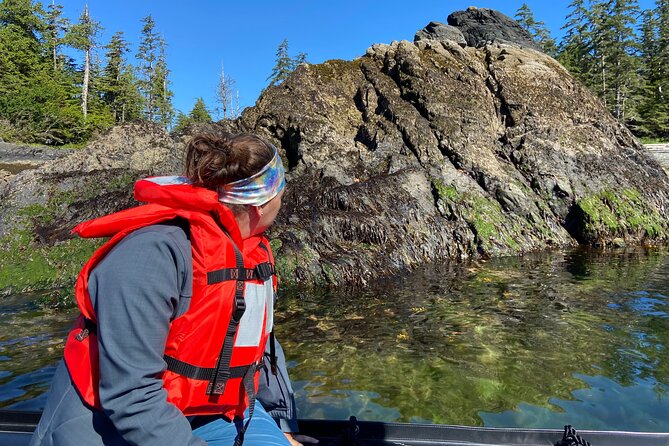
When the tide is low, the Zodiac may pause near rocky shallows. This is where the trip can feel most hands-on, even though you remain on the boat.
The intertidal zone may reveal sea stars, giant green anemones, sea urchins, mussels, crabs, sea cucumbers, nudibranchs, jellyfish, and fish. Guides explain how these animals live between land and sea, where they must handle changing water levels and exposure.
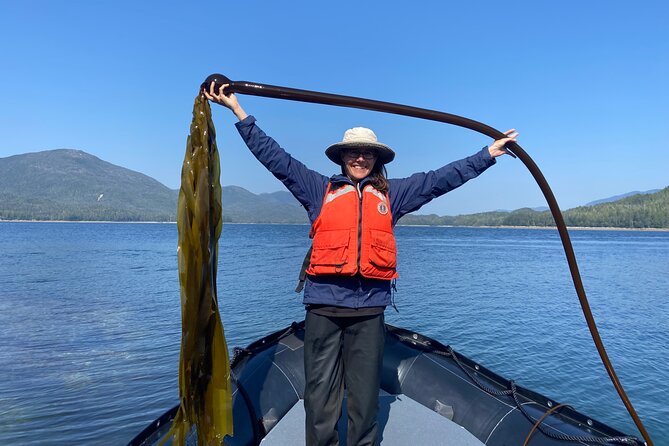
You may also learn about kelp and other coastal plants. On some outings, the crew has allowed people to touch kelp and examine marine life more closely. That small detail helps connect the explanation to something you can actually see and feel.
This section is a good reminder that a successful wildlife trip does not depend only on finding a whale. A quiet look at tide-pool life can be just as rewarding, particularly for families and anyone who enjoys learning how an ecosystem fits together.
Looking for whales, seals, sea lions, and porpoises
The main search takes place in the protected Inside Passage waters around Ketchikan. The crew looks for harbor seals, Steller sea lions, porpoises, humpback whales, and killer whales.
Humpback sightings have included whales feeding close to shore and groups bubble-feeding. That behavior can be thrilling to watch, but you should not assume every trip will produce it. Whales may appear at a distance, surface briefly, or not show up at all.
The same is true of orcas. A pod has been spotted on past outings, and one trip found four orcas soon after leaving land. But the company is clear that orcas are relatively uncommon on its trips. That candor is useful when you are deciding how much to pay for a wildlife excursion.
Seals and sea lions may be easier to find. Porpoises, otters, salmon, eagles, and coastal birds can add variety to the day. The crew’s quiet approach helps avoid turning the outing into a noisy chase, and guides emphasize care for the animals and their habitat.
What the guides add to the experience
The people on board are a major part of the value. Owners Delaney and Eric are local, and the crew’s interests include photography, birding, marine biology, and conservation. Jenny, who has served as the naturalist on some trips, is known for clear explanations and a friendly teaching style.
The best guiding here is not a nonstop lecture. It is short, useful information at the moment you need it: why a group of birds is gathered, what a sea star is doing, how salmon fishing works, or why a whale might be feeding near the shoreline.
The crew also takes part in environmental work, including beach cleanups, wildlife counts, debris collection during outings, and sharing observations with research organizations such as Cornell. That does not turn the trip into a formal conservation program, but it gives the experience a stronger sense of place and responsibility.
You may also receive a hot drink, bottled water, and a small fig-based snack. Eat before departure if you are hungry, since the snack is light and the trip lasts two and a half hours.
The price, group size, and overall value
The cost is $209.95 per person. That is not a bargain-priced harbor ride, but the comparison should be with other small-group wildlife excursions, not with a basic boat transfer.
Your price includes the boat trip, captain and naturalist support, safety gear, waterproof clothing, overboots, a dry bag, and the chance to travel with no more than 12 people. A small group has real value here. The crew can answer questions, help children stay engaged, adjust the pace, and spend time examining a shoreline or tidal area.
Large boats may offer more shelter and stability, but they cannot provide the same close-to-the-water feel. If personal attention and quiet wildlife watching matter to you, the price is easier to justify. If you mainly want guaranteed whale sightings or a warm indoor cabin, this may not be your best use of money.
The trip also benefits from not canceling simply because a booking group is small. A private-feeling outing can result when only a few people are aboard, though the listed maximum remains 12 travelers.
Weather, timing, and cruise-day planning
Ketchikan weather can change quickly, and the experience requires suitable conditions. If poor weather forces a cancellation, you are offered another date or a full refund.
You can cancel for a full refund if you do so at least 24 hours before the scheduled start. Changes or cancellations inside that 24-hour window are not accepted, so watch your cruise schedule carefully.
The tour begins and ends at 124 Thomas Street. That makes it practical for cruise visitors, but you should allow time to walk from your berth, collect your gear, and complete the safety briefing. If your ship arrives at Ward Cove, pay close attention to the transportation instructions and request help at least 48 hours ahead if needed.
Who should book this expedition?
I would choose this trip if you want a personal, educational outing rather than a standard cruise-port activity. It suits families, couples, friends, birdwatchers, photographers, and anyone who likes the idea of letting the ocean set the agenda.
It is also a strong choice if you want to support a small local company and learn about the place from people who live there. Children can enjoy the wildlife and the boat ride, though parents should prepare them for rain, cold, and a long period outdoors.
I would think twice if you need a covered boat, guaranteed animal sightings, or a fixed route. The name also matters: this is an ocean expedition aboard an open Zodiac, not a river rafting trip.
Should you book the Alaska Ocean Wilderness Expedition?
Yes, if you value a small group, close shoreline access, thoughtful local guiding, and a real chance to see Southeast Alaska’s marine life without a crowd around you. The strongest reasons to book are the flexible route, excellent equipment, and the crew’s clear care for wildlife and the local community.
Book with realistic expectations. Orcas and whales are possible, not promised. The weather may be wet, and the open boat demands warm layers. If you accept those limits, the $209.95 price buys more than a boat ride: it buys time with guides who can help you notice the small details, from a sea star in the shallows to an eagle above the trees.
FAQ
Where does the Alaska Ocean Wilderness Expedition begin?
It begins at 124 Thomas Street in downtown Ketchikan, Alaska.
Where does the tour end?
The tour returns to the same meeting point at 124 Thomas Street.
How long does the experience last?
The total duration is approximately two hours and 30 minutes, including the short outfitting and safety period. About two hours and 20 minutes are spent on the water.
How many people can join the tour?
The experience has a maximum of 12 travelers.
What kind of boat is used?
The tour uses an open Zodiac expedition craft.
What wildlife might I see?
Possible sightings include humpback whales, killer whales, harbor seals, Steller sea lions, porpoises, bald eagles, river otters, mink, deer, seabirds, sea stars, anemones, sea urchins, crabs, and other marine life.
Are whales and orcas guaranteed?
No. Wildlife sightings depend on tides, weather, and animal activity. Orcas are seen on only some trips.
What equipment is provided?
The company provides rain bibs, a rain jacket, overboots, a dry bag, and a USCG-approved life jacket.
Is transportation from the cruise docks available?
Transportation from the downtown cruise ship docks may be available with at least 48 hours notice. Ship-specific instructions are provided for arrivals at Ward Cove.
What is the cancellation policy?
You can cancel at least 24 hours before the start time for a full refund. If poor weather causes the company to cancel, you are offered a different date or a full refund.
Just added around the USA
- From Flagstaff: Grand Canyon National Park Tour★ 4.9 · 106 reviews
- From Denver: Guided Hike in Rocky Mountain National Park★ 4.2 · 9 reviews
- From Seattle: Full-Day Mt Rainier National Park Tour★ 3.5 · 6 reviews
- From Anchorage: Wilderness, Wildlife, & Glacier Experience★ 4.9 · 85 reviews
- Everglades National Park: Private 2.5-Hour Photo Safari★ 4.9 · 9 reviews
- Everglades National Park: Boat Assisted Kayak Eco Tour★ 4.7 · 25 reviews
- Everglades National Park: Pontoon Boat Tour & Boardwalk★ 4.2 · 44 reviews
- Everglades National Park 3-Hour Kayak Eco Tour★ 4.9 · 10 reviews
USA National Park Tours, compared.
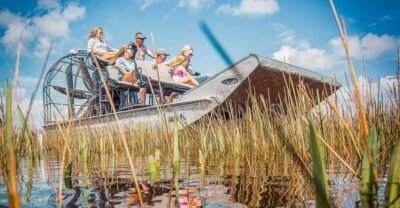
Miami: Everglades National Park Airboat Tour & Wildlife Show
Read our review →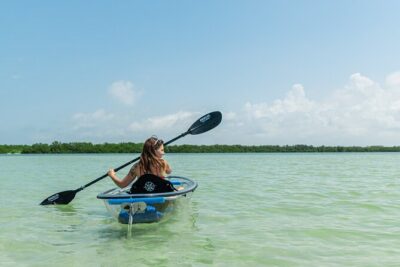
Clear Kayak Tour of Shell Key Preserve and Tampa Bay Area
Read our review →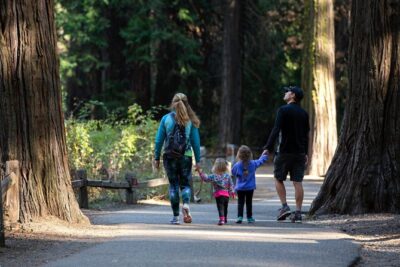
Yosemite Highlights & Giant Sequoias Day Tour from San Francisco
Read our review →
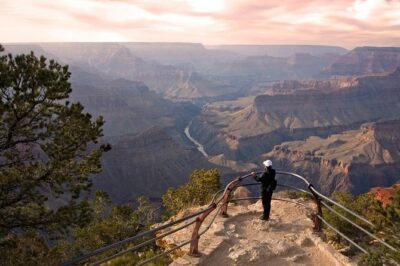
Grand Canyon National Park South Rim Bus Tour from Las Vegas
Read our review →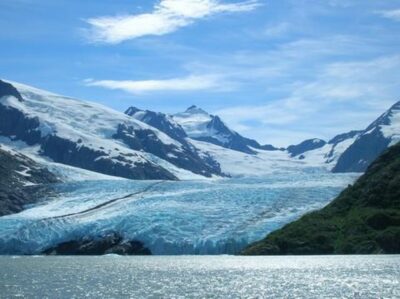
Wilderness, Wildlife, Glacier Experience from Anchorage
Read our review →
Bryce Canyon & Zion National Park from Las Vegas with Lunch, WiFi
Read our review →Browse the lists this tour appears in