
REVIEW · USA
Big Bend National Park Self-Guided Driving Audio Tour
Big Bend rewards a slow drive. This self-guided audio tour turns more than 72 miles of desert road into a moving storybook, with more than 90 audio stops covering fossils, ranches, geology, legends, and border country. I like the hands-free narration and the freedom to pause for photos, hikes, meals, or a quiet look across the Rio Grande.
I also like the price: $16.99 per car group of up to four, not per person. The main caution is the setup. You must download the separate Action Tour Guide app while you still have strong internet, and one recent user needed extra help finding the starting instructions.
Big Bend audio tour highlights
- More than 90 stories across a 72-mile route: The narration adds context to sights that can otherwise blur together on a long desert drive.
- A full route from the Alpine entrance area to Santa Elena Canyon: You move from the Chihuahuan Desert and Chisos Mountains toward Terlingua and the Rio Grande.
- An optional one-hour detour: The route can extend toward a historic village near the river and a hot springs trail.
- Offline operation: Download the tour before arriving, then use location-triggered audio without cellular service or Wi-Fi.
- Useful for a private group: One purchase covers up to four people in the same car, and nobody meets you at the start.
- Lifetime access: You can pause, restart, or reuse the tour on another Big Bend visit without an expiration date.
What the Big Bend audio tour is really like
Big Bend is too large to understand from a single viewpoint. Its roads pass through desert, volcanic rock, forested mountains, old ranch sites, abandoned mining country, and the Rio Grande corridor. This tour gives those changes a running explanation instead of leaving you to guess what you are seeing.
The experience lasts about two to three hours if you follow the main route at a steady pace. That timing refers to the driving and narration, not a full day in the park. You should allow extra time for overlooks, short walks, photos, food, and the optional detour.
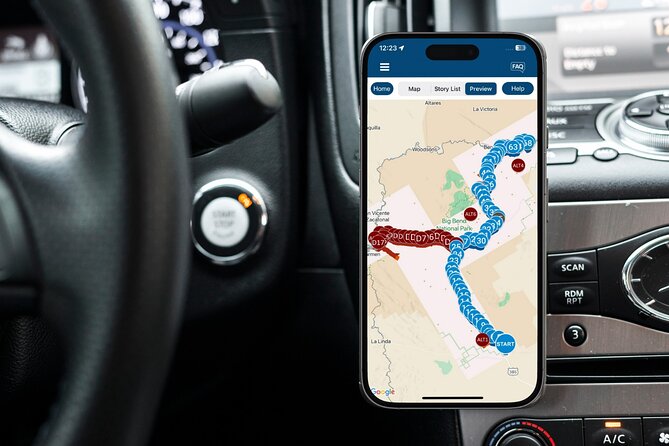
The format is simple. After booking, you receive setup instructions and a password by email and text. Search for audio tour if you cannot find them. Download the separate Action Tour Guide app, enter the password, and download the route while you have strong Wi-Fi or cellular service.
Once you reach the first story point, the audio begins automatically. The next story plays when you reach the next location. You can connect your phone to the car stereo by Bluetooth, USB, or AUX. Apple CarPlay works for audio playback, while Android Auto support is still listed as forthcoming.
This is not a live tour. Nobody greets you at the park sign, and you will not have a guide sitting in the car. That is a benefit if you want privacy and control. It also means you should test the app before leaving town.
More Self-Guided Driving and Audio Tours in the USA:
- Joshua Tree National Park Self-Guided Driving Audio Tour
★ 4.5 · 762 reviews - Ultimate Acadia National Park Self-Guided Driving Audio Tour
★ 4.0 · 521 reviews - From Moab: Half-Day Arches National Park 4×4 Driving Tour
★ 4.8 · 440 reviews
Starting near Alpine and entering Big Bend
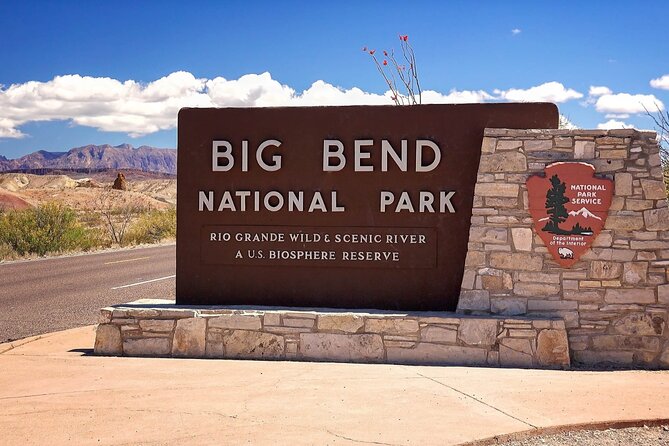
The route begins at the Big Bend National Park sign near Alpine, Texas, and uses the entrance station as an early orientation point. The entrance station is modest, with a rustic design intended to fit the desert setting. You will see the park sign and emblem as you enter the gateway area.
You need a separate entrance pass for Big Bend National Park. It is not included in the $16.99 tour price, so include that extra cost in your planning. The stated operating period runs from May 16, 2024, through February 24, 2027, with hours listed as 8:00 AM to 4:00 PM daily.
The first part also introduces the Fossil Bone Exhibit. Admission is not included, and the stop is listed at about five minutes. Treat this as an opening point rather than a long museum visit. The tour’s real strength appears once you are moving through the park.
Chihuahuan Desert, Sierra del Carmen, and the Chisos Mountains
The narration explains the scale of the Chihuahuan Desert, which stretches across Texas, New Mexico, and several Mexican states. The comparison to France helps put its size in perspective. The connection between the desert and the Mexican state of Chihuahua also gives a quick explanation for the name of the small dog breed.
As the route continues, the Sierra del Carmen comes into view along the Mexican side of the Rio Grande. The narration points out how remote this mountain region is, with no rivers, roads, or towns within it. That detail matters because Big Bend can feel isolated even from the park roads, and the Mexican mountains add another layer to that sense of distance.
The Chisos Mountains then interrupt the desert with forested peaks. The tour explains this as a sky island, a high, cooler area surrounded by a warmer desert. It is one of the most useful pieces of context on the route because it explains why green forest can exist in an otherwise dry setting.
The audio also connects the mountains to the Chizos tribe. At this point, you get a clear example of what the tour does best: it takes a visual contrast you can already see and adds an explanation about climate, geography, and people.
Fossils and the ranching past near Avery Canyon
The Fossil Discovery Exhibit, opened in 2017, features replicas of well-known fossils found in Big Bend. Paleontologists have excavated more than 1,200 fossils in the area, including rocks from the Cretaceous period. The narration makes this stop more than a quick roadside photo opportunity.
Admission is not included, so check your plans before treating the exhibit as a scheduled stop. The listed audio time is about ten minutes. If you want to spend longer inside, pause the tour and resume it when you return to the car.
Avery Canyon shifts the story from ancient creatures to modern settlement. The stop is named for J.C. Avery, who ranched here around the start of the 20th century. The narration links the growth of local settlements to the railroad reaching nearby Marathon in the 1880s and to the addition of thousands of miles of track.
That railroad connection helps explain why Brewster County developed as it did. Without some historical context, a ranch site can look like a few old remains in a very empty place. Here, you get a sense of the people, transport, and government policies that shaped the area.
More Audio Tours in the USA:
- Arches National Park Self-Guided Driving Audio Tour
★ 4.5 · 288 reviews - Yellowstone National Park Self-Guided Driving Audio Tour
★ 4.5 · 249 reviews - Self-Guided GPS Audio E-Bike Tour Hawaii Volcanoes National Park
★ 4.5 · 131 reviews - Shenandoah National Park Self-Guided Driving Audio Tour
★ 4.5 · 109 reviews
Ross Maxwell Scenic Drive and the Marfa Lights
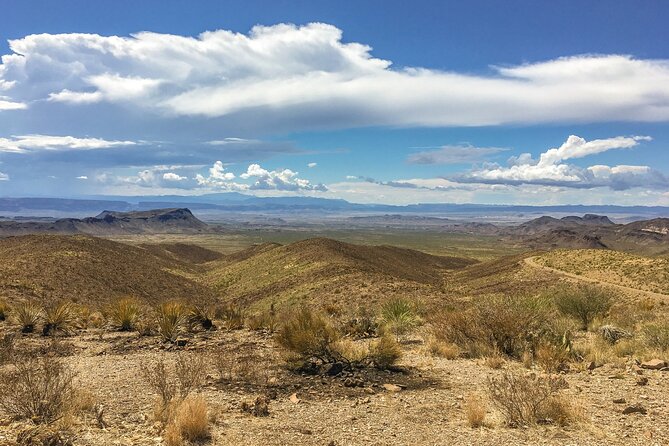
Ross Maxwell Scenic Drive is one of the visual high points. The road passes through desert views, volcanic formations, canyons, and broad views toward the Chisos Mountains. Pullouts give you places to stop, and the route includes views toward Santa Elena Canyon and the Rio Grande.
The audio works well here because the road itself provides plenty to look at. You do not need to stare at a screen while driving. Let the narration play through the car stereo and stop only where you can safely pull off.
The Marfa Lights Viewing Area adds a dose of mystery. The story dates to 1883, when a young cowhand reported a bright, brief light in the distance. Other settlers had also seen unexplained lights, and the tale became part of West Texas folklore.
The tour presents the story as a local legend rather than a guaranteed sighting. That is the right approach. If you stop here, think of it as a place tied to an old mystery, not an attraction that promises a show on demand.
Sam Nail Ranch and Lower Burro Mesa Pour-off
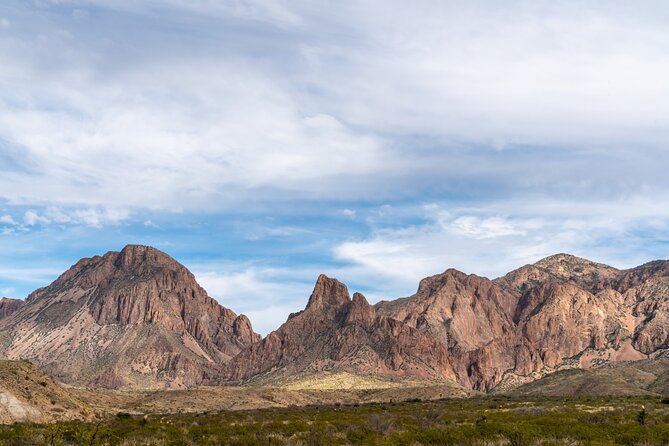
Sam Nail Ranch operated across 15,000 acres for nearly four decades. The narration explains how two brothers arrived in Brewster County in 1916, during a period when homesteading expanded and the government encouraged food production and resource conservation during World War I.
This stop gives the drive a human scale. You are not only looking at open desert. You are passing through land shaped by ranch work, family decisions, government policy, and the hard limits of water and distance.
Lower Burro Mesa Pour-off reaches farther back in time. The area once supplied chert, a colorful sedimentary rock used by prehistoric hunter-gatherers for tools such as spearheads. The story places human activity here as far back as 13,000 years.
You may find the contrast between prehistoric tools and 20th-century ranching especially useful. It shows that Big Bend’s story is not one era repeated across the park. The route keeps changing its subject, which helps maintain interest during the long drive.
Homer Wilson Ranch, Sotol Vista, and Mule Ears
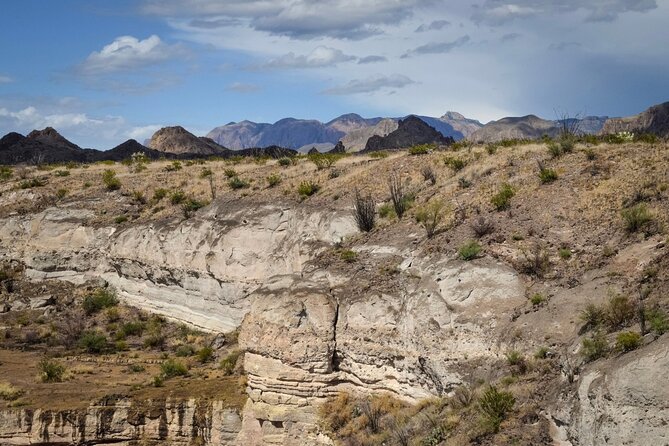
Homer Wilson Ranch offers a view toward Blue Creek Valley. Wilson, a World War I veteran, settled here in 1929, apparently drawn by the setting and the chance to build a home for his family. The ranch stop works best when you pause long enough to consider how demanding that life must have been.
Sotol Vista provides one of the broadest views on the route. You can look across the Chihuahuan Desert toward the Chisos Mountains, distant canyons, and the Rio Grande. This is a good place to pause the audio and simply take in the scale of the park.
Mule Ears Spring Trail focuses on geology. The twin formation consists of rhyolite, a volcanic rock, and the narration explains geological dikes, formed when magma fills a crack in older rock and cools there.
You do not need a geology background to follow the explanation. The stop connects the odd shape in front of you to the volcanic forces that formed it. If you want to walk the trail, leave enough time beyond the tour’s stated two to three hours.
Terlingua Ghost Town and the volcanic rock of the west
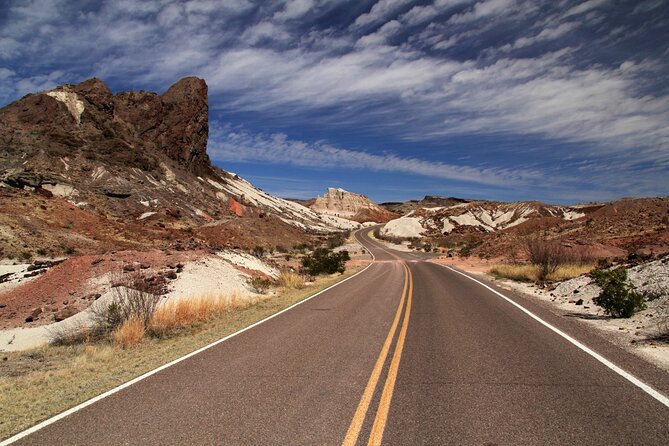
Terlingua began as a mining district and later became a ghost town on the edge of Big Bend. The narration explains the name through tres lenguas, or three languages, referring to English, Spanish, and Lipan Apache influences in the area.
The story also reaches back to Terlingua’s earlier life as a small Mexican village near the Rio Grande. That layered background makes the stop more interesting than a simple collection of old buildings. You get a glimpse of mining, border culture, and settlement patterns in one place.
Tuff Canyon Overlook follows with a geological lesson. The canyon’s red and tan rock reflects the region’s volcanic past. At Cerro Castellan, the audio raises questions about the mountain’s formation and its red-orange surface.
These stops are a good reminder that Big Bend often rewards looking down at the rock as much as looking out at the horizon. The tour gives you reasons to notice color, texture, and shape instead of treating each overlook as another scenic pause.
Castolon, the Rio Grande, and Santa Elena Canyon
Castolon Historic District preserves some of the few remaining structures from before the park existed. The buildings may look plain at first, but their value comes from what they represent: the people and working communities that occupied the area before park protection changed the region.
The route then moves toward the river at Santa Elena Canyon River Access. This is a chance to get close to the Rio Grande and spend time at the water’s edge. The audio points you toward the access area, but you control how long you stay.
The final major stop is Santa Elena Canyon. Its limestone cliffs rise dramatically above the Rio Grande, and the tour explains how the canyon took shape. The provided description gives the river as plunging about 1,500 feet below the overlook, so you can expect a striking vertical view.
The route ends at the Santa Elena Canyon Trail near Terlingua. That makes the finish practical if you want to continue with a walk, though the tour itself does not include an organized hike or a guide. Plan your footwear, water, and timing separately from the audio experience.
The optional detour toward Boquillas and hot springs
The main tour takes about two to three hours, but you have an optional detour of roughly one hour. It leads toward the remains of a historic village by the Rio Grande and a hot springs hiking trail.
The route colors in the app matter. A previous user had expected the main audio to continue farther toward Boquillas and found the setup unclear. The useful fix is to follow the blue main route in the app and treat the differently marked Boquillas section as the detour.
This is a good example of why you should inspect the map before driving. The app allows you to skip stops, pause for a side trip, or return to bonus content later. You do not need to force the entire route into one short session.
Is $16.99 good value?
For a group of up to four, $16.99 is a low-cost way to add structure to a park drive. A private guided vehicle tour would cost far more, and the audio lets you choose your own stops and pace. The value is strongest if you already plan to drive the full route.
The tour is less useful if you only have time for one short road section or if you prefer to read park signs and guidebooks on your own. It also does not cover your park entry, food, transportation, hikes, or attraction admission.
The lifetime access improves the deal. You can use it on another Big Bend trip, pause it over multiple days, or replay sections without buying again. Just remember that the purchase is for the tour, not a reservation or entrance ticket.
Who should book this experience?
I would choose this tour if you are driving your own car, want background stories without joining a group, and enjoy learning why a place looks the way it does. Couples, families, and small groups can split the cost, making it especially reasonable for four people in one vehicle.
It also suits a first visit when the park’s size feels hard to organize. The route gives you a ready-made sequence from the Alpine entrance area to Santa Elena Canyon, with a useful mix of geology, local history, fossils, ranches, folklore, and views.
I would be more cautious if you want a live expert who can answer questions, adjust the route in real time, or lead a hike. I would also avoid waiting until you reach the park to install the app. Download everything at home, enter the password, and test the audio before cellular service becomes uncertain.
The experience has a 4.1 rating from 14 reviews. The strongest praise centers on the narration, the steady pacing, and the history lessons that make the drive more engaging. The clearest criticism concerns starting instructions and confusion about the main route versus the Boquillas detour.
You can cancel for a full refund up to 24 hours before the scheduled start time. Inside that window, the payment is not refundable, and changes are not accepted.
FAQ
How much does the Big Bend audio tour cost?
The tour costs $16.99 per group of up to four people. The price covers the audio tour, not Big Bend National Park admission or other attraction tickets.
How long does the tour take?
The main tour takes about two to three hours. An optional detour can add about one hour and leads toward a historic village near the Rio Grande and a hot springs hiking trail.
Where does the tour start and end?
The route starts at the Big Bend National Park sign near Alpine, Texas. It ends at the Santa Elena Canyon Trail near Terlingua, Texas.
Do I need cell service during the tour?
No. You must download the tour while you have strong Wi-Fi or cellular service. After downloading, the app works offline with location-triggered audio and offline maps.
How do I start the audio?
Download the separate Action Tour Guide app, enter the password sent by email and text, and open the correct tour version for your starting point and direction. Go to the first story location, and the audio should begin automatically.
Is park admission included?
No. You need a separate entrance pass for Big Bend National Park. It is not included in the audio tour price.
Should you book the Big Bend audio tour?
Book it if you want an inexpensive, private way to add stories and structure to a long Big Bend drive. The mix of fossils, ranch history, volcanic geology, desert ecology, Terlingua, and Santa Elena Canyon gives you more to notice at each stop.
Skip it if you want a live guide, a planned hiking experience, or a tour that includes park admission. For most self-driving visitors, the best plan is simple: download the app before leaving reliable service, follow the blue main route, keep the park pass separate, and allow extra time for the overlooks and optional detour.
Just added around the USA
- Guided Wilderness Mindfulness Experience with Nature Meditation★ 5.0 · 3 reviews
- Yellowstone National Park – Lower Loop Adventure★ 5.0 · 6 reviews
- Yellowstone National Park – PRIVATE Full-Day Lower Loop Tour from Jackson Hole★ 5.0 · 35 reviews
- Yellowstone & Grand Teton National Parks – Ultimate Wildlife Safari★ 5.0 · 4 reviews
- Self-Guided Grand Teton National Park Driving Tour★ 3.0 · 5 reviews
- Private 4 hour Snowshoe in Grand Teton National Park★ 5.0 · 8 reviews
- Private Sundowner Dinner Experience in Grand Teton National Park★ 3.0 · 2 reviews
- Best of Yellowstone Private National Park Safari Tour★ 5.0 · 120 reviews
Self-Guided Driving and Audio Tours, compared.
Ultimate Acadia National Park Self-Guided Driving Audio Tour
Read our review →
From Moab: Half-Day Arches National Park 4×4 Driving Tour
Read our review →
Self-Guided Ebike Tours of Acadia National Park Carriage Roads
Read our review →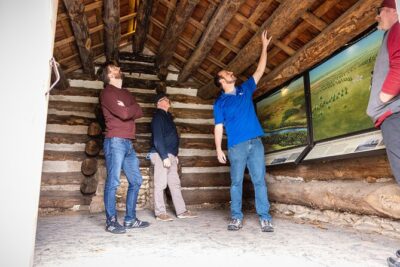
Driving Tour of Valley Forge National Park from Philadelphia
Read our review →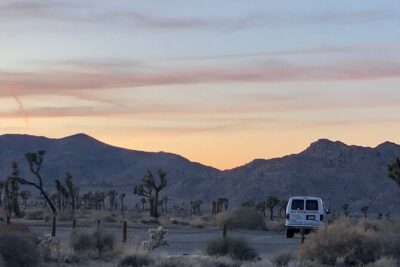
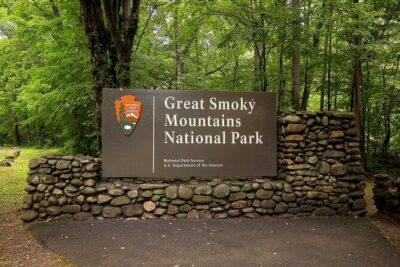
Great Smoky Mountains National Park Self-Guided Driving Tour
Read our review →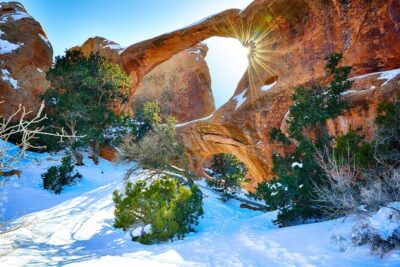
Browse the lists this tour appears in