REVIEW · NATIONAL PARKS
Etosha National Park: Himba Village Cultural Tour
Culture begins beyond the park gates. This small-group visit takes you about 40 kilometers from Etosha’s Anderson Gate to a traditional Himba village, where a local guide explains daily life, cattle, family customs, spiritual practices, and the famous red-ochre beauty rituals. I like the direct contact with Himba culture, and I like that your visit can support the community through village fees and handmade purchases.
The two main cautions are the unclear timing and a possible extra entrance charge. The advertised duration is 150 minutes, but the schedule also lists about 1.5 hours of driving plus two hours in the village. One recent booking account also reported paying 300 NAD per person at the village, despite the activity information saying admission is included. Confirm both points before you set out.
Key points to know before you go
- The tour starts only at Etosha’s southern entrance: Meet at Anderson Gate or at a lodge within 30 kilometers outside the gate.
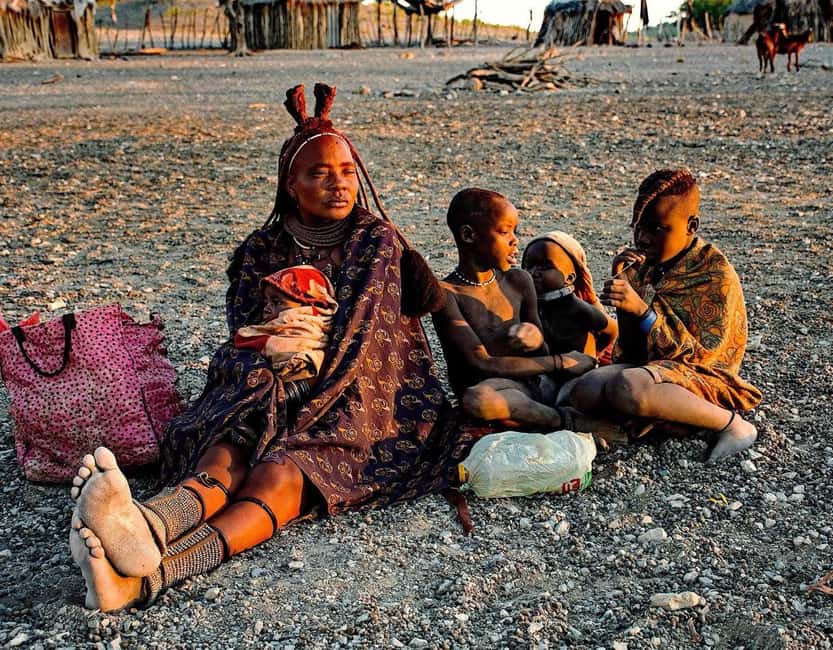
- You visit a traditional Himba village: Expect mud huts, open courtyards, cattle kraals, craft demonstrations, and explanations of family and spiritual life.
- The group is limited to six people: That makes questions easier and keeps the visit more personal.
- Transport is by jeep or SUV: The journey to the village takes about 1.5 hours according to the schedule, so confirm the total timing.
- Traditional music may be seasonal: Dance, singing, jewelry-making, pottery, and weaving demonstrations are possible, but not guaranteed on every departure.
- The price is $64 per person: Transportation, a local guide, and village admission are described as included, but confirm whether the 300 NAD fee applies.
Why this Himba visit is worth adding near Etosha
Etosha is famous for wildlife, but Namibia is not only about lions, elephants, and water holes. This visit gives you a chance to learn about the people who live in the wider Kunene Region and maintain customs tied closely to cattle, land, family, and craftwork.
I especially like the setting of the visit. The village is not presented as a museum display with glass cases and labels. You walk through a working community, seeing mud huts called ovahimba, open gathering areas, and cattle kraals. Those details help you understand how daily life is organized.
The local guide is central to the quality of the outing. English is the tour language, and the guide explains the meaning behind what you see. Several parts of the visit depend on asking questions, so do not be shy. Ask about marriage customs, family roles, cattle, the use of red ochre, and the way spiritual beliefs shape village life.
I also like the small group size. With no more than six people, you have a better chance to hear the guide and ask questions without turning the visit into a noisy procession. One French booking account gave special praise to an attentive guide who stayed available for questions throughout the visit. That is exactly the kind of guide you want here.
Still, you should arrive with sensible expectations. A short cultural tour cannot explain every part of Himba life. The visit gives you an introduction, not a complete study of the community. The quality may also depend on the guide, the season, and which activities are taking place that day.
More Heritage Trips in the world:
- 2-Hour Gettysburg Battlefield Guided History Bus Tour with a National Park Guide
★ 4.5 · 2,201 reviews
The ride from Anderson Gate to the village
The meeting point is Anderson Gate, the southern entrance to Etosha National Park. You may also arrange pickup from a lodge within 30 kilometers of the gate, but the activity is not offered from Etosha’s other entrances.
Transport is provided in a jeep or SUV. The schedule gives approximately 1.5 hours for the drive to the village and back, although the listed timing is not fully consistent with the stated 150-minute duration. If you are planning a game drive, a park transfer, or a lodge checkout around this activity, ask for the exact departure and return times.
The drive is part of the practical cost of the tour. You are not simply paying for a brief village stop. Your fee also covers getting there, returning to the gate area, and having a guide explain the visit in English.
Bring water, sunscreen, and a hat. Namibia’s sun can be hard on you, especially when you are walking around an open village with little shade. Comfortable shoes matter more than stylish ones, since the tour includes a walk through the community.
Food and drinks are not included. Pack your own supplies before leaving your lodge. There is no promise of a meal stop, so do not assume you can buy lunch during the outing.
Walking through ovahimba homes and courtyards
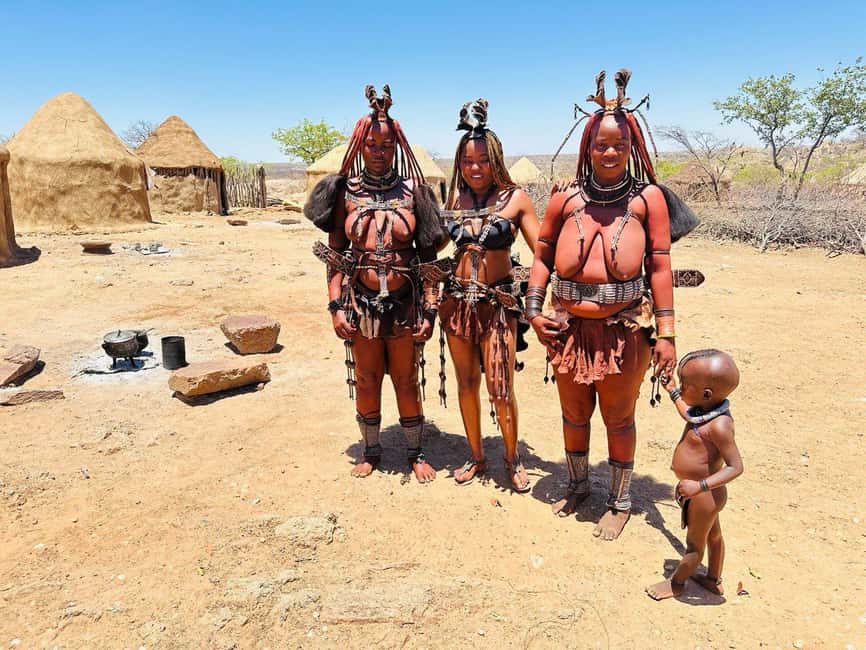
The village visit is the heart of the activity. You walk around traditional mud huts, open courtyards, meeting places, and cattle kraals. The guide uses these spaces to explain how the village works and why cattle are so important to Himba families.
The setting helps make abstract information easier to understand. Instead of only hearing that cattle matter, you see the kraal as part of the village structure. Instead of hearing that family life is communal, you see how courtyards and central meeting areas bring people together.
You may learn about animal husbandry, agriculture, and craftsmanship. These are not presented as separate tourist topics. They are connected parts of daily life, shaped by the local environment and the community’s long-held customs.
The tour also introduces Himba social structure and belief systems. Expect discussion of spiritual practices, marriage customs, and the community’s connection to the land. The exact depth will depend on the guide and the questions you ask.
This is a place where respectful behavior matters. Ask before taking close-up photographs, listen when the guide explains local customs, and remember that the people you meet are not costumed performers. A cultural visit works best when you treat it as an exchange rather than a photo stop.
Red ochre, butter, clothing, and personal style
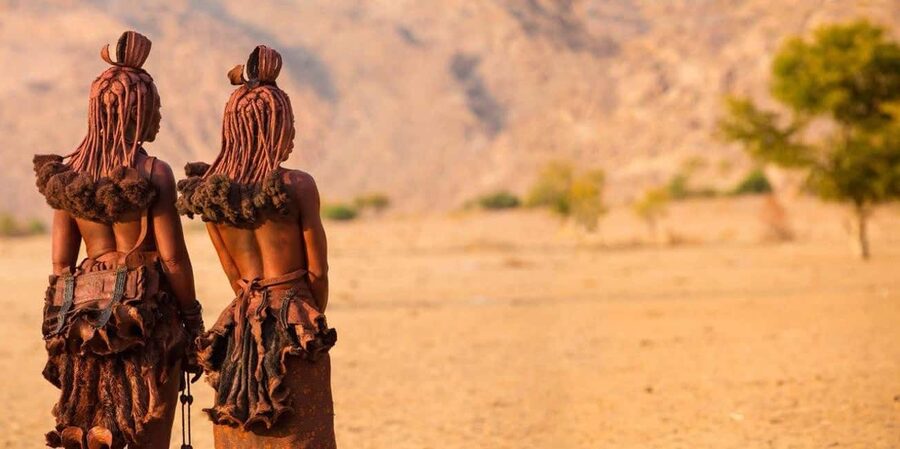
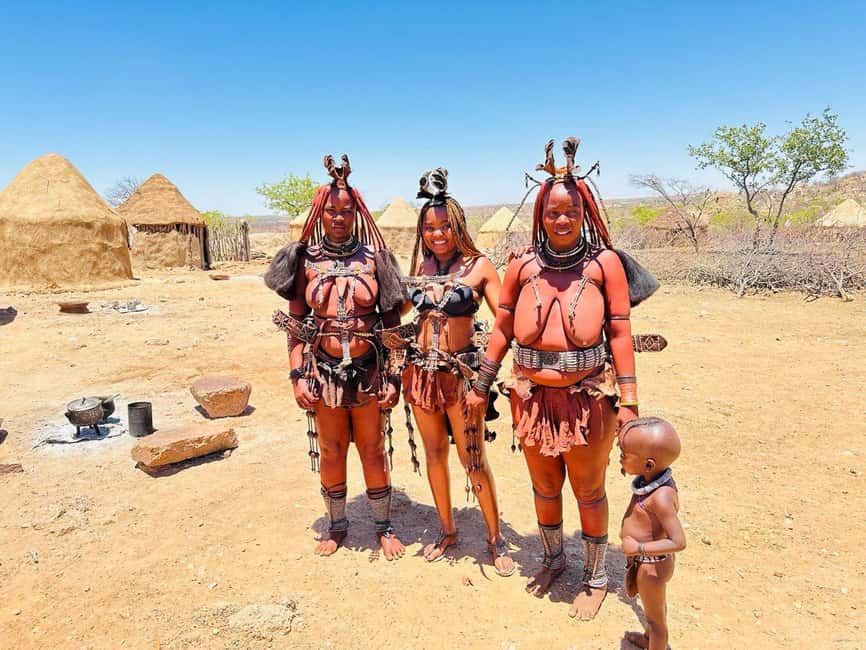
The Himba are widely recognized for the red ochre applied to skin and hair. During the visit, the guide explains the beauty rituals involving ochre and butter, along with the meaning and practice behind this distinctive appearance.
This is one of the most visually memorable parts of the tour, but it deserves more than a quick photograph. Listen to the explanation and notice how personal presentation connects with identity and tradition. The red color, hairstyles, jewelry, and clothing are not random decoration.
Photography is allowed as an opportunity, and the scenery provides a striking background. Still, your camera should come second to courtesy. Ask permission before photographing individuals, particularly children, and follow the guide’s instructions.
One description of the experience presents photography as a major highlight. That is fair, but I would not book this tour only for dramatic pictures. The strongest value comes from understanding what you are seeing. Without that context, the visit risks becoming a series of attractive images without much meaning.
A few more park trips around the world worth a look
- Miami: Everglades National Park Airboat Tour & Wildlife Show
★ 4.5 · 7,296 reviews - Chiang Mai: Doi Inthanon National Park Eco-Friendly Tour
★ 4.6 · 6,667 reviews - Tenerife: Teide National Park Sunset & Stargazing Tour
★ 4.2 · 3,812 reviews - Discover Rocky Mountain National Park
★ 5.0 · 3,419 reviews
Dance, music, and handmade crafts
Depending on the season, you might see traditional Himba dance and music. These performances can add energy to the visit, but they are not guaranteed every time. Ask before booking if dance is essential to your plans.
You may also see demonstrations of jewelry-making, pottery, or weaving. These crafts show how practical skills are passed between generations. They also create a direct way for you to support the village.
A small arts and crafts market forms part of the visit. Purchasing handmade goods is optional, but it can make your money work more directly in the community. Ask the guide which items are locally made and how much they cost before buying.
The buying experience may feel different from shopping in a city store. Take your time, be polite, and do not treat bargaining as a contest. The point is to support local makers while taking home something connected to the visit.
One recent account praised the activity as a genuine look at everyday Himba life, while another felt that parts of the village presentation seemed staged for tourists. Both reactions are possible in this type of visit. A scheduled dance or craft demonstration is arranged for visitors, yet that does not automatically make it meaningless. The useful question is whether the guide gives you honest context and whether you approach the activity respectfully.
What the $64 price really covers
At $64 per person, the outing is not the cheapest add-on near Etosha. Its value depends on how much you want cultural context alongside wildlife viewing.
The price includes transportation, a local English-speaking guide, and village entrance according to the stated activity details. It also includes the chance to buy handmade goods directly from the community, though purchases are extra.
That price is easier to justify for a small group of six or fewer. A private or nearly private conversation with the guide can be far more useful than a large bus visit where questions are difficult. The long drive also means that transport is a meaningful part of what you are paying for.
However, you should verify the village fee before booking. One recent account reported an additional charge of 300 NAD per person and said the fee had not been clear in advance. That conflicts with the information saying entrance is included. This is the single most important price question to settle with Yavola Tours and Transfer.
Meals and drinks are not included. Add the cost of your own water and food, plus any craft purchases, when you work out the full budget.
The activity offers free cancellation up to 24 hours before departure and allows you to reserve now and pay later. Those terms are useful if your Etosha plans may change, but they do not remove the need to confirm timing and admission costs.
Who should choose this activity
I would recommend this tour to you if you want a compact cultural visit near Etosha and are interested in learning how Himba communities organize daily life. It suits people who enjoy asking questions, listening to local explanations, and seeing traditional homes and crafts in person.
The small group makes it a good fit for couples, families with older children, and solo visitors who prefer a quieter setting. It also works well if your Etosha schedule leaves time for an outing beyond wildlife viewing.
You may want to skip it if your main goal is an all-day safari. The drive takes a significant share of the schedule, and the village visit is not designed as a wildlife activity. You should also think twice if you dislike arranged cultural demonstrations or feel uncomfortable taking part in a visit where some activities may be presented for tourists.
The tour is not suitable for wheelchair users or people with mobility impairments. You will need to walk through the village, and comfortable shoes are specifically recommended.
Practical tips for a respectful visit
Pack water, food, sunscreen, a hat, and a camera. Wear walking shoes that you do not mind using on uneven ground.
Before departure, confirm three things: the exact pickup time, the actual return time, and whether the 300 NAD village fee is included. The advertised schedule has enough timing uncertainty that this matters if you are connecting with another activity.
Keep your camera ready, but do not let it control the visit. Look first, listen to the explanation, and ask permission before photographing people.
Respect the community’s customs and follow the guide’s instructions. Fireworks and explosive substances are not allowed, and electric wheelchairs cannot be accommodated.
Should you book the Himba village tour?
Book it if you want a small-group cultural encounter near southern Etosha, especially one that includes a local guide, traditional homes, craftwork, and a chance to support village makers. The strongest praise centers on attentive guiding and the feeling of seeing everyday Himba life rather than a simple staged show.
Book with caution if your schedule is tight or if a clear all-inclusive price is essential. Confirm the duration and entrance fee in writing, since the 150-minute total conflicts with the separate transport and village timings, and one booking account reported a 300 NAD charge.
For the right visitor, this is a worthwhile change of pace from game drives. Just bring patience, an open mind, and enough water.
FAQ
Where does the Himba village tour start?
It starts at Anderson Gate, the southern entrance to Etosha National Park. Pickup is also available from lodges within 30 kilometers of Anderson Gate, outside the park.
Is the tour available from every Etosha entrance?
No. This activity is conducted only from Etosha’s southern entrance, Anderson Gate.
How long does the activity last?
The stated duration is 150 minutes. The schedule also lists about 1.5 hours of jeep or SUV transport and two hours at the village, so confirm the exact timing before booking.
What is included in the price?
Transportation, a local English-speaking guide, and village entrance are stated as included. Because one recent booking account reported a separate 300 NAD entrance charge, confirm this point before departure.
How large is the group?
The group is limited to six participants.
Is transportation provided?
Yes. Transport is provided by jeep or SUV from Anderson Gate or an eligible nearby lodge.
Are meals and drinks included?
No. You need to bring your own food and drinks.
Can I take photographs?
You should bring a camera, and photography is described as an opportunity during the visit. Ask permission before photographing people and respect the guide’s instructions.
Is the tour suitable for wheelchair users?
No. The activity is not suitable for wheelchair users or people with mobility impairments. Comfortable walking shoes are recommended.
Just added around the world
- From Galway: Connemara, Kylemore Abbey or National Park Tour★ 4.7 · 7 reviews
- From Flores: Tikal National Park All Inclusive★ 5.0 · 5 reviews
- From Flores: Tikal National Park Private Day Trip with Lunch★ 5.0 · 2 reviews
- From Flagstaff: Grand Canyon National Park Tour★ 4.9 · 106 reviews
- From Ella: Udawalawe National Park Safari Tour★ 5.0 · 12 reviews
- From Ella – Yala National Park Leopard Safari Tour★ 3.8 · 5 reviews
- From Diani or Mombasa: Tsavo East National Park Day Trip★ 5.0 · 4 reviews
- From Ella: All Inclusive Udawalawe National Park Safari★ 4.8 · 19 reviews
Tours, compared.

Miami: Everglades National Park Airboat Tour & Wildlife Show
Read our review →
Chiang Mai: Doi Inthanon National Park Eco-Friendly Tour
Read our review →
Clear Kayak Tour of Shell Key Preserve and Tampa Bay Area
Read our review →
Tenerife: Teide National Park Sunset & Stargazing Tour
Read our review →
Yosemite Highlights & Giant Sequoias Day Tour from San Francisco
Read our review →
Grand Canyon National Park South Rim Bus Tour from Las Vegas
Read our review →