REVIEW · AUSTRALIA
Hobart: Waterfalls, Wilderness & Wildlife – Active Day Tour
Tasmania packs a lot into one day. This full-day outing links Mt Field National Park, several waterfalls, Bonorong Wildlife Sanctuary and kunanyi/Mt Wellington, giving you a broad look at the natural world around Hobart without arranging separate trips.
I like the combination of a real forest walk and close views of Tasmanian animals. I also like that the guides add local facts and keep the day moving. The main caution is simple: this is more active than the cheerful word walk may suggest, with a long forest circuit and a steep section of roughly 400 steps.
You leave Hobart at 7:30 a.m. and return to the same meeting point after about 12 hours. At $132.69 per person, the price is fair if you want transport, park entry, wildlife sanctuary admission and guided walks bundled together. It is less appealing if you prefer slow, independent sightseeing or dislike full days with several stops.
Key points to know before booking
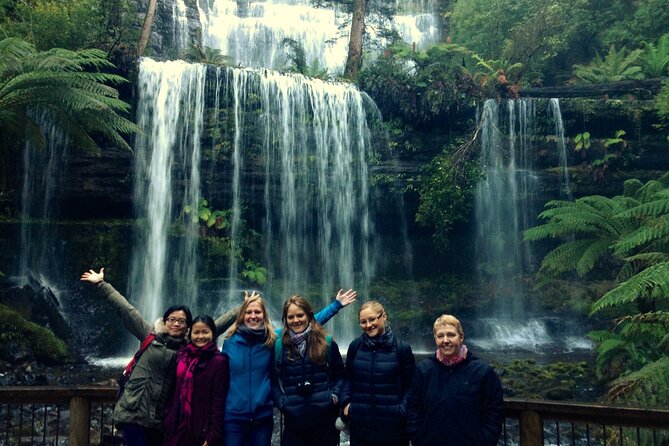
- Russell Falls is only the beginning: The famous three-tiered waterfall leads into a longer forest route toward Horseshoe Falls and the Tall Trees Walk.
- The walking demands real energy: The Three Falls Circuit includes stairs, with one uphill section described as about 400 steps.
- Mt Field offers variety in one park: Expect rainforest, waterfalls and giant swamp gums rather than one single viewpoint.
- Bonorong adds the animal encounters: You may see Tasmanian devils, wombats, echidnas and kangaroos, though wildlife can be shy.
- The group stays relatively small: The maximum is 20 people, with a professional guide and interpretive walks included.
- kunanyi/Mt Wellington finishes the day: You get about 30 minutes at the summit for broad views across southern Tasmania.
Why this day trip works from Hobart
Hobart is surrounded by excellent nature, but the best places are spread out. Mt Field National Park is about 1.5 hours from the city, Bonorong is in a different direction, and kunanyi/Mt Wellington rises directly behind Hobart. Combining all three makes this a useful first full day if you want to understand the region quickly.
The route is carefully packed. You spend the morning in forest, the middle part with native animals, and the final part high above the city. That changing scenery keeps the day interesting, although it also means you should not expect long, unhurried stops.
Your guide is an important part of the experience. Several guides have received praise, including Hannah, Carl, Paris and Ben. The most useful comments describe guides who explain Hobart, Tasmania’s forests, Indigenous culture and local wildlife while keeping the schedule under control. This matters on a day with several moving parts.
The group limit of 20 is a practical advantage. It is not a private tour, but it should feel more manageable than a large coach outing. You will still need to follow the group’s timing, particularly at Mt Field, where the walking portion is the heart of the day.
More National Park Day Trips in Australia
- Port Arthur Full-day Guided Tour with Harbour Cruise and Tasman National Park
★ 4.5 · 585 reviews - Wineglass Bay & Freycinet National Park Day Trip from Hobart
★ 4.7 · 249 reviews - Hobart: Wineglass Bay & Freycinet National Park – Active Day Tour
★ 4.5 · 142 reviews
Mt Field National Park: rainforest before breakfast has worn off
The first major stop is Mt Field National Park, one of Tasmania’s oldest national parks. The park brings together lush temperate rainforest, alpine moorland and waterfalls, so you get more variety than the short drive from Hobart might suggest.
The forest section is the reason to choose this tour over a simple waterfall photo stop. The track passes through mixed forest and tall trees, with the sound of water running through the park. Small pademelons may be around the paths, adding a pleasing bit of wildlife interest before you reach Bonorong.
The entire Mt Field portion is listed at about five hours, with the separate waterfall and Tall Trees sections taking up part of that time. That does not mean you walk continuously for five hours, but it does mean the park receives a serious share of the day.
Bring water and wear shoes suited to uneven forest tracks and stairs. The route is described as an easy and enjoyable walk in places, but that should not be mistaken for a flat stroll. One visitor compared the final climb to a straight uphill run of about 400 steps and advised saving energy. That is the advice I would follow.
Russell Falls: Tasmania’s classic waterfall stop
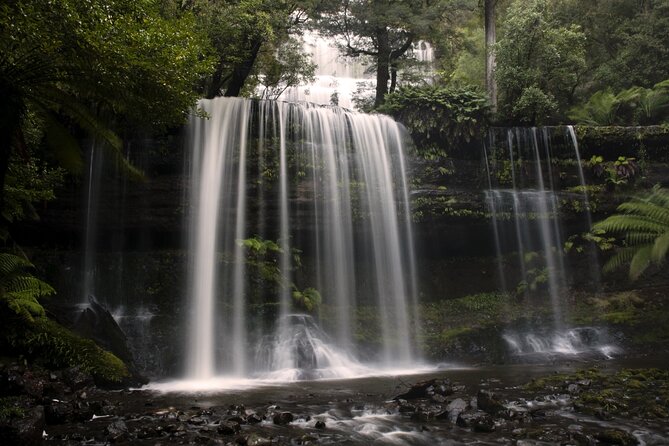
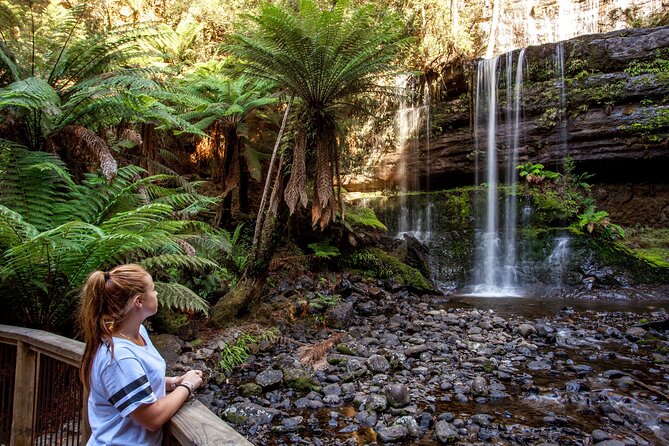
Russell Falls is the park’s best-known waterfall, dropping in three levels through the forest. The walk to it takes about 45 minutes and is included in the park visit, with no extra admission charge.
This is the gentlest part of the walking route and a good introduction to the area. The path through mixed forest and temperate rainforest lets you enjoy the trees as much as the waterfall itself. The setting feels calm and shaded, especially compared with the exposed summit later in the day.
You will want time for photographs, but do not stop your attention at the first viewpoint. The forest gives the waterfall its character. The water, tree trunks and damp track all work together, and the guide can help explain what you are seeing rather than leaving you with a quick picture and a name.
The waterfall’s appearance can change with weather and recent rain. The tour requires suitable weather, and poor conditions may lead to a different date or a full refund. That policy is useful here because wet tracks and mountain roads can affect the day.
Horseshoe Falls and the stair test
From Russell Falls, the route continues to Horseshoe Falls. This section takes about 30 minutes and includes stairs. Horseshoe Falls is tucked farther into the forest and may appeal to you even more than the famous first waterfall because the setting feels quieter and less expected.
The walk is short in clock time but more demanding in effort. The uphill steps are the part to take seriously. If you have a reasonable level of fitness, you will likely find the route manageable at the group’s pace, but you should not book this day expecting only level paths.
A few people found the stairs harder than the tour description suggested. That is a useful warning, especially for anyone with limited stamina or knee problems. The tour information says most people can participate, but the active label is meaningful here.
I would treat the waterfall walk as the physical center of the day. Pace yourself early, carry water, and avoid spending all your energy rushing to the first viewpoint. Your reward is not just another waterfall, but a more complete experience of Mt Field’s forest.
More Waterfall and Lakes Park Tours in Australia
- Mt Field National Park and Russell Falls from Hobart
★ 5.0 · 49 reviews - From Hobart: Mt. Field National Park and Russell Falls
★ 4.6 · 41 reviews - Mt Field National Park and Russell Falls with Bonorong Wildlife
★ 3.5 · 2 reviews - From Darwin: Litchfield National Park & Waterfalls Day Trip
★ 4.7 · 158 reviews
Tall Trees Walk and the Three Falls Circuit
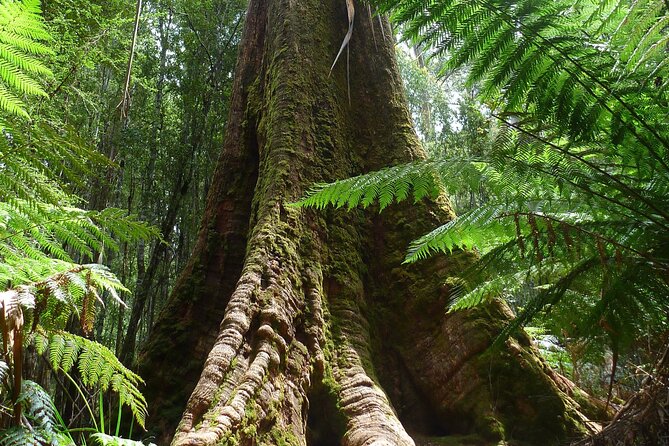
The route continues along the Three Falls Circuit to the section known as the Tall Trees Track. Here, giant swamp gums rise as high as about 80 metres. They are described as the world’s tallest flowering plants, a detail that gives this section real scale.
The Tall Trees Walk changes the mood of the outing. Russell and Horseshoe Falls focus your attention on water and rock, while the giant gums make you look straight up. The trees are the kind of feature that photographs often fail to capture, since their height is difficult to judge on a small screen.
This section lasts about an hour and is included with the guided interpretive walk. Your guide can add context about the forest and the wider area, which is useful when the scenery begins to look like a wall of trunks and ferns.
The full forest route is the reason I would not recommend sandals or casual city shoes. The tour is active, and the combination of steps, forest tracks and time on your feet can add up. If you like walking and want more than a roadside lookout, this is the strongest part of the day.
Bonorong Wildlife Sanctuary: Tasmanian animals up close
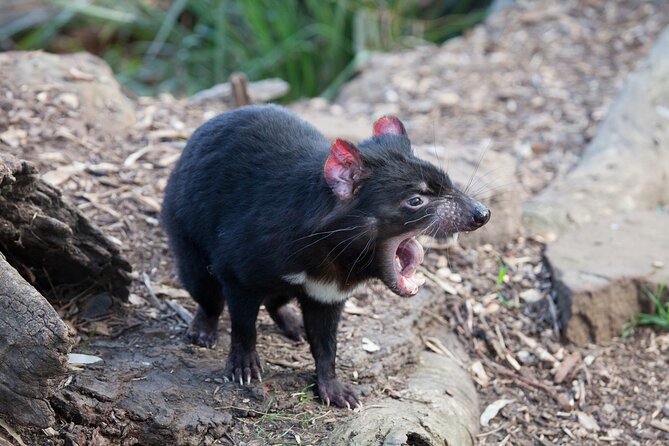
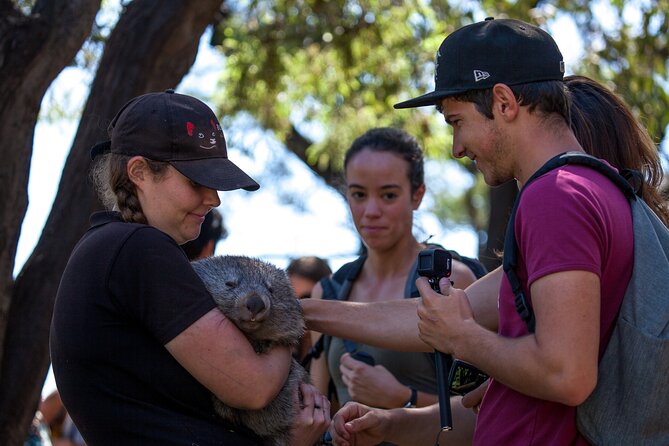
After the national park, the tour moves to Bonorong Wildlife Sanctuary for about two and a half hours. Admission is included, as is an informative wildlife session led by sanctuary staff.
This stop gives the day a different focus. Instead of looking for animals in the forest, you have a better chance to see species associated with Tasmania, including Tasmanian devils, wombats and echidnas. Kangaroos are also part of the experience, and one account specifically enjoyed feeding them.
Bonorong is especially useful if your Tasmania visit is short. Seeing a Tasmanian devil in the wild is never guaranteed, and forest animals may stay hidden. At the sanctuary, you have a more dependable opportunity to learn about the island’s rare and precious fauna.
Still, animal behavior cannot be scheduled. On some days, animals may be hiding, which can make the stop feel less lively than expected. That is not a flaw in the tour, but you should arrive with realistic expectations. Bonorong offers access and education, not a promise that every animal will perform for you.
The two-and-a-half-hour visit is long enough to feel worthwhile rather than rushed. It also provides a useful break from the forest walking before the final mountain drive.
kunanyi/Mt Wellington: the final view over Hobart
The drive from Bonorong to kunanyi/Mt Wellington takes about 60 minutes. The summit reaches 1,271 metres above sea level, and you get about 30 minutes at the top.
This final stop gives you the wide view that the forest cannot provide. From the mountain, you can look across Hobart and southern Tasmania, linking together the places you have visited during the day. The contrast is pleasing: close trees in the morning, animals in the afternoon, and a broad view at the end.
Weather can change quickly at mountain summits. You may find cool air, cloud or limited visibility even when Hobart looks pleasant below. The tour’s weather requirement is therefore practical, not just administrative.
Thirty minutes is enough for photos and a quick look around, but not for a long summit walk. Think of Mt Wellington as a closing viewpoint rather than another hiking stop. If the air is clear, it can be the most dramatic visual finish to the day. If clouds cover the summit, the earlier forest and wildlife stops still carry the experience.
What is included, and what you must arrange

The tour includes national park entry, wildlife sanctuary entry, a professional guide, interpretive walks and transport in a small group. You do not need to budget separately for the two main admission charges.
Lunch is not included. The group stops in a regional town at a local bakery so you can buy lunch and snacks for the day. This arrangement gives you some choice, but you should plan to purchase food during that stop rather than expecting a provided meal.
The meeting point is 20 Davey Street in Hobart, with a 7:30 a.m. start and a return to the same location. A mobile ticket is accepted, and confirmation is provided when you book.
The day lasts about 12 hours, so your return time may feel late depending on the day’s conditions and traffic. The benefit is coverage: you see several major natural attractions without renting a car or working out the route yourself.
Is $132.69 good value?
At $132.69, I consider this reasonable for a full-day guided trip with national park entry, wildlife sanctuary entry and transport between widely separated sites. The cost makes more sense if you would otherwise pay for a car, fuel, parking and two separate admissions.
The strongest value comes from the range of experiences. You are not paying for one attraction with a short transfer. You get rainforest walking, two waterfalls, giant trees, a wildlife sanctuary and a mountain summit in one organized day.
The tradeoff is time. Each stop has a set window, and you cannot linger at Mt Field or Bonorong as long as you might on a self-drive visit. The tour also asks you to accept the group’s rhythm, including the bakery stop and the roughly 60-minute transfer to Mt Wellington.
For a first visit to Hobart, I think the price is justified. For a repeat visit, you may prefer to focus on one area and spend longer walking there.
Who should book this active Hobart tour?
I would recommend it to you if you want a strong first look at Tasmania’s natural attractions and prefer having the route handled for you. It suits people who enjoy walking, wildlife, scenic drives and guides who explain what they are seeing.
You should be reasonably comfortable with stairs and several hours on your feet. The Japanese-language feedback supplied for the tour described the hiking as tiring even for a younger person, though the same account praised the guide’s patience, animal encounters and overall value.
This is also a good choice if you want Tasmanian devils, wombats or echidnas on your list. Bonorong improves your chances of seeing them, while the forest section gives you a more natural setting for the day’s first wildlife moments.
I would choose something else if you want a relaxed sightseeing day, a long lunch, or a tour built around one main attraction. The waterfalls are beautiful, but the steps are real, and the schedule covers a lot of ground.
The tour has a 4.9 rating from 22 reviews and a 100 percent recommendation rate. That is a small sample, but it matches the main strengths I would expect here: good guides, strong time management, excellent scenery and a wide mix of experiences.
Cancellation and weather details
You can cancel up to 24 hours before the start time for a full refund. Changes or cancellations inside that 24-hour window are not accepted for a refund.
The tour needs suitable weather and a minimum number of participants. If the operator cancels for either reason, you are offered another date or experience, or a full refund.
Final verdict: book it for variety, skip it for a slow day
Book this tour if you want to cover Hobart’s major natural highlights in one ambitious day. The best reasons are the forest circuit at Mt Field, the chance to see distinctive Tasmanian animals at Bonorong, and the final view from kunanyi/Mt Wellington.
Go in prepared for stairs, a long schedule and a lunch stop where you buy your own food. If you pace yourself and accept that wildlife can be unpredictable, the $132.69 price buys a useful, well-organized introduction to southern Tasmania.
FAQ
How long does the Hobart Waterfalls, Wilderness and Wildlife tour last?
The tour lasts approximately 12 hours, including transport between Hobart, Mt Field National Park, Bonorong Wildlife Sanctuary and kunanyi/Mt Wellington.
What time does the tour start?
The tour starts at 7:30 a.m. from 20 Davey Street, Hobart, Tasmania 7000.
Where does the tour finish?
The activity ends back at the same meeting point on Davey Street in Hobart.
Is lunch included?
No. The group stops at a local bakery in a regional town so you can purchase lunch and snacks for the tour day.
Are admission fees included?
Yes. The national park entrance fee and Bonorong Wildlife Sanctuary entrance fee are included.
How difficult is the walking?
The tour includes forest tracks, stairs and an uphill section of about 400 steps. It is suitable for most participants according to the tour information, but you should have a reasonable level of fitness.
How many people can join the tour?
The maximum group size is 20 people.
Will I see Tasmanian devils and other native animals?
Bonorong Wildlife Sanctuary provides the chance to see Tasmanian devils, wombats, echidnas and kangaroos. Animals can be hiding, so sightings and activity are not guaranteed.
What happens if bad weather cancels the tour?
If poor weather causes the tour to be canceled, you are offered a different date or a full refund.
More Waterfall and Lakes Park Tours in Hobart
- From Split: Plitvice Lakes National Park Guided Tour
★ 5.0 · 3,002 reviews - From Split: Plitvice Lakes National Park Guided Tour
★ 5.0 · 2,355 reviews - Plitvice Lakes National Park Guided Day Tour from Split
★ 5.0 · 1,948 reviews - Doi Inthanon Waterfall and Royal Project Chiang Mai
★ 5.0 · 1,735 reviews
More Wildlife and Elephant Encounters in Australia
- Tasmania: Wilderness and Wildlife Guided 6-Day Tour
★ 4.6 · 60 reviews - Hobart: Maria Island National Park – Nature & Wildlife Adventure
★ 5.0 · 36 reviews - Hobart: Mt Field National Park & Wildlife Shore Excursion
★ 4.0 · 6 reviews - Tasmania: 6-Day Comfort Tour for Wilderness and Wildlife
★ 5.0 · 5 reviews
Just added around Hobart
- Mt Field National Park and Russell Falls with Bonorong Wildlife★ 3.5 · 2 reviews
- Mt Field National Park and Russell Falls from Hobart★ 5.0 · 49 reviews
- Hobart: Maria Island National Park – Nature & Wildlife Adventure★ 5.0 · 36 reviews
- From Hobart: Gordon Dam and Lake Pedder Wilderness Day Tour★ 5.0 · 8 reviews
- Tasmania: Wilderness and Wildlife Guided 6-Day Tour★ 4.6 · 60 reviews
- Tasmania: 6-Day Comfort Tour for Wilderness and Wildlife★ 5.0 · 5 reviews
- Hobart: Fly & Cruise in Southwest Wilderness Area with Lunch★ 4.3 · 5 reviews
- Hobart: Mt Field National Park & Wildlife Shore Excursion★ 4.0 · 6 reviews
Waterfall and Lakes Park Tours, compared.
From Split: Plitvice Lakes National Park Guided Tour
Read our review →From Split: Plitvice Lakes National Park Guided Tour
Read our review →
Plitvice Lakes National Park Guided Day Tour from Split
Read our review →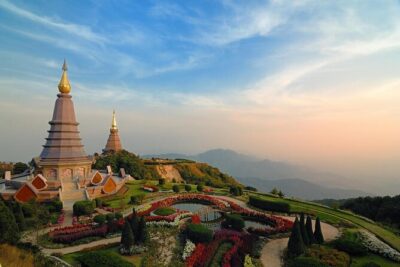
Doi Inthanon Waterfall and Royal Project Chiang Mai
Read our review →
From Split: Krka Waterfalls Trip with Boat Cruise and Swimming
Read our review →
Waterfall, Lagoon and Old Village in Peneda-Gerês National Park
Read our review →