
REVIEW · USA
Indiana Dunes National Park Self-Guided Audio Tour
Indiana’s dunes tell a much bigger story. This self-guided drive connects quiet bird trails, Lake Michigan beaches, old farmsteads, Indigenous history, and the separate Indiana Dunes State Park. I like the automatic GPS narration, which lets you keep your eyes on the road, and the one-price-per-car setup, which can be excellent value for a group. The main caution is simple: you need to download the tour carefully before leaving, since one user was routed an hour out of the way when the app failed.
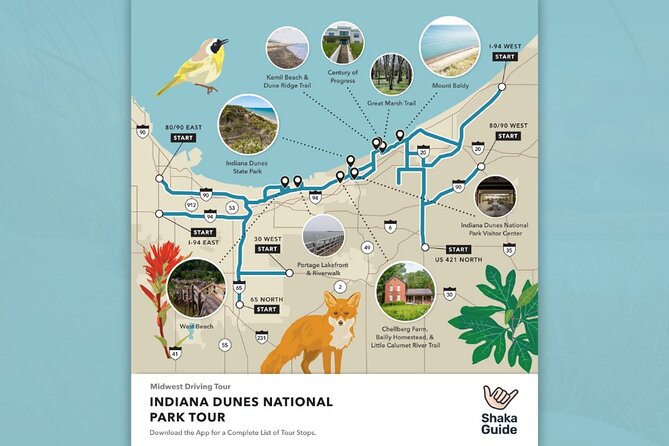
The route covers a lot of ground, from the Heron Rookery west of the park to the Paul H. Douglas Center near Gary. You can follow the full 12-hour plan, spread it across several days, or skip stops that do not fit your schedule. That freedom is the point, but you still need to watch parking, seasonal facilities, trail conditions, and the separate fee at Indiana Dunes State Park.
Key things to know before you go
- One tour covers up to 15 people: At $15.99 per group, the price is especially attractive for families or friends sharing one vehicle.
- The route is far more than beaches: Expect birds, wetlands, dunes, historic homes, a cemetery, a Swedish farm, prairie, and old industrial-era stories.
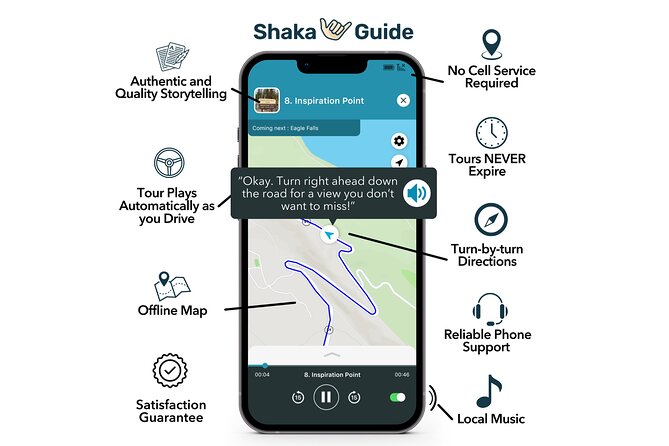
- Download on strong Wi-Fi: The audio, map, and GPS directions work offline after the tour has been downloaded.
- The State Park costs extra: Indiana Dunes National Park and Indiana Dunes State Park are separate places with separate management and fees.
- Some hikes need real time: Glenwood Dunes, Cowles Bog, Tolleston Dunes, and the Dune Succession Trail are not quick roadside stops.
- Swimming has no lifeguard coverage: Rip currents and rough waves can make Lake Michigan dangerous at every beach listed here.
How the Shaka Guide tour works on the road
This is a private audio tour for your vehicle, not a scheduled group excursion. You book it, receive a confirmation and redemption code, download the Shaka Guide app, and save the tour before setting out. Once launched from the My Stuff tab, the app uses GPS to trigger stories, directions, music, and stop information as you drive.
That format works well at Indiana Dunes because the park is spread out. You are not simply walking from one attraction to the next. You are crossing roads, beach access points, wetlands, old communities, and two different park systems. A guide in your car can explain why one ridge is 13,000 years old, why another dune is still moving, and why the area helped give birth to the science of ecology.
The tour begins at 5648 US-6 in Westville and ends near the Paul H. Douglas Center in Gary. New Buffalo and Sherwood Forest Paintball are also listed as alternate starting points. The advertised duration is about 12 hours, but that is better understood as a full-day route with many optional stops, not 12 hours of continuous narration.
The app is designed to pause and resume, and tours do not expire. That is useful if you want to return for a second day, wait for better weather, or save the longer trails for another visit. Still, test the app before you leave your lodging. The audio is only as helpful as the route guidance, and one failed outing led to an hour-long detour before the user abandoned the app and received a refund.
More Canyon and Desert Park Tours in the USA
- Grand Canyon National Park South Rim Bus Tour from Las Vegas
★ 4.5 · 3,071 reviews - Bryce Canyon & Zion National Park from Las Vegas with Lunch, WiFi
★ 4.5 · 2,515 reviews - Grand Canyon National Park South from Las Vegas with Lunch, WiFi
★ 5.0 · 1,966 reviews
Heron Rookery and Mount Baldy reveal two sides of the dunes
Start at the Heron Rookery Trail Auxiliary West Lot for an easy, peaceful 3.3-mile walk. The Great Blue Herons that once nested here have moved elsewhere, but the habitat still attracts kingfishers, warblers, red-headed woodpeckers, and yellow-bellied sapsuckers.
Spring is a particularly good time for the trail. Look for small Harbinger of Spring flowers and Yellow Trout Lilies, whose yellow blossoms can resemble banana peels. The stop is listed at about 30 minutes, though the full trail deserves longer if you want to walk the entire distance.
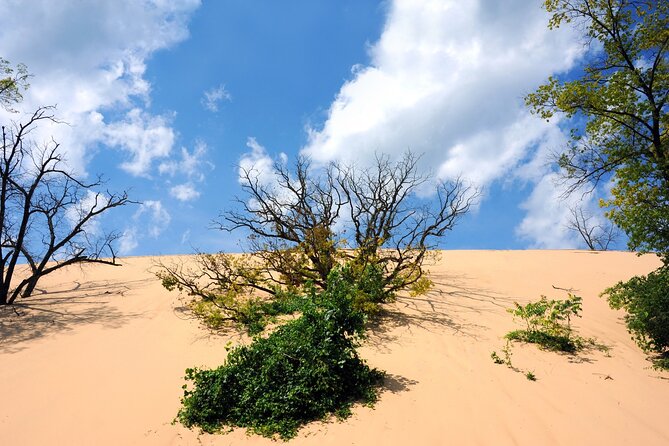
Mount Baldy gives you a very different view of the park. This huge dune rises about as high as a 12-story building and can move up to 10 feet in a year. Grass once held it in place, but repeated climbing damaged the vegetation, allowing wind to shift the sand and push the dune toward its own parking area.
You cannot simply climb straight over it to reach the beach. The route to the water is a half-mile round trip around the dune, with stairs. Treat this as a short but physical stop, and do not assume every beach access point is flat.
Central Beach, Lake View, and Kemil Beach
Central Avenue Beach has seasonal restrooms, potable water, and two picnic tables at the west end of the parking lot, up the stairs. The restrooms are wheelchair accessible, but the beach and picnic tables are not.
The park strongly asks you to stay on the beach rather than climb the dune slopes behind it. There are no lifeguards, and Lake Michigan can produce dangerous waves and rip currents. In spring and summer, watch for Bank Swallows moving in and out of their dune nests.
Lake View Beach is a shorter stop, with a seasonal note worth knowing. In spring, smelt may be visible or available for catching. These small oily fish are traditionally dusted with flour, shallow-fried, and eaten whole. That detail gives the narration a local, food-focused touch that a simple driving map would miss.
Kemil Beach is a good place to stay after dark because of its night-sky appeal and nocturnal wildlife. It has year-round restrooms and potable water, although the paved parking lot can fill quickly on summer weekends.
If you have time for one short hike here, choose the Dune Ridge Trail. It crosses forested dunes and Black Oak Savannas, with views toward the Great Marsh and Lake Michigan. This is one of the better quick walks for seeing several habitats in one outing.
Century of Progress Homes and the eastern beaches
The five Century of Progress homes are among the strangest sights on the route. They first appeared at the 1933 Chicago World’s Fair as part of the futuristic Homes of Tomorrow exhibit. After the fair, a developer bought five houses and moved them to Beverly Shores, a community named after his daughter.
The homes now belong to the National Park but are leased to private residents who maintain them. You cannot go inside during a normal visit because people live there. The annual September tour is the exception, but tickets usually sell out within an hour. Plan ahead if entering these unusual houses is important to you.
Dunbar Beach has seasonal restrooms and potable water, but its parking area can fill on summer weekends. Porter Beach, near the State Park beach, has fewer amenities but lets you park and walk about a quarter mile along the shore to the State Park.
At both beaches, swimming is at your own risk. Porter has seasonal restrooms, while Kemil has year-round facilities. These distinctions matter if you are planning a long beach day rather than a quick look at the lake.
Same corner of the map, a different park:
- Miami: Everglades National Park Airboat Tour & Wildlife Show
★ 4.5 · 7,296 reviews - Clear Kayak Tour of Shell Key Preserve and Tampa Bay Area
★ 5.0 · 5,800 reviews - Yosemite Highlights & Giant Sequoias Day Tour from San Francisco
★ 4.5 · 3,455 reviews - Discover Rocky Mountain National Park
★ 5.0 · 3,419 reviews
Trails that explain how the dunes formed
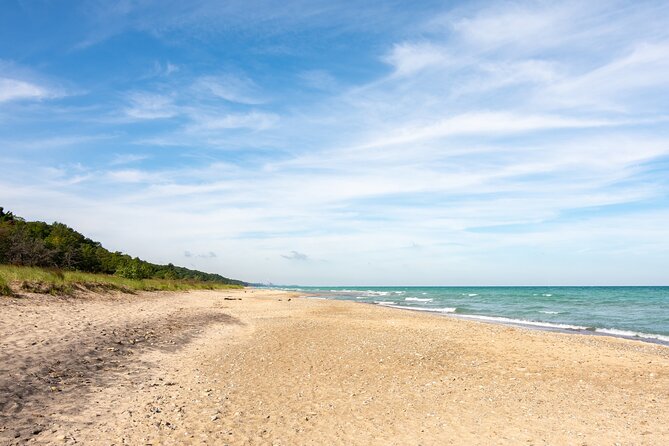
The Little Calumet River Trail is a good summer birding stop and a winter cross-country skiing area. Its best story is geological: the Calumet Dunes Ridge was once the shore of Lake Michigan. Over roughly 12,000 years, the lake receded about one and a half miles, leaving old shorelines behind.
Glenwood Dunes gives you an even older chapter. These dunes are about 13,000 years old, making them the oldest in the park. The trail system serves hikers, runners, horseback riders, and cross-country skiers, with routes ranging from less than a mile to 6.8 miles and extensions that total more than 15 miles.
Take a trail map. There are 13 junctions, and this is not the place to wander without checking your route. The one-hour estimate applies to a selected outing, not every possible trail combination.
Cowles Bog Trail is a moderate 4.7-mile walk with 202 feet of elevation gain. Expect steep climbs in loose sand and a rugged surface. The area honors ecologist Henry Cowles, whose work on how plants respond to environmental change helped establish Indiana Dunes as a birthplace of ecology.
Tolleston Dunes is another roughly three-mile walk. The 5,000-year-old dunes rise and fall along a mostly shaded route, but the trail can turn soggy after rain. Watch for prickly pear cactus, sassafras, and wild blue lupine.
The Visitor Center, Indigenous Cultural Trail, and State Park
The Indiana Dunes Visitor Center is a useful place to pause. You can see displays, watch short films, browse the bookstore, and speak with a ranger. The Indigenous Cultural Trail is especially worthwhile because it honors the Potawatomi and Miami people and shows how closely their lives were connected to the area’s wetlands, woods, prairie, and lake.
Ask a ranger about the cultural information if you want more context. This is one of the stops that adds meaning to the scenery rather than simply pointing out another overlook.
Indiana Dunes State Park is separate from the national park and requires its own entrance fee. It can get busy enough for rangers to direct traffic, and you may wait to enter during popular periods.
The State Park offers the 3-Dune hiking challenge, accessible from the Nature Center, along with a beach, a large art deco pavilion, a general store, restaurants, and a bird observatory west of the pavilion. In winter, the 100-foot Devil’s Slide provides a notable sledding hill. History fans should look for the marker on the way to the pavilion commemorating the 1780 Battle of Petit Fort.
Bailly Cemetery, Chellberg Farm, and Mnoké Prairie
The Bailly Cemetery is a short, unusual walk through the woods. A shortcut route covers less than half a mile round trip and leads to an old cemetery with an odd story about one family taking control of the burial ground and shaping it to their own wishes.
Nearby, the Bailly Homestead is a National Historic Landmark. Joseph and Marie Bailly lived here, and Joseph established a trading post in 1822. For a time, the homestead was the only stopping point between Chicago and Detroit.
The five buildings include log cabins, brick structures, and a large late-19th-century main house. Allow about 45 minutes if you want more than a quick look.
Chellberg Farm adds an immigrant and agricultural chapter. Swedish immigrants bought the land in 1869. Their first wooden farmhouse burned in 1884, and the brick replacement seen today went up the next year.
The family began making maple syrup in the 1930s. The national park still produces its own maple syrup, and the March maple syrup festival is a good seasonal event to check on the park calendar. Ranger programs may let you tour the farmhouse and feed the cows, chickens, and goats.
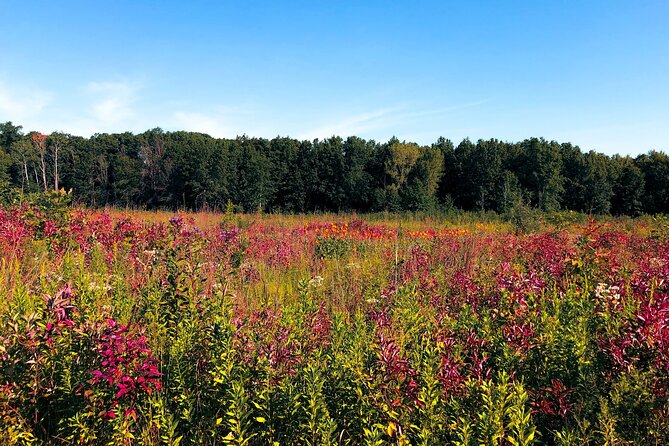
Mnoké Prairie is a restored tallgrass prairie that shows what this part of Indiana looked like before European-American settlement. It can be a good birding stop, with possible sightings of double-breasted cormorants, rock pigeons, and Cooper’s hawks.
Portage Lakefront, West Beach, and Marquette Park
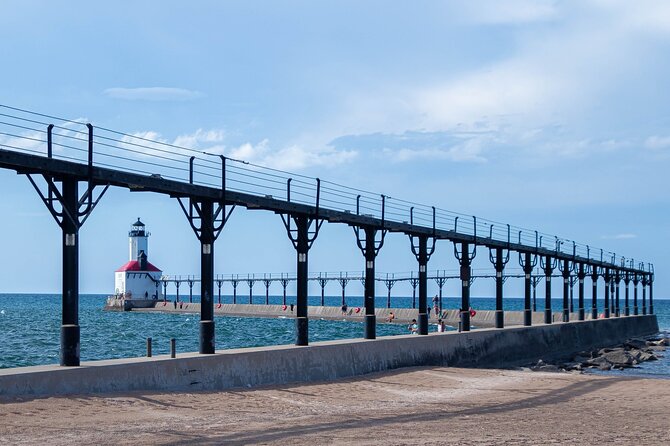
Portage Lakefront and Riverwalk combines a beach with an easy riverwalk just under a mile long. Spring and summer are good for bird observation, while winter can bring shelf ice along Lake Michigan. The pavilion has snacks, gifts, restrooms, and ranger programs.
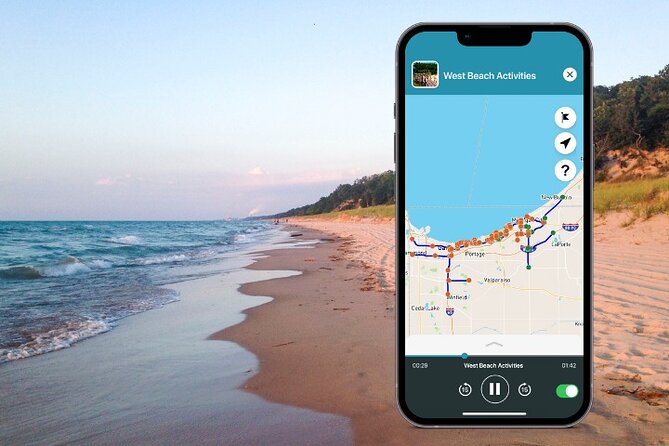
West Beach is the national park’s biggest and busiest beach. You can sunbathe, swim, search the shore, watch birds, or use the picnic area near the parking lot. There is also a designated dune-climbing area.
For a harder walk, try the Dune Succession Trail, known here as the Diana of the Dunes Dare. The one-mile route includes 270 steps to the top of Diana’s Dune. That is a serious stair climb, not a casual stroll, so bring water and allow time to recover.
Marquette Park belongs to Gary and sits outside the national park. It has a playground, concession stand, hiking trails, disc golf, and a beach. The Gary Bathing Beach Aquatorium, built in 1921, is the architectural highlight.
The Paul H. Douglas Center for Environmental Education completes the route near Miller Woods. Exhibits focus on park wildlife, and the Miller Woods Loop Trail covers less than a mile through several habitats with impressive lake views.
Price, timing, and who gets the best value
At $15.99 per group of up to 15 people, this is inexpensive if several people share one car. It costs more than simply using a free park map, but the narration adds context, directions, trail suggestions, restaurant ideas, and music. For a solo driver, the value is more modest. For a family or group, the price is easy to justify.
You still pay for parking, meals, refreshments, and any entrance fees. The State Park fee is the main extra charge called out in the route. Beach lots can fill quickly on summer weekends, so arriving early matters more than the audio price.
The tour suits people who want control. You can skip a beach, pause for lunch, return another day, or spend an hour on a trail without holding up a group. It is less suitable if you want a live guide, a fixed schedule, or a short two-hour outing.
Service animals are allowed, and most people can take part, but several trails have loose sand, stairs, steep dune climbs, or muddy sections. Central Beach’s restrooms are wheelchair accessible, while the beach and picnic tables are not.
Should you book this Indiana Dunes audio tour?
Book it if you want the park’s full story, not just a quick stop at Lake Michigan. The strongest parts are the engaging narrator, automatic GPS stories, flexible timing, and wide mix of nature and history. You can hear about herons, glaciers, Indigenous communities, Swedish farming, ecology, and futuristic fair houses in one route.
Skip it if your plan is only one beach and a short walk, or if you do not want to manage an app. Download the route on strong Wi-Fi, confirm the starting point, and keep a park map handy. With that preparation, $15.99 can turn a scattered day of dunes and beaches into a well-connected visit.
FAQ
How much does the Indiana Dunes audio tour cost?
The tour costs $15.99 per group, with up to 15 people included. It is priced per group rather than per person.
How long does the tour take?
The planned experience lasts about 12 hours. You can also pause it, skip stops, or use it across multiple days because the tour does not expire.
Does the tour work without cell service?
Yes. Download the tour, audio, and offline map using strong Wi-Fi before you leave. GPS directions and narration are designed to work without continuous Wi-Fi or mobile data.
Where does the tour start and finish?
The main start point is 5648 US-6, Westville, Indiana 46391. The route ends at the Paul H. Douglas Trailhead near N Lake Street, south of the Paul H. Douglas Center for Environmental Education in Gary.
Is Indiana Dunes State Park included in the national park?
No. Indiana Dunes State Park is a separate park and requires a separate entrance fee. The audio route includes it as one of the stops, but its admission is not included.
Are there lifeguards at the beaches?
No lifeguards are provided at the beaches described on this route. Rip currents and waves can make swimming hazardous, so you swim at your own risk.
Can I cancel for a full refund?
Yes, if you cancel at least 24 hours before the experience start time. Cancellations made less than 24 hours before the start time are not refunded.
More Audio Tours in the USA
- Arches National Park Self-Guided Driving Audio Tour
★ 4.5 · 288 reviews - Yellowstone National Park Self-Guided Driving Audio Tour
★ 4.5 · 249 reviews - Self-Guided GPS Audio E-Bike Tour Hawaii Volcanoes National Park
★ 4.5 · 131 reviews - Shenandoah National Park Self-Guided Driving Audio Tour
★ 4.5 · 109 reviews
More Self-Guided Driving and Audio Tours in the USA
- Joshua Tree National Park Self-Guided Driving Audio Tour
★ 4.5 · 762 reviews - Ultimate Acadia National Park Self-Guided Driving Audio Tour
★ 4.0 · 521 reviews - From Moab: Half-Day Arches National Park 4×4 Driving Tour
★ 4.8 · 440 reviews - Self-Guided Ebike Tours of Acadia National Park Carriage Roads
★ 5.0 · 427 reviews
Just added around the USA
- Yellowstone National Park – Lower Loop Adventure★ 5.0 · 6 reviews
- Yellowstone National Park – PRIVATE Full-Day Lower Loop Tour from Jackson Hole★ 5.0 · 35 reviews
- Yellowstone & Grand Teton National Parks – Ultimate Wildlife Safari★ 5.0 · 4 reviews
- Self-Guided Grand Teton National Park Driving Tour★ 3.0 · 5 reviews
- Private 4 hour Snowshoe in Grand Teton National Park★ 5.0 · 8 reviews
- Private Sundowner Dinner Experience in Grand Teton National Park★ 3.0 · 2 reviews
- Best of Yellowstone Private National Park Safari Tour★ 5.0 · 120 reviews
- Grand Teton National Park – PRIVATE Full-Day Tour from Jackson Hole★ 5.0 · 16 reviews
Canyon and Desert Park Tours, compared.
Grand Canyon National Park South Rim Bus Tour from Las Vegas
Read our review →
Bryce Canyon & Zion National Park from Las Vegas with Lunch, WiFi
Read our review →
Grand Canyon National Park South from Las Vegas with Lunch, WiFi
Read our review →
Bryce: Guided Sightseeing Tour of Bryce Canyon National Park
Read our review →
2 Day: Grand Canyon, Antelope Canyon, Horseshoe Bend, Zion Tour
Read our review →
4-Hour Biblical Creation + Sunset Tour • Grand Canyon National Park South Rim
Read our review →
Vegas: Grand Canyon National Park South w/Lunch, Free WiFi
Read our review →
Las Vegas: Grand Canyon National Park South Rim Guided Tour
Read our review →Browse the lists this tour appears in