
REVIEW · SPAIN
Tenerife: Sunset and Stargazing at Teide National Park
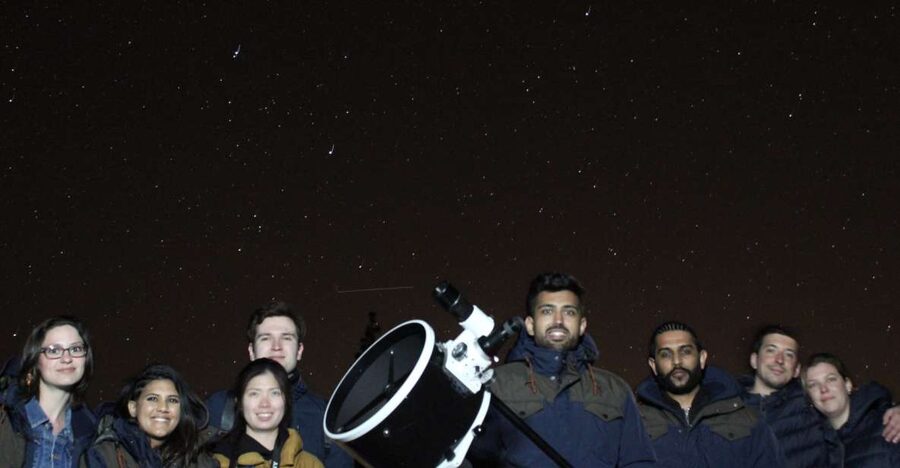
The best show starts after sunset. This Tenerife outing pairs a 1,400-meter sunset above the clouds with a serious look at the night sky around Teide National Park. I like the small-group setup, often arranged in groups of about eight, and I like that you get both a free star-filled portrait and telescope time rather than just a quick look upward. The main drawback is the cold: winter temperatures can approach 2°C, with wind making it feel colder.
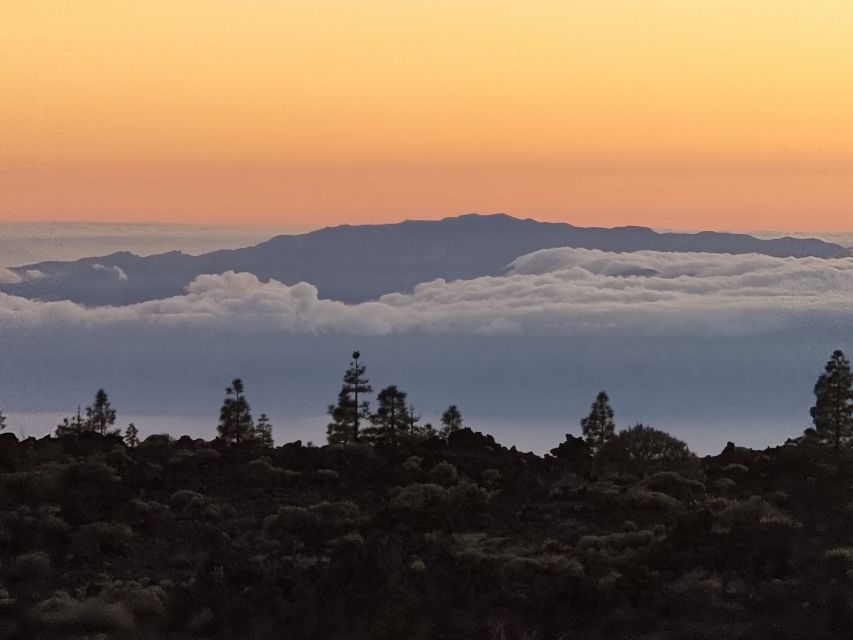
The sunset viewpoint looks toward La Gomera, La Palma, and El Hierro, while the evening astronomy session brings planets, galaxies, nebulae, and star clusters into view through a 12-inch Dobsonian telescope. The guides, including Peter, Phil, Roland, Dani, and others, are praised for making astronomy clear and funny, but you need to bring serious warm clothing and plan around the lack of toilets at both viewing areas.
Key points to know before you go
- A two-part mountain evening: You watch the sun drop over the western islands, then move a few minutes to a darker point for astronomy.
- The sunset is above the clouds: The first viewpoint sits at about 1,400 meters beside a lava flow linked to an eruption noted in Christopher Columbus’s 1492 ship log.
- Real telescope viewing: The 12-inch Dobsonian can show Saturn’s rings, Jupiter’s moons, the Moon, star clusters, galaxies, and nebulae when conditions and seasonal skies cooperate.
- Small groups make a difference: Groups of roughly eight allow more time at the telescope and easier conversation with the guides.
- Bring winter clothing: Warm jackets are supplied only with the VIP option, and the mountain can feel close to freezing even when Tenerife’s coast feels mild.
- The price covers more than transport: At $47 per person, you get the sunset stop, Cava or a non-alcoholic drink, guided stargazing, telescope use, and an individual astrophotography photo.
Why this sunset feels different from a beach sunset
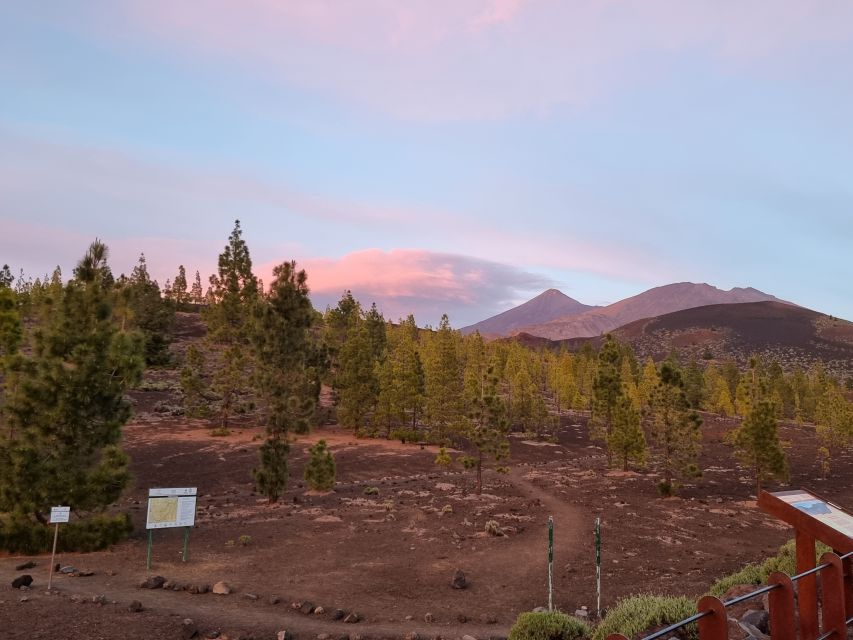
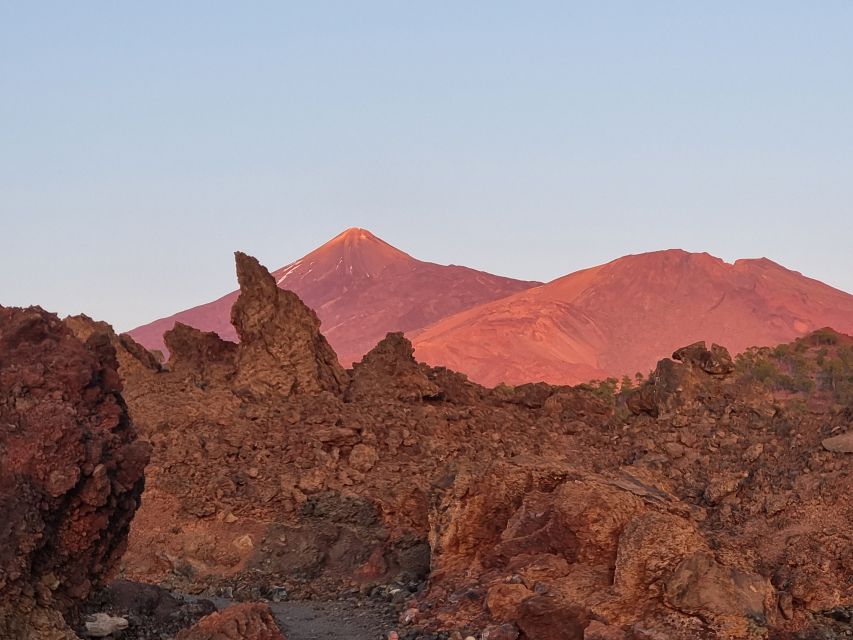
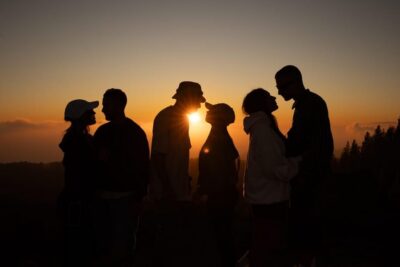
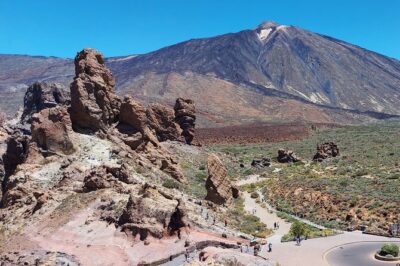
Tenerife has no shortage of places to watch the sun go down. The reason to make the climb toward Teide is the change in scale. From the viewpoint, the cloud layer can spread below you like a pale sea, while the volcanic slopes and Mount Teide catch the last orange and pink light.
You are not simply facing a flat horizon. La Gomera, La Palma, and El Hierro can appear across the western view, and the colors shift quickly as the sun drops. The guides point out the changing light on the volcanic terrain, giving you something to watch after the sun itself has disappeared.
The site is also tied to Tenerife’s volcanic past. You stop beside a lava flow from an eruption recorded in Columbus’s ship log in 1492. That detail adds a useful sense of place without turning the sunset into a long history lecture.
The first stop lasts about 45 minutes. That gives you time for photographs, the view, and a welcome drink. You receive a glass of Cava, Spain’s sparkling wine, or a non-alcoholic alternative. Hold the glass up to the fading light and you have an easy holiday photograph, though you will want to keep your phone ready because the best colors may last only a few minutes.
One small criticism is that some of the waiting time before sunset can feel quiet. If you arrive early, you may spend part of the stop simply waiting for the main event. That is not a serious flaw if you enjoy the view, but anyone expecting continuous commentary from the moment of arrival should know that the sunset portion is more relaxed than structured.
More Teide National Park Tours in Tenerife:
- Tenerife: Teide National Park Sunset & Stargazing Tour
★ 4.2 · 3,812 reviews - Teide National Park Sunset & Stargazing with Dinner (Star Safari)
★ 5.0 · 2,601 reviews - Teide National Park: Sunset & Stargazing Safari with Dinner
★ 4.6 · 2,115 reviews
The short transfer to a darker viewpoint
After sunset, the group usually drives about five minutes to another viewpoint. The exact place can change, since the guides consider wind, cloud cover, and temperature before deciding how high and how far to go.
If the conditions are good, the second site gives you darker skies and a better setting for the telescope session. If high wind, clouds, or low temperatures make the upper point unpleasant, the guides may remain at the lower viewpoint. That decision is sensible. A darker site is useful, but shivering beside a telescope or trying to see through cloud is not.
The short transfer also keeps the evening moving. You do not spend another long stretch in a van after the sunset. The full outing lasts about three to four hours, with roughly 45 minutes of travel to the first point, the sunset stop, the brief move onward, and about two hours and 15 minutes of guided astronomy.
If you choose the self-drive option, you follow the guides in your own rental car. The usual meeting place is Mirador de los Poleos, though you need to confirm the exact point and time through WhatsApp on the day of the activity. The mountain road and parking require care, especially at the first stop, where the parking area can fill up. Arriving 15 to 20 minutes early is a practical idea.
Astronomy that stays understandable
The strongest part of the evening is the guide-led explanation. A laser pointer gives you a clear line from the ground to the stars, so you are not left trying to match a tiny printed chart with a sky full of lights.
The guides explain how to find Polaris, the North Star, using the familiar shape of Ursa Major. They also show how to locate the Andromeda Galaxy from the Great Square of Pegasus. Greek mythology helps turn these patterns into something memorable, rather than a pile of unfamiliar names.
The tone appears to be friendly and lively. Peter is often praised for his astronomy knowledge and easy humor, while Phil, Roland, Dani, Jamie, and other guides are noted for answering questions and keeping the group involved. The best guides do more than point at stars. They explain what you are seeing and why it appears in that part of the sky.
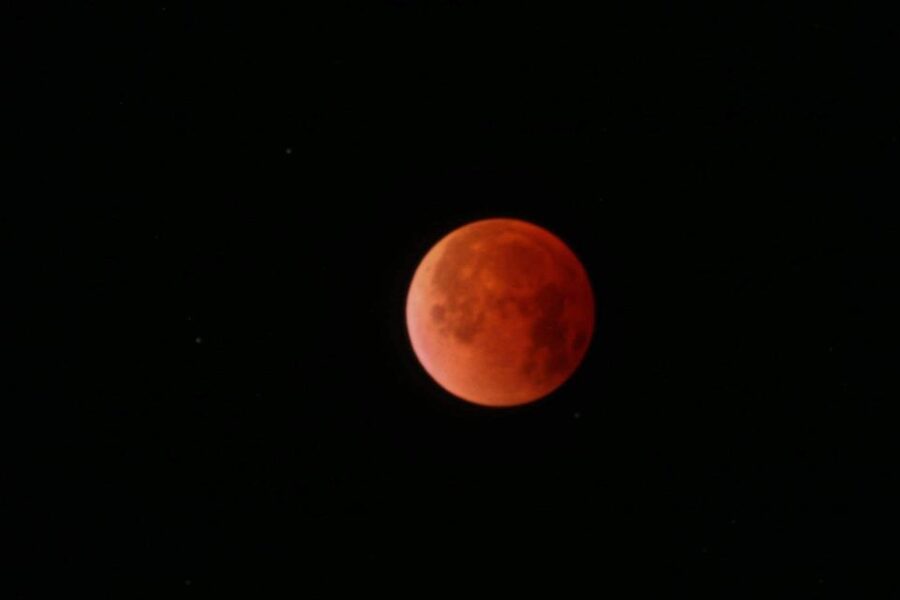
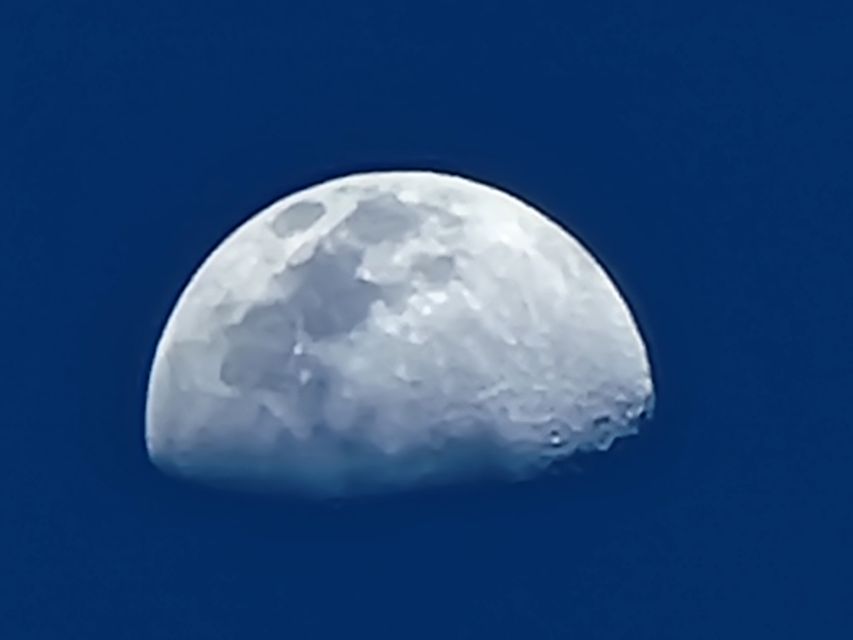
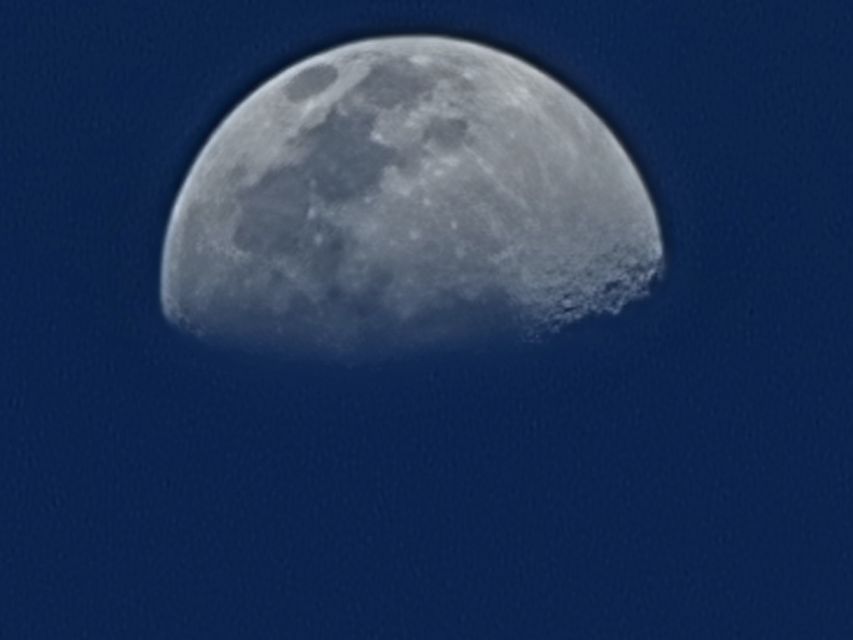
The content changes with the season and the Moon. On evenings near a full moon, the Moon may become the main sight, with its surface details visible through the telescope. When visible during the warmer months, Saturn can reveal its rings and Jupiter can show its Galilean moons. In winter, the Pleiades, also called the Seven Sisters, is one of the notable star clusters.
You may also see galaxies, nebulae, and other clusters. What appears depends on the time of year, cloud cover, wind, moonlight, and the guide’s choice of targets. That last point matters. This is not a fixed show where every group sees exactly the same objects.
Several people have described seeing Saturn’s rings and Jupiter’s moons clearly. Those are especially rewarding targets because you can connect a real object in the sky with a visible feature through the eyepiece. The telescope session is not just about taking a picture. You take turns looking, asking questions, and building a better sense of what the sky contains.
Why the small groups matter
A small group changes the pace. With about eight people to a guide on many departures, you spend less time standing behind a large crowd and more time at the telescope. You can ask a follow-up question without feeling you are holding up a busload of people.
It also helps with the personal side of the evening. Guides such as Peter and Phil have been praised for their humor, while Roland and Dani are noted for clear explanations. The style can vary by departure, but the repeated praise for the guide team points to a real strength: this is an astronomy lesson led by people who enjoy the subject.
A small group does not mean a private tour. You still share the van, the viewpoints, and the equipment with other people. If you want complete control over the schedule or unlimited telescope time, this is not the right format. For most people, though, the smaller arrangement offers a good balance between cost and attention.
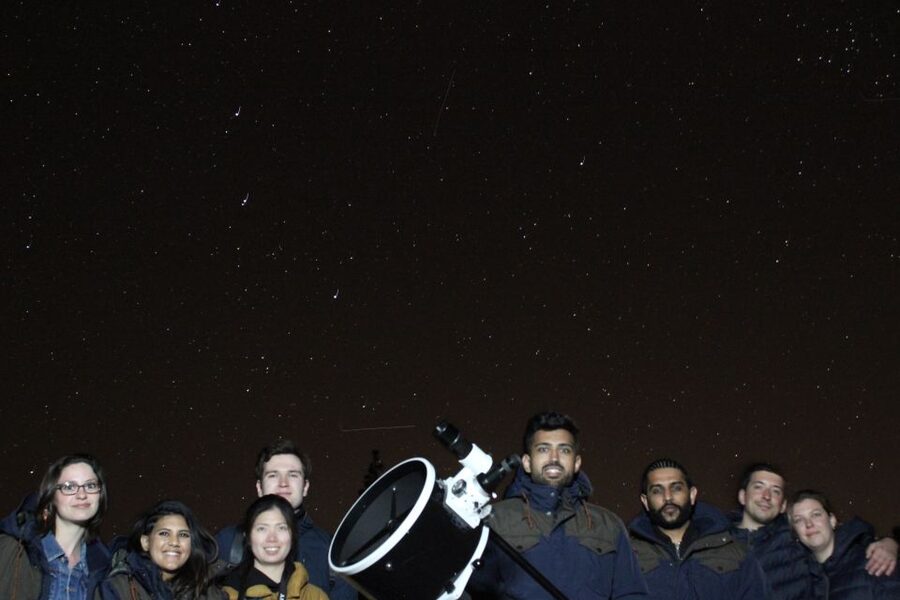
The free astrophotography photograph is another welcome touch. Each person is photographed individually under the stars using techniques that capture more of the sky than a normal phone picture. It gives you a useful souvenir of the evening, especially since ordinary night photographs often show only a black background.
Do not judge the photo as a professional portrait session. The main purpose is to record you beneath Tenerife’s dark sky. You should also remember that the image depends on the weather and the photographer’s process.
More Evening Trips in Tenerife:
- Teide National Park Day or Sunset Tour on Quads
★ 4.6 · 193 reviews - Puerto de la Cruz: Quad Sunset Volcano Teide National Park
★ 4.6 · 178 reviews - Sunset and Stars at Teide National Park
★ 4.5 · 168 reviews - Tenerife: Teide National Park Sunset Quad Tour
★ 4.1 · 164 reviews
The cold is the main practical issue
Tenerife’s coastal resorts can be warm and breezy, which makes the mountain temperature easy to underestimate. At night, the upper viewpoints can be close to freezing. Several visitors used five layers and still felt cold, and winter conditions around 2°C were specifically reported.
Bring a proper jacket, long trousers, long sleeves, warm shoes, and extra layers. Comfortable walking shoes are enough because this is not a hiking trip, but thin holiday clothing is a poor match for two hours outdoors after dark.
VIP departures include warm jackets. Some evenings have also included hot chocolate, which can be a welcome treat after the sunset drink, but I would not book on the assumption that it is guaranteed. The listed drink is Cava or a non-alcoholic alternative, so pack your own water and snacks if needed.
There are no toilet facilities at or near the viewing points. Use a restroom before leaving the coast. This is a minor detail until you are high on the mountain with several hours still to go.
The tour is not suitable for people with altitude sickness. It also involves standing outdoors at elevation for a long period, so anyone sensitive to cold, wind, or mountain conditions should think carefully before booking.
VIP pickup or self-drive?
The VIP option includes pickup and drop-off from accommodation or a nearby meeting point in the south of Tenerife. The service covers the area broadly between El Médano and Los Gigantes, with some exceptions. You must provide the exact address at least 24 hours ahead, and the exact pickup time arrives by WhatsApp on the day.
The timing on your digital ticket is only a general guide. The actual pickup can differ by as much as two hours, so keep the afternoon flexible. If you are arriving by plane that day, do not book the same-night tour unless you have a very large time cushion.
The self-drive choice can be good value if you already have a rental car. You must drive your own vehicle. Public transport and taxis are not accepted for this option, because you need to follow the guides from the sunset point to the astronomy point.
Self-driving gives you more independence, but it also means dealing with mountain roads, parking, and the return drive in the dark. If you are a young or inexperienced driver, the mountain route may feel demanding. The VIP option removes that worry and gives you a door-to-door return, but the available pickup area is limited.
Neither option includes the cable car, Teide Observatory, a hike, or a climb to Mount Teide. This is a stargazing outing at public viewpoints near the national park, not an observatory visit or summit excursion.
Is $47 a fair price?
At $47 per person, the standard price is strong for the amount included. You are paying for transport during the tour if you choose the appropriate pickup option, a sunset stop, a drink, a live English-speaking astronomy guide, telescope access, and a personal astrophotography photo.
The value is especially good if you want more than a scenic drive. A simple sunset transfer might cost less, but it would not give you a structured explanation of constellations or access to a 12-inch telescope. A larger astronomy event might offer more equipment, but it could also mean more waiting and less time with the guide.
The price does not include food, so do not expect dinner. It also does not cover the cable car or Teide Observatory. That keeps the tour focused and helps explain why the outing fits into three to four hours rather than becoming a full-day mountain trip.
The rating of 4.7 from 2,826 ratings supports the idea that this is a dependable choice, though your result still depends on the sky. Clouds can hide the stars, the Moon can wash out faint objects, and wind can limit the upper viewpoint. The guides can adjust the plan, but they cannot control the weather.
Who should book this Teide stargazing tour?
I would choose this tour if you want a compact evening with strong scenery, clear explanations, and a chance to see real objects through a telescope. It works well for couples, families with older children, and anyone curious about astronomy but not ready for a technical observatory program.
Teenagers can enjoy it because the session includes lasers, planets, stories, and hands-on telescope viewing. Children under five are not permitted on the VIP option, though they are welcome with self-drive. The cold and late finish may still make the outing tiring for very young children.
This is also a good choice if you want an activity that feels different from the usual beach and resort schedule. The sunset is scenic, but the stars are the reason to book. Try to choose a night when the Moon is not too bright if your main goal is faint galaxies and the Milky Way. A bright Moon is excellent for lunar detail, so the best date depends on what you want to see.
Book it if you can accept a weather-dependent result, prepare for serious cold, and have no problem standing outside for most of the evening. Skip it if you dislike mountain roads, need regular toilet access, or want a guaranteed list of planets and galaxies.
FAQ
How long does the sunset and stargazing tour last?
The activity lasts about three to four hours. The listed route includes about 45 minutes in the van to the first viewpoint, a 45-minute sunset stop, a five-minute transfer, and about two hours and 15 minutes of guided stargazing.
Where does the tour meet?
The meeting point depends on the option you choose. Self-drive groups normally meet at Mirador de los Poleos, but you should confirm the exact location and time through WhatsApp on the day of the activity.
Can I join without a rental car?
Only the VIP option includes pickup and drop-off. The self-drive option requires your own rental car. Public transport and taxis cannot be used for the self-drive arrangement.
Is the tour suitable for children?
Children under five are not allowed on the VIP option. They are welcome with the self-driving option, though the cold and several hours outdoors may not suit every young child.
What should I wear?
Bring warm layers, a proper jacket, long trousers, long sleeves, and warm shoes. Mountain temperatures can be close to freezing, and wind can make the evening feel colder than expected.
What happens if the weather is bad?
If wind, clouds, or low temperatures make the upper viewpoint unsuitable, the guides may stay at the lower viewpoint. That location can still be used for stargazing, but the number of visible stars and telescope targets depends on the conditions.
Just added around Tenerife
- Tenerife: Sunset Teide National Park & Photos★ 4.1 · 14 reviews
- Tenerife: Teide National Park and Volcano Buggy Tour★ 4.0 · 39 reviews
- Quad Tour Volcano Teide By Day in Teide National Park★ 4.0 · 80 reviews
- Teide National Park: Landscapes and Viewpoints Private Tour★ 4.7 · 52 reviews
- Teide National Park Exclusive and private Tour★ 5.0 · 115 reviews
- Get to know the Teide National Park and the north of Tenerife on a private tour★ 5.0 · 63 reviews
- PRIVATE TOUR Teide National Park: Hiking and Stargazing★ 5.0 · 38 reviews
- Tenerife: Teide National Park Buggy Tour with Hotel Transfer★ 4.5 · 145 reviews
Teide National Park Tours, compared.
Tenerife: Teide National Park Sunset & Stargazing Tour
Read our review →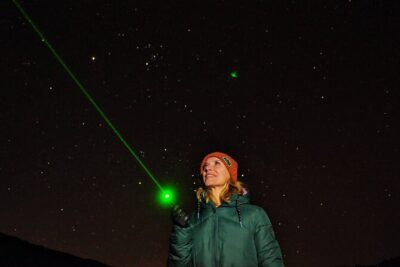
Teide National Park Sunset & Stargazing with Dinner (Star Safari)
Read our review →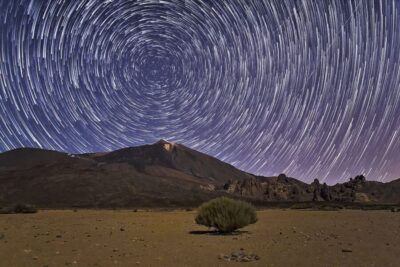
Teide National Park: Sunset & Stargazing Safari with Dinner
Read our review →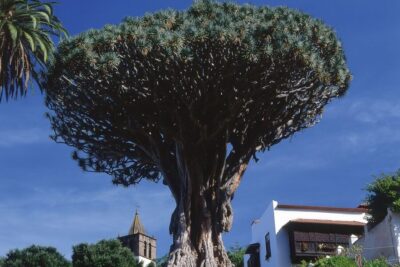
Tenerife: Teide National Park Full-Day Tour with Pickup
Read our review →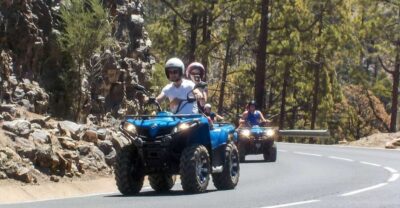
Tenerife: Quad Adventure Tour in Teide National Park
Read our review →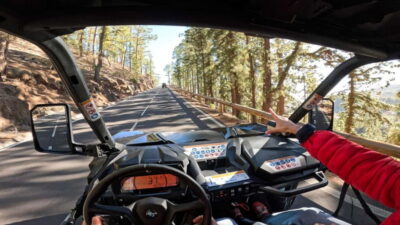
Small Group Teide National Park Volcanic and Forest Wonders
Read our review →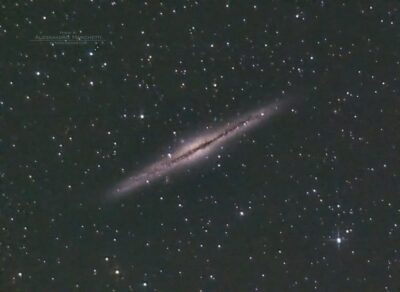
Teide National Park: Guided Large Telescope Stargazing Tour
Read our review →Browse the lists this tour appears in