
REVIEW · USA
Big Island, Hawaii: Volcanoes National Park Safari
Volcanoes look different from the sky. Safari Helicopters’ 55-minute flight from Hilo Airport gives you a rare view of lava fields, calderas, waterfalls, orchid farms, and native forest without spending a full day on the road. I like the small maximum group of six and the way pilots such as Andrew and Jim add island history, geology, and local details to the flight.
I also like the easy Hilo meeting point and the company’s long record of operating on the Big Island. The main catch is simple: weather controls the show. Clouds, smoke, or poor visibility can block the caldera, and some seats offer better window views than others.
Key points to know before you book
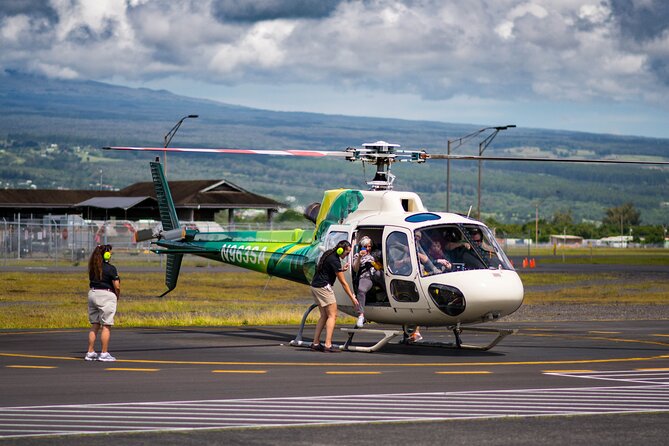
- The flight leaves from Hilo Airport: You meet at 2220 Kekuanaoa Street, then return to the same point after the flight.
- The main target is Volcanoes National Park: Expect views of old and recent lava flows, craters, vents, and the Kilauea area when conditions allow.
- The pilot is also your guide: Andrew, Jim, and Drew have received especially strong praise for clear narration and calm flying.
- Weather can change the route: Safari may offer a different island route, another date, or a full refund if the volcano area is not safe or visible.
- Weight rules are strict: Each passenger is limited to 249 pounds, and accurate weights are required at booking.
- The price reflects a rare view: At $379 per person, this is costly, but the small group and aerial access make it a serious option for a special Big Island day.
Leaving Hilo Airport for Volcano Country
Your day begins at Safari Helicopters’ Hilo base, 2220 Kekuanaoa Street. Plan to arrive 40 minutes before departure, not at the listed flight time. The ground team handles check-in and safety instructions before bringing you to the helicopter.
This is an easy starting point if you are staying in Hilo or touring the east side of the island. It is not an airport transfer service, though, so you must arrange your own way to the meeting point. There is public transportation nearby, but hotel pickup and drop-off are not included.
The company describes itself as the longest-running helicopter operator on the island. That matters less as a slogan than it does in the practical details: the ground staff prepares you for the flight, explains the safety rules, checks passenger weights, and discusses the chance of a changed route when weather is poor.
The small aircraft holds no more than six people on this experience. A compact cabin can feel more personal than a large sightseeing flight, but it also means that seating matters. One passenger reported feeling cramped behind the pilot and having trouble looking out, while another noted that not every seat offers equally good visibility.
If the window view matters greatly to you, ask the staff how seating is assigned and which side may offer the clearest view. The pilot may circle or use figure-eight patterns near points of interest, but you should not assume every seat will have the same sightline.
More Volcano National Park Tours in the USA
- Hilo Shore Excursion: Volcanoes National Park & Black Sand Beach
★ 4.5 · 2,338 reviews - Big Island: Fat Tire E-Bike Tour through Volcanoes National Park
★ 5.0 · 546 reviews - Small-Group Big Island Tour: Hawaii Volcanoes National Park and Kona Coffee Farm
★ 5.0 · 343 reviews
A short flight with a lot to see
The published flight time is about 55 minutes. That is long enough to see far more than one volcanic crater, but short enough to fit into a busy Big Island schedule.
The route heads from Hilo toward Volcanoes National Park. On the way, you may look down on orchid farms, macadamia farms, lush forest, and native plant areas that are strongly associated with the Big Island. From the ground, these areas can blur into a long drive. From above, their patterns and changes become easier to understand.
The helicopter also gives you access to remote sections of the island that would take much longer to reach on foot or by car. You will not be stopping for walks or meals. This is a sightseeing flight, so your reward is the broad view and the pilot’s running explanation.
The pilot narrates the route throughout the trip. Andrew has been praised for explaining the island’s geology, culture, plants, animals, and past eruptions. Jim has also received strong praise for answering questions, giving everyone a chance to see the key sights, and making first-time helicopter passengers feel at ease.
That narration is important. A volcanic crater can look like a dark bowl from the air unless someone explains how it formed, why gases rise from it, or how earlier eruptions changed the ground around it. The best part of this flight is not just looking down. It is learning what you are seeing while the view is in front of you.
Volcanoes National Park from above
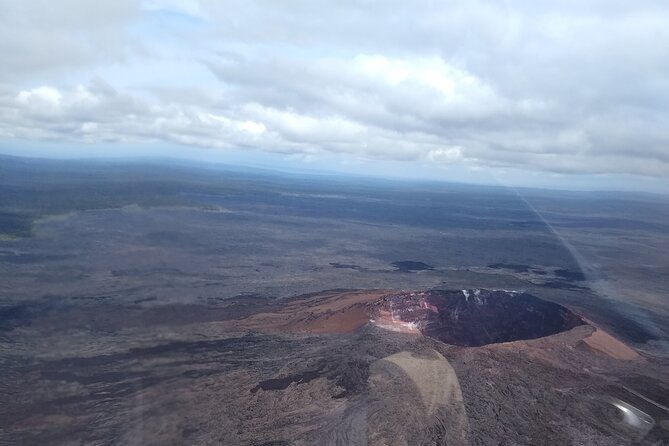
The central portion of the tour is the flight over Volcanoes National Park. From the air, the park becomes a broad record of volcanic activity. You may see old lava flows, newer flows, craters, vents, calderas, and sections of forest that have returned after earlier eruptions.
When the weather is clear and volcanic activity is visible, the experience can be remarkable. Passengers have seen gas rising from the caldera, active vents, lava fields, and lava emerging from a fissure. One flight took place just after an eruption, while another included a view of lava fountains and brief lava overflows.
Those conditions cannot be promised. Eruptions change, clouds build quickly around the summit, and smoke may mix with low cloud. Safari’s pilots will not fly into an unsafe area simply to preserve the advertised route. That is sensible, but it means the title of the tour should not be treated as a guarantee of seeing molten lava or the active crater.
This is the most important point to understand before paying $379. You are buying an aerial view of Volcanoes National Park, not a guaranteed eruption sighting. On some days, the volcano may be active but hidden. On others, you may see the craters and lava fields clearly without seeing red lava.
A November flight, for example, could not reach the caldera because smoke and cloud made the area unsafe. The passenger still saw other parts of Kilauea and remote areas of the park, but the main hoped-for view was missing. That is a real limitation, especially if the volcano is the only reason you want to take the flight.
If the caldera is visible, the pilot may make repeated passes or turns so people on both sides can look. You might see steam, gas, black lava scars, and broad volcanic depressions. The scene changes with the light and weather, so even a flight without visible lava can offer a strong sense of the island’s volcanic scale.
Waterfalls, farms, and forest beyond the crater
The volcano is the star, but it is not the whole flight. The route can include waterfalls, forest, farms, and the transition from wet lowland around Hilo to the rougher volcanic country inland.
Waterfalls can appear suddenly through the forest, especially on the wetter Hilo side. From the ground, many are difficult to reach or hidden behind thick growth. From the helicopter, you may get a clean view that would be impossible from a road or trail.
The forest itself is worth watching. The flight description points to native forest and orchid farms, while passengers have also seen macadamia farms and other agricultural areas. These details give the trip more range than a simple crater flyover.
One flight that could not reach the summit because of weather still included coastlines, lava fields, farms, and waterfalls. That is useful context. The alternate scenery will not replace an active volcano if that is your main goal, but it can keep the flight from becoming a total loss.
Some flights have also included distinctive sights such as a golden Buddha. That detail will not be the reason to book, but it shows how the pilot may point out cultural and visual landmarks along the route rather than focusing only on rocks and smoke.
Same corner of the map, a different park:
- Miami: Everglades National Park Airboat Tour & Wildlife Show
★ 4.5 · 7,296 reviews - Clear Kayak Tour of Shell Key Preserve and Tampa Bay Area
★ 5.0 · 5,800 reviews - Yosemite Highlights & Giant Sequoias Day Tour from San Francisco
★ 4.5 · 3,455 reviews - Discover Rocky Mountain National Park
★ 5.0 · 3,419 reviews
What happens when the weather turns bad
Hilo is known for frequent cloud and rain, and the summit area can have different conditions from the airport. The ground staff explains the weather risk before departure, but the final call comes down to safety and visibility.
If clouds block Volcanoes National Park, Safari may offer a different route. Past alternatives have included the north side of the island and Waimanu Valley. Some passengers accepted the change and found the replacement route exceeded expectations. Others declined because the volcano was the entire purpose of their visit.
That choice is worth thinking about before you arrive. If you are happy seeing the Big Island from the air, a substitute route can still provide coastlines, waterfalls, forest, and remote valleys. If you specifically want Kilauea, you may prefer to cancel or reschedule instead of taking a different flight.
The cancellation rules give you a full refund if you cancel at least 24 hours before the start time. Changes made within 24 hours are not accepted, and a late cancellation is not refunded. If Safari cancels because of poor weather, you are offered another date or a full refund.
There is also a minimum number of passengers needed for a flight to operate. This has caused some departures to be moved or canceled, including a case where passengers were rebooked more than once. Safari says it contacts passengers about the status, but you should keep some flexibility in your schedule and avoid building a tightly timed cross-island drive around this one flight.
Is $379 a fair price?
At $379 per person, this is one of the more expensive short activities on a Big Island itinerary. The flight lasts less than an hour, and snacks, hotel transfers, and other extras are not included.
Still, the price buys something difficult to duplicate. You can drive to Volcanoes National Park and walk to viewpoints for far less money, but you cannot reproduce the aerial view of lava fields, remote craters, waterfalls, farms, and forest. You also avoid spending several hours on the road if your schedule is tight.
The value is strongest when three things line up: clear weather, an interesting volcanic event, and a pilot who keeps the narration moving. On a clear day with visible activity, the cost may feel justified, especially for a first helicopter flight or a special family occasion.
The value is weaker if low cloud forces an alternate route, if you need guaranteed access to the caldera, or if you are uncomfortable paying a high price for a flight that lasts 55 minutes. You should also factor in the cost of reaching Hilo if you are staying on the Kona side. One passenger accidentally booked a Hilo departure while expecting a Kona flight and faced a long drive across the island.
For a family, the total cost rises quickly, but children as young as six have taken the flight. The small aircraft and gentle narration can work well for families, provided everyone understands that this is a seated aerial tour, not an active outing with stops.
Weight, comfort, and practical limits
Safari requires accurate passenger weights. The stated limit is 249 pounds per passenger. An additional seat is required for a passenger over 250 pounds or for two people whose combined weight is 420 pounds.
Do not guess low when booking. If the weights provided are inaccurate and create a safety problem, you may be required to buy another seat or leave the tour, with no refund for that issue.
The cabin can also feel tight. Several passengers found the ride smooth and comfortable enough, while one specifically complained about limited legroom and poor viewing from a seat behind the pilot. If you are tall, broad-shouldered, or prone to motion discomfort, raise your concerns with the staff before boarding.
The ground team has helped older people with mobility limits, and one family praised the staff for working patiently with elderly parents. Still, the supplied information only says most people can participate, so you should discuss specific mobility needs with Safari before booking.
Who will enjoy this flight most?
I would consider this tour for a first helicopter ride, a special family activity, or anyone who wants to understand the Big Island’s volcanic shape without a long day of driving and hiking.
It suits you especially well if:
- You are staying near Hilo or already plan to visit the east side.
- You enjoy natural history and want a pilot-led explanation.
- You can accept that weather may change the route.
- You want a small group rather than a crowded sightseeing flight.
- You are flexible about seeing lava, since active eruptions cannot be promised.
I would hesitate if you have only one narrow time slot, must see the caldera, or are staying on the Kona side with no spare time for a drive to Hilo. I would also think twice if you dislike tight seating or feel that $379 is too much for a 55-minute flight.
Should you book Safari Helicopters?
Book it if you want the Big Island’s volcano country from a perspective no road can provide, and if you can treat the flight as an aerial tour of the island rather than a guaranteed lava sighting. The pilots, especially Andrew and Jim, receive consistent praise for calm flying, clear explanations, and attention to the whole cabin.
Before paying, confirm that you are booking the Hilo departure, give accurate weights, arrive 40 minutes early, and leave room in your schedule for weather or minimum-group changes. If the forecast looks doubtful, ask what alternate route or refund choices are available.
For clear skies and visible volcanic activity, this can be a memorable use of half an hour in the air. For poor weather, it becomes a decision: accept waterfalls, farms, forest, and coast, or save the money for a ground visit to the park.
FAQ
Where does the Volcanoes National Park Safari depart?
It departs from 2220 Kekuanaoa Street in Hilo, Hawaii. The flight also ends back at this meeting point.
How long is the helicopter tour?
The flight lasts approximately 55 minutes. You should arrive 40 minutes before the scheduled departure.
Is hotel pickup included?
No. Hotel pickup and drop-off are not included. You must make your own way to the Hilo meeting point.
What happens if bad weather prevents the volcano flight?
If poor weather causes Safari to cancel, you will be offered a different date or a full refund. During a flight, weather can also lead to an alternate route instead of the Volcanoes National Park route.
How many people can join the flight?
The activity has a maximum of six travelers. It also requires a minimum number of passengers to operate, so a departure can be changed or canceled if that minimum is not met.
What are the passenger weight rules?
The stated limit is 249 pounds per passenger. An additional seat is required for anyone over 250 pounds or when two passengers have a combined weight of 420 pounds. Accurate weights are required for safety.
More National Park Safaris in the USA
- The Rocky Mountain National Park Safari Tour
★ 5.0 · 366 reviews - Half-Day Wildlife Safari Tour in Grand Teton National Park
★ 5.0 · 341 reviews - Estes Park: Rocky Mountain National Park Safari Tour
★ 4.8 · 264 reviews - Best of Yellowstone – Guided National Park Safari Tour
★ 5.0 · 178 reviews
Just added around the USA
- From Flagstaff: Grand Canyon National Park Tour★ 4.9 · 106 reviews
- From Denver: Guided Hike in Rocky Mountain National Park★ 4.2 · 9 reviews
- From Seattle: Full-Day Mt Rainier National Park Tour★ 3.5 · 6 reviews
- From Anchorage: Wilderness, Wildlife, & Glacier Experience★ 4.9 · 85 reviews
- Everglades National Park: Private 2.5-Hour Photo Safari★ 4.9 · 9 reviews
- Everglades National Park: Boat Assisted Kayak Eco Tour★ 4.7 · 25 reviews
- Everglades National Park: Pontoon Boat Tour & Boardwalk★ 4.2 · 44 reviews
- Everglades National Park: Motorboat Eco Tour★ 5.0 · 15 reviews
Volcano National Park Tours, compared.
Hilo Shore Excursion: Volcanoes National Park & Black Sand Beach
Read our review →
Lanzarote: Timanfaya National Park Volcanic Craters Tour
Read our review →
Big Island: Fat Tire E-Bike Tour through Volcanoes National Park
Read our review →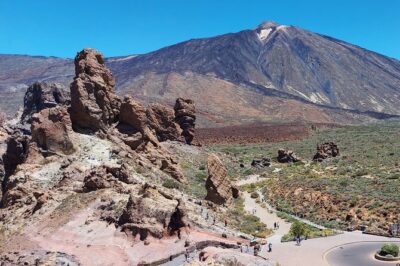
Small Group Teide National Park Volcanic and Forest Wonders
Read our review →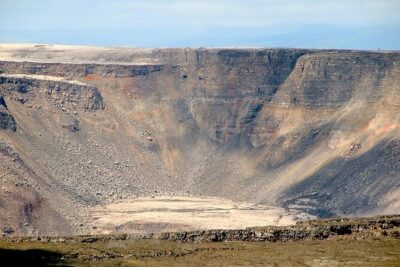
Small-Group Big Island Tour: Hawaii Volcanoes National Park and Kona Coffee Farm
Read our review →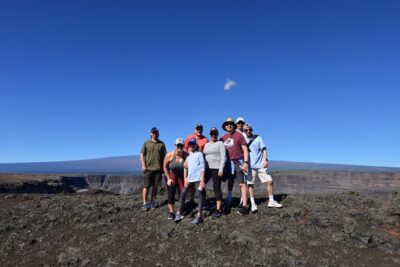
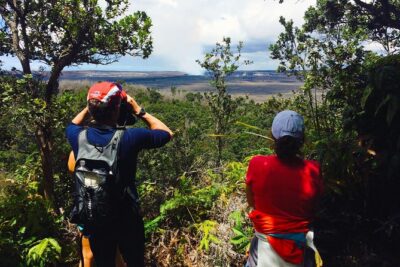
Hawaii Volcanoes National Park and Hilo Highlights Small Group Tour
Read our review →Browse the lists this tour appears in