
REVIEW · AUSTRALIA
Hobart: Maria Island National Park – Nature & Wildlife Adventure
Maria Island rewards early risers. This full-day trip from Hobart combines wildlife watching with easy-to-moderate walks, ferry travel, beaches, cliffs, and the Darlington convict site. I especially like the chance to see wombats and wallabies in a protected setting, and the way the guides connect the island’s natural features with its human past. The main catch is timing: access to the Painted Cliffs depends on the tide, and the day can feel rushed if ferry schedules limit your time.
You leave Hobart at 6:45 am and return after roughly 12 hours, usually in a small group of no more than 19 people. Guides such as Matt, Heather, Ian, David, Trevor, and Clinton have been praised for making the day lively and informative. Still, this is an active outing, not a casual sightseeing bus ride, so bring water, food, proper shoes, and clothing for Tasmania’s famously changeable weather.
Key points to know before booking
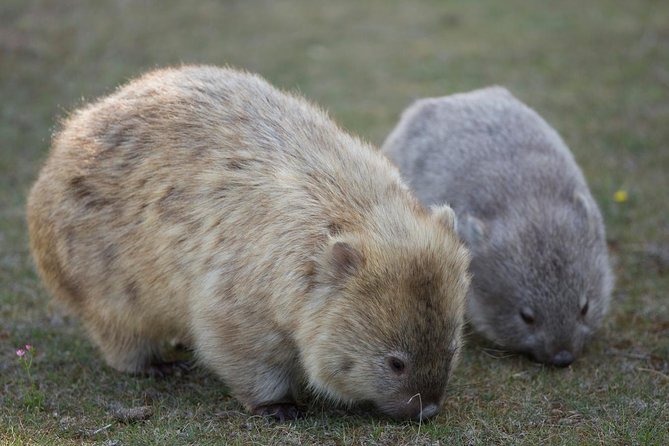
- Wombats are a major attraction: You have a good chance of seeing wombats, wallabies, kangaroos, Cape Barren geese, and many bird species.
- The Painted Cliffs are tide-dependent: The walk is gentle, but the cliffs can only be reached safely at low tide.
- Expect almost 10 kilometres of walking: The pace is relaxed, but you need moderate fitness and the ability to stay on foot for much of the day.
- Maria Island has no shops or cars: Pack lunch, snacks, and enough drinking water before boarding the ferry.
- The ferry ride adds real appeal: Keep watch for dolphins, seals, penguins, and seasonal whales during the crossing.
- The price covers the big essentials: At $154.21 per person, your fare includes transport from Hobart, return ferry travel, park entry, and guided walks.
Leaving Hobart before breakfast
The early start is not a minor detail. You meet at 20 Davey Street in Hobart at 6:45 am, and the vehicle leaves promptly to stay on schedule for the ferry. If you are late, the group may have to depart without you, so plan to arrive with time to spare.
The drive to Triabunna takes about two hours, according to the planned stops. This gives you time to settle into the climate-controlled vehicle and buy last-minute food. The stop is useful because Maria Island has no shops, cafés, or convenient place to pick up lunch once you arrive.
Your food choices on the island are entirely your responsibility. Bring sandwiches, snacks, and enough water for the day. There is limited drinking water, and the tour operator advises taking a day pack rather than luggage.
The small-group format is a plus here. With a maximum of 19 people, you should have a better chance of hearing the guide and staying together on the walking trails. Pick-up is available only from limited hotel locations, and the listed meeting point is the safest option if you are unsure.
More Wildlife and Elephant Encounters in Australia
- Tasmania: Wilderness and Wildlife Guided 6-Day Tour
★ 4.6 · 60 reviews - Hobart: Waterfalls, Wilderness & Wildlife – Active Day Tour
★ 5.0 · 22 reviews - Hobart: Mt Field National Park & Wildlife Shore Excursion
★ 4.0 · 6 reviews
The ferry from Triabunna to Maria Island
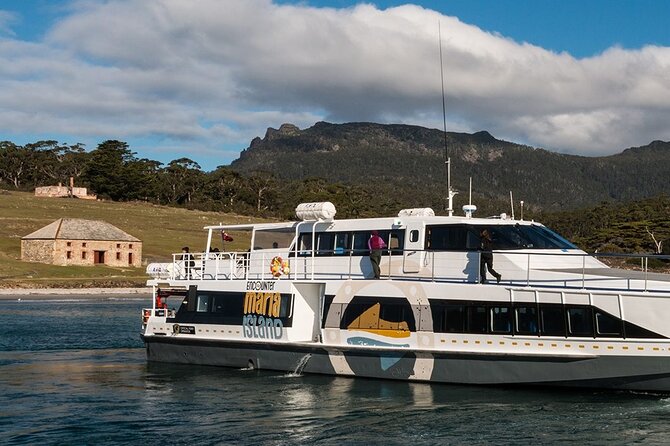
The crossing takes about 30 minutes and is part of the experience, not just a transfer. Keep your eyes on the water for dolphins, seals, penguins, and whales during migration season. Sightings are never guaranteed, but the crossing gives you a useful first look at the coast and adds a welcome change of pace after the road journey.
The ferry also explains why Maria Island feels different from a standard national park visit. There are no cars on the island, and access is by passenger ferry. Once you arrive, the day becomes a walking trip through a quiet protected area rather than a drive between viewpoints.
Conditions can change quickly. One outing included strong winds, heavy rain, and clear skies on the same day. Pack a waterproof layer, warm clothing, sun protection, and swim gear. Tasmania can offer several types of weather before lunch, and the ferry crossing is more pleasant when you are prepared.
Walking through Darlington and its convict past
The Darlington area gives the day more depth than a simple wildlife outing. The site is part of the island’s World Heritage convict history, and your guide explains how the island was used during different periods of convict occupation.
The history is not presented as a polished backdrop. It includes difficult and often sad chapters, which makes the Darlington visit worthwhile for anyone interested in Tasmania’s past. Guides including Ian, who has been praised for his history teaching, can help connect the buildings and setting with the people who lived and worked there.
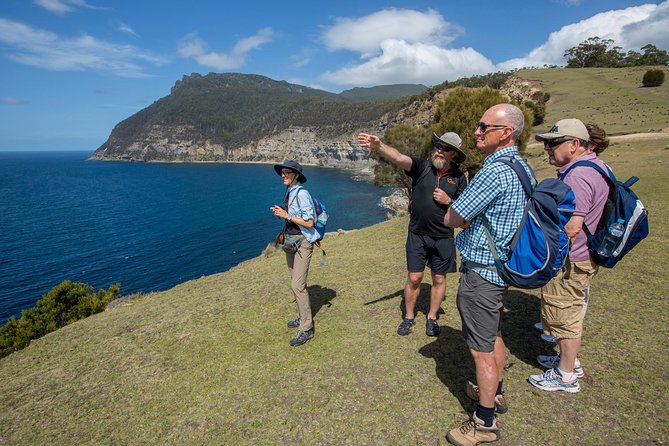
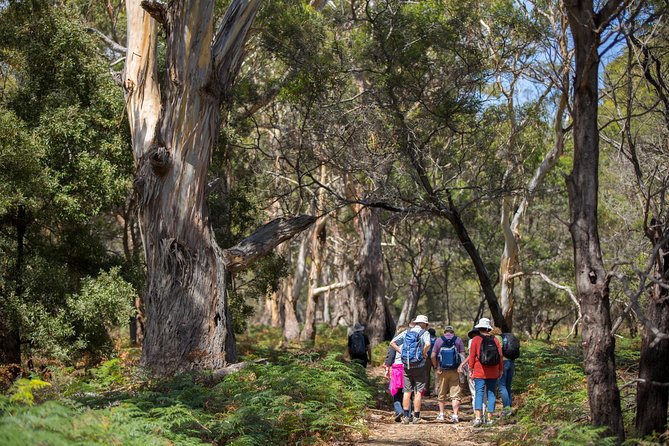
You will spend much of the day on foot, moving between historic sites, beaches, and coastal tracks. The pace is described as relaxed, but the total walking distance is close to 10 kilometres across two main trails. That is manageable for someone with moderate fitness, but it may be tiring if you are expecting a short stroll with frequent vehicle breaks.
Wear sturdy walking shoes. The tour stays on tracks and boardwalks to reduce disturbance to wildlife and protect the area, so you should not expect to wander wherever you like. That restraint is a good thing, especially around animals that are easily disturbed.
Wombats, wallabies, and the island’s birdlife
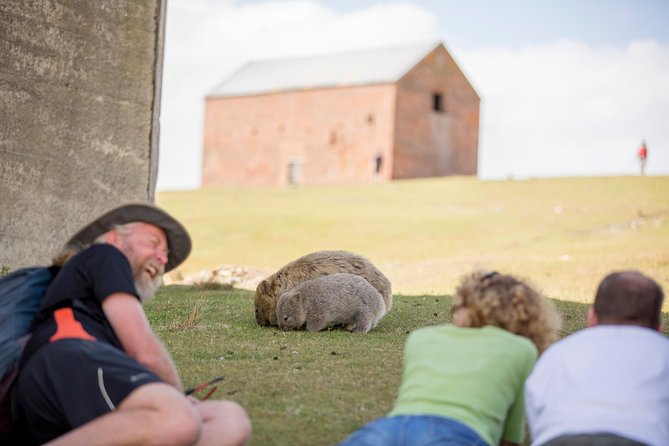
Maria Island is best known for its wildlife, and wombats are often the star of the day. You might also see wallabies, kangaroos, pademelons, bandicoots, Cape Barren geese, and a wide range of bird species. Tasmanian devils are part of the possible wildlife list, although no animal sighting can be promised.
The useful part of having a guide is learning how to watch without crowding the animals. The guides keep an appropriate distance, explain how to behave, and focus on patient observation. You remain on marked tracks and boardwalks, which protects both the animals and the fragile setting.
Wildlife luck varies. Some outings have included wombats and wallabies but no kangaroos. Others have produced wombats, pademelons, a bandicoot, and a strong variety of birds. It is better to book this as a chance to see native wildlife than as a checklist tour.
I like that the experience gives wildlife more context. You are not simply pointed toward an animal and rushed onward. The guide explains the island’s natural setting and helps you notice smaller details, including birdlife and coastal creatures such as sea stars.
More Wildlife and Elephant Encounters in Hobart:
- Tasmania: 6-Day Comfort Tour for Wilderness and Wildlife
★ 5.0 · 5 reviews - Mt Field National Park and Russell Falls with Bonorong Wildlife
★ 3.5 · 2 reviews - Miami: Everglades National Park Airboat Tour & Wildlife Show
★ 4.5 · 7,296 reviews - Wilderness, Wildlife, Glacier Experience from Anchorage
★ 5.0 · 3,004 reviews
Fossil Cliffs and the long story in the rocks
The Fossil Cliffs provide a different kind of reward. Instead of living wildlife and convict buildings, you get a look at the island’s geological past, with rock formations and fossils recording millions of years of history.
The walk here forms one of the main routes of the day. It is classed as easy to moderate, but remember that the combined walking distance is substantial. You may find the cliffs especially interesting if you enjoy geology, coastal scenery, or places where the rocks tell a story without much help from a museum display.
The coastline also gives you open views and a sense of Maria Island’s scale. Some people find there is too much to see in one day, while others feel the ferry timetable creates a slight rush. Both points are fair. A day trip lets you reach the main highlights, but an overnight stay would allow more time to explore at a slower pace. This tour is built for visitors who have only one day available.
The Painted Cliffs and the tide problem
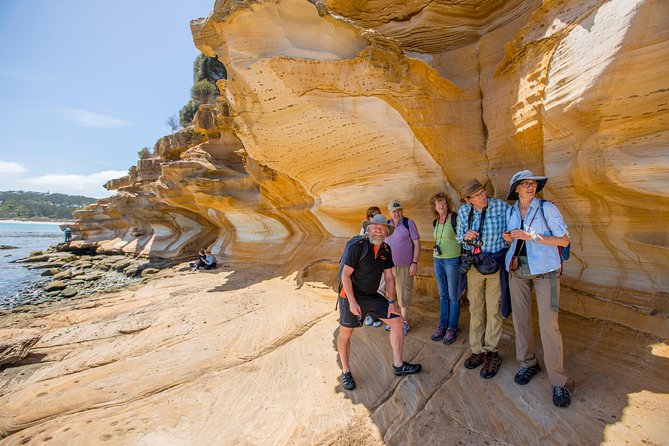
The Painted Cliffs are one of the main reasons to choose this trip. The trail is mostly flat and gentle, leading toward Hopground Beach, with the patterned cliffs at the far end. The rock layers and unusual colors make this one of the most photogenic parts of Maria Island.
There is an important condition: the cliffs can only be reached safely at low tide. If the tide is too high, the guide may need to cancel that section rather than take the group into an unsafe area. One outing missed the cliffs for this reason, which was understandably disappointing because they are a headline feature.
Check the tide situation before booking if the Painted Cliffs are your top priority. The operator cannot control the sea, and safe access matters more than forcing the itinerary. Still, it is reasonable to understand that this highlight is not guaranteed on every departure.
The walk itself is not the difficult part. The issue is timing. You need to reach the beach at the right point in the tide cycle, then return in time for the ferry. This is one reason the day can feel tightly scheduled.
Beaches, sheltered bays, and time for a swim
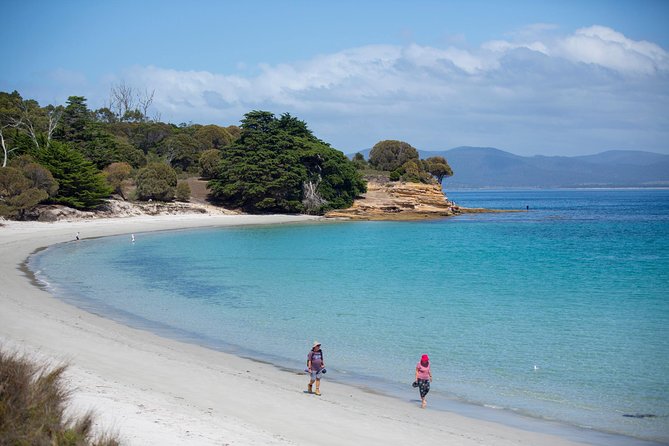
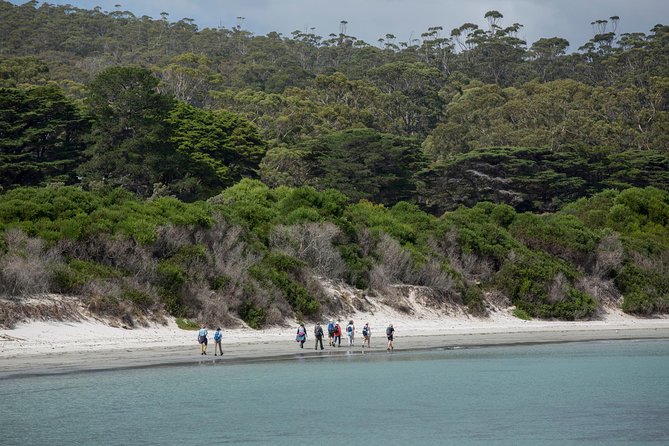
Maria Island offers more than cliffs and history. You will pass secluded bays, white-sand beaches, and clear coastal water in shades ranging from dark blue to turquoise. If conditions and timing allow, you can swim in sheltered areas, so pack swimwear even if you are mainly visiting for walking and wildlife.
Do not expect a long beach holiday stop. The tour has several goals, including the fossil cliffs, Painted Cliffs, wildlife viewing, and Darlington. Swimming is an extra pleasure rather than the central activity.
The beaches are also useful places to pause. After several kilometres on foot, a quiet shoreline gives you a chance to slow down, take photographs, and appreciate the setting without another formal attraction to reach. Bring a towel or light cover-up if you plan to swim, but keep your day pack compact.
What the guides add to the day
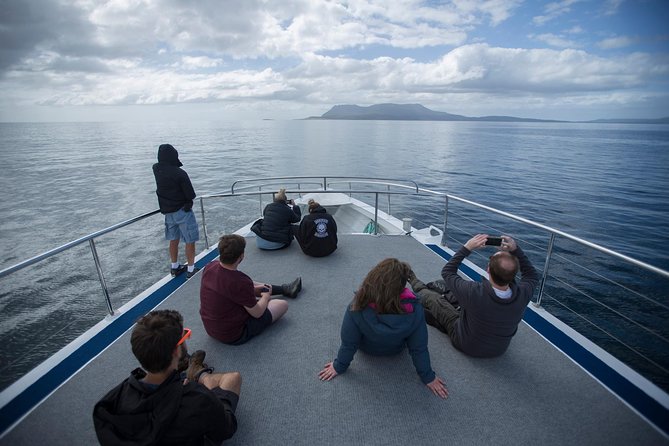
The guide can make or break a nature tour, and this experience has received especially strong praise for its guiding. Matt has been described as enthusiastic, while Heather was praised for knowing the island’s details and history. Ian’s background in history helped bring extra depth, and Trevor was appreciated for keeping the group laughing while sharing information.
Those details matter because Maria Island is not a self-explanatory place. The convict site, fossils, wildlife, and coastal formations become more meaningful when someone explains what you are seeing. You also benefit from guidance about viewing animals respectfully and staying on the correct tracks.
The quality may vary slightly by departure because several guides lead the trips. Still, the repeated emphasis on clear commentary, humour, and enthusiasm suggests that the human side of the tour is one of its strongest features.
Is $154.21 good value?
At $154.21 per person, the price is reasonable for a 12-hour outing that includes transport from Hobart, the return ferry, national park entry, and guided walks. You are paying for a full day with several moving parts, not just admission to one site.
The value is strongest if you do not have a rental car, do not want to organize ferry timing yourself, or prefer an expert to manage the day. The guide also adds value by helping you find wildlife and explaining the convict and geological features.
The price does not include food or drinks. That is easy to overlook, so allow extra money for your own supplies or buy lunch during the brief stop before the ferry. There may also be an opportunity to buy takeaway food on the return journey to Hobart, but you should not rely on that.
The experience is non-refundable and cannot be changed for personal cancellation or amendment requests. Minimum numbers also apply, although if the operator cancels because the group is too small, you should be offered another option or a full refund.
Who should book this Maria Island day trip?
I would choose this tour if you want wildlife, coastal scenery, history, and walking in one long day. It suits active adults, families with children aged eight or older, and anyone who prefers a guide to handling transport and park logistics.
It is also a good fit if wombats are high on your Tasmania wish list. Sightings are not guaranteed, but Maria Island gives you a strong opportunity to see them along with wallabies and native birds.
I would hesitate if you dislike early mornings, long walks, changeable weather, or fixed ferry schedules. You should also think twice if your main goal is a guaranteed visit to the Painted Cliffs, because tides can prevent safe access.
Should you book it?
Yes, if you have one free day in Hobart and want an active outing with real variety. The strongest reasons are the excellent mix of wildlife and history, the ferry journey, the quiet beaches, and the chance to walk through a place that cars cannot reach.
Book with realistic expectations. Pack like you are preparing for four seasons, carry your own lunch and water, arrive early, and accept that wildlife and tides set part of the schedule. If you can do that, Maria Island offers one of the more rewarding day trips from Hobart, especially for people who enjoy walking at a relaxed pace and letting the setting do much of the work.
FAQ
How long is the Maria Island tour from Hobart?
The experience lasts approximately 12 hours. It begins at 6:45 am and ends back at the Hobart meeting point.
Where does the tour start?
The listed meeting point is 20 Davey Street, Hobart, Tasmania 7000. Pick-up is available from limited hotel locations.
Is the ferry included?
Yes. The return ferry crossing fee is included in the tour price.
How much walking is involved?
The tour includes two main walking trails covering almost 10 kilometres in total. The walks are described as easy to moderate, but you need a moderate level of fitness.
What should I bring?
Bring good walking shoes, all-weather clothing, swim gear, a day pack, lunch, snacks, and enough drinking water. Maria Island has no shops and limited drinking water.
Can children join the tour?
The minimum age is eight years. Participants also need suitable general health, fitness, and physical ability for an active day.
Just added around Hobart
- Hobart: Waterfalls, Wilderness & Wildlife – Active Day Tour★ 5.0 · 22 reviews
- Mt Field National Park and Russell Falls with Bonorong Wildlife★ 3.5 · 2 reviews
- Mt Field National Park and Russell Falls from Hobart★ 5.0 · 49 reviews
- From Hobart: Gordon Dam and Lake Pedder Wilderness Day Tour★ 5.0 · 8 reviews
- Tasmania: Wilderness and Wildlife Guided 6-Day Tour★ 4.6 · 60 reviews
- Tasmania: 6-Day Comfort Tour for Wilderness and Wildlife★ 5.0 · 5 reviews
- Hobart: Fly & Cruise in Southwest Wilderness Area with Lunch★ 4.3 · 5 reviews
- Hobart: Mt Field National Park & Wildlife Shore Excursion★ 4.0 · 6 reviews
Wildlife and Elephant Encounters, compared.
Miami: Everglades National Park Airboat Tour & Wildlife Show
Read our review →
Wilderness, Wildlife, Glacier Experience from Anchorage
Read our review →
Kenai Fjords National Park Glacier & Wildlife Cruise
Read our review →
Kenai Fjords National Park Glacier & Wildlife Tour from Seward
Read our review →
Nairobi: National Park & Optional Elephants & Giraffe Center
Read our review →
Addo Elephant National Park All Inclusive Full-Day Safari
Read our review →
Jasper National Park: Evening or Morning Wildlife Watch Tour
Read our review →
Jackson: Grand Teton National Park Guided Wildlife Tour
Read our review →Browse the lists this tour appears in