
REVIEW · NATIONAL PARKS
Etosha National Park: Full or Half-Day Game Drive
Etosha rewards an early start. This guided safari pairs an open 4×4 with a local guide who knows the park from lifelong experience, giving you a strong chance of seeing elephants, lions, giraffes, zebras, and rhinos before the day grows hot. I especially like the flexible route, which changes with animal sightings, and the guide’s contact with other safari vehicles.
I also like the practical setup at Anderson Gate: free parking, an early departure, and a warm fleece poncho for the chilly morning drive. The main drawback is that lunch, water, and the NAD 150 park fee are extra, and half-day visitors must arrange their own way to the gate.
Key points at a glance
- Early entry through Anderson Gate: Starting at park opening helps you beat some crowds and reach the park during the cooler, active morning hours.
- Open 4×4 viewing: The raised, open vehicle gives you clear sightlines for photographs and animal watching, though warm clothes are essential.
- A guide with local instincts: Ben receives especially strong praise for spotting animals, judging stops, and using radio contact with other guides.
- Routes change during the day: The drive follows recent sightings, weather, and animal movement rather than a rigid sightseeing circuit.
- Full-day rhythm: Expect a morning drive, about one hour for lunch inside the park, and more wildlife viewing in the afternoon.
- Extra costs to plan for: Bring cash for the NAD 150 entrance fee, and budget separately for lunch and drinks.
Why an early start matters at Etosha
The safari begins at park opening from Anderson Gate, near Okaukuejo. That timing is more than a nice idea on the schedule. It puts you in position to enter with the first vehicles, when roads may be quieter and animals are often easier to watch before the strongest heat of the day.
If you are staying outside the park, pickup is available from selected accommodation within about 30 minutes of Anderson Gate for full-day trips. Still, meeting at the gate in your own vehicle is recommended. You can park there for free and avoid waiting for a pickup vehicle to collect several people.
This arrangement also saves time and fuel. You drive directly to the entrance, park securely, and are ready to join the open safari vehicle. If your accommodation is inside the park at Okaukuejo Lodge or Okaukuejo Camp, do not assume the guide will collect you there. The regular meeting point is still Anderson Gate unless collection inside the park has been cleared in advance.
For a half-day trip, you must meet at Anderson Gate. There is no pickup. That is simple enough, but it makes your own transport plan important, particularly if you are not already staying nearby.
More National Park Safaris in the world:
- Teide National Park Sunset & Stargazing with Dinner (Star Safari)
★ 5.0 · 2,601 reviews - Teide National Park: Sunset & Stargazing Safari with Dinner
★ 4.6 · 2,115 reviews - From Johannesburg: Pilanesberg Nature Reserve Game Safari
★ 4.8 · 1,327 reviews
What the open 4×4 adds
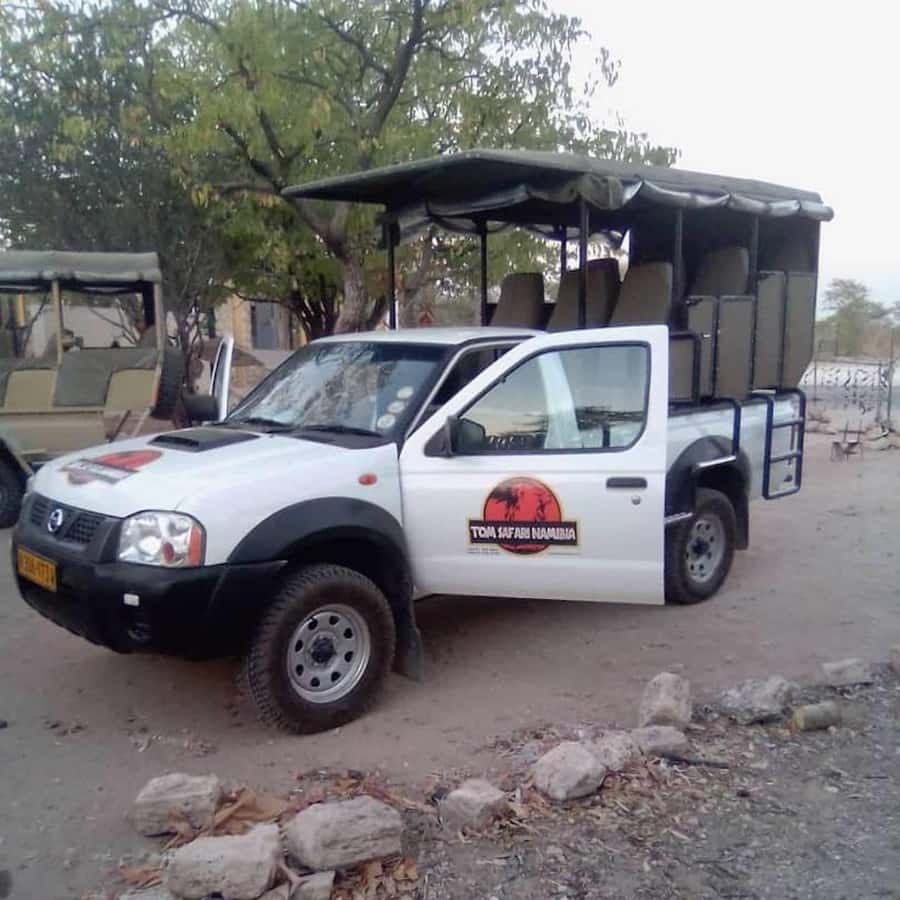
The vehicle is designed for game viewing, not comfort in the usual enclosed-tour sense. You get broad sightlines, open air, and a better chance of photographing an animal without a window reflection between you and the subject.
The tradeoff is the wind. Winter mornings from May through August can feel very cold, especially while the vehicle is moving. Bring layers, a windbreaker, and warm clothing. The supplied fleece poncho is useful, but I would treat it as backup rather than your only protection.
A shared pair of binoculars is available on board. That is helpful for scanning distant animals, birds, or movement near a waterhole, but you may prefer to bring your own if you want binoculars available whenever you need them.
The open vehicle also calls for sensible behavior. Keep your movements calm and follow the guide’s instructions around wildlife. Drones are not allowed.
How the guide shapes the day
The strongest part of this outing is the guide. The activity is led by an experienced local guide born and raised near Etosha, and the guide does more than drive from one marked point to another.
Ben is repeatedly praised for sharp eyesight, safe driving, good humor, and the patience to let people watch an animal for as long as the moment deserves. He is also described as having excellent instincts about animal behavior. That matters in Etosha, where spotting wildlife can depend on a small movement in scrub or a shape far beyond the road.
Communication with other guides is another useful advantage. Guides share information about recent sightings, allowing the vehicle to adjust its route when animals have been found elsewhere. This does not guarantee lions, cheetahs, or leopards, but it gives the day a better chance than following a fixed route regardless of conditions.
Other guides named in the feedback include Amone and Matias, both praised for finding animals and keeping the drive enjoyable. The specific guide assigned to you may vary, so I would judge the experience as a local-guided safari rather than book it solely around one person.
A good guide also sets the right expectations. You may see a wide range of animals, but no ethical safari can promise every species. The most pleasing accounts describe guides who explain that luck is part of the outing, then make the most of each sighting.
The morning drive: animals, waterholes, and patient stops
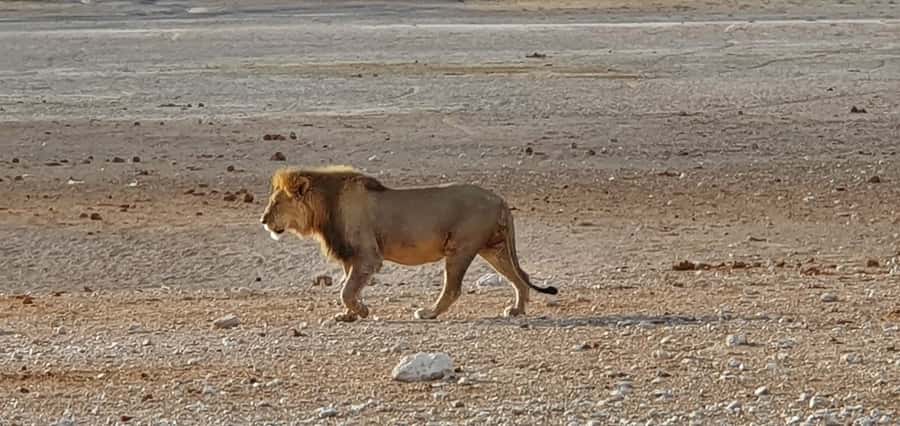
After entering Etosha, the guide chooses roads according to weather, recent sightings, and animal movement. There is no fixed list of stops supplied in advance, which is a benefit if your priority is wildlife rather than checking off a particular route.
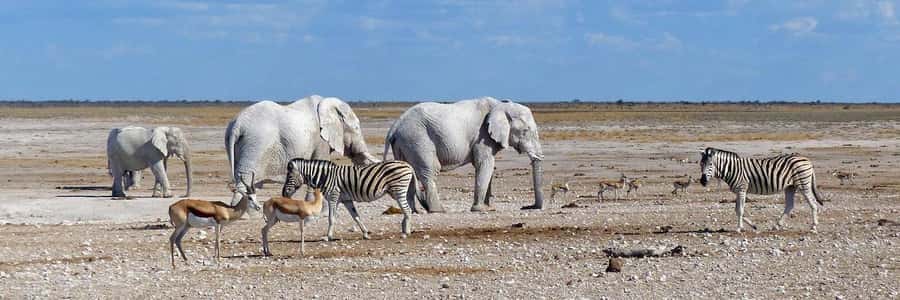
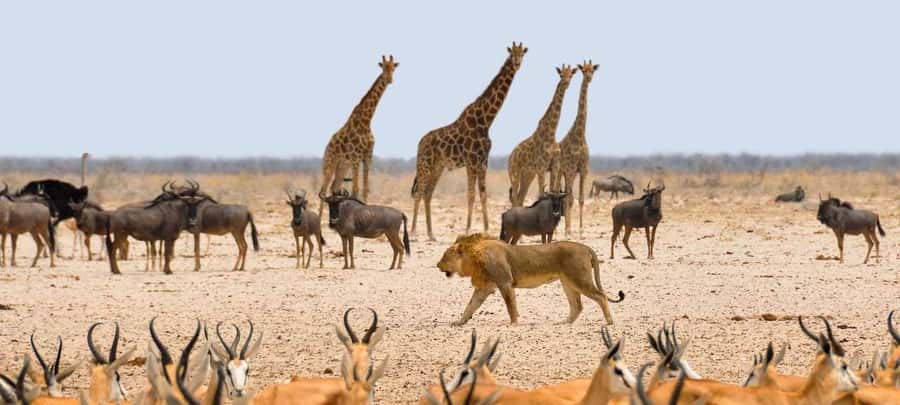
Morning is often the most exciting part of the day. Sightings described on this safari include elephants, lions, giraffes, zebras, rhinos, wildebeest, springboks, oryx, warthogs, ostriches, birds, and other antelope. Cheetahs and leopards are possible but less certain.
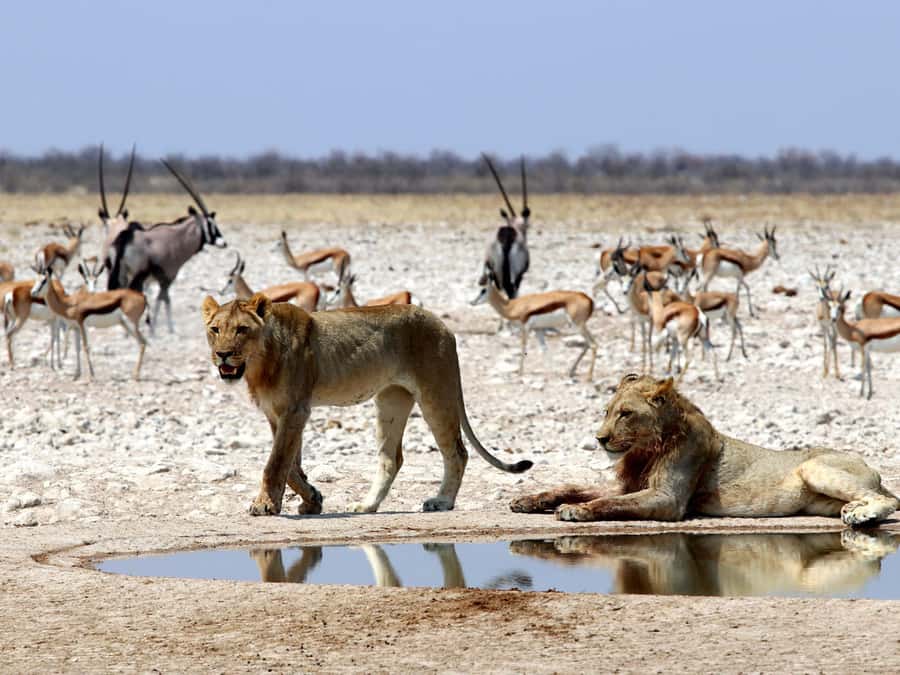
Waterholes can provide some of the best viewing. One outing included elephants bathing, while another produced a family of lions. These moments are not rushed. The guide is praised for stopping at the right time, repositioning the vehicle for photographs, and allowing long periods to watch animal behavior.
That patience is valuable. A quick glimpse of a lion is exciting, but a longer stop lets you notice how animals move, rest, feed, or interact. It also gives you time to take photographs without feeling that the vehicle will pull away just as you find your subject.
Several full-day accounts describe seeing many major species, with some people reporting four or even all of the so-called Big Five by midday. Treat that as a lucky outcome rather than a promise. Etosha is a wild park, and animal sightings vary with season, weather, and chance.
More Half-Day Trips in the world:
- East Coast National Park: Half-Day Caves Jeep Safari
★ 4.6 · 1,090 reviews - Canyonlands National Park Half-Day Tour from Moab
★ 5.0 · 1,074 reviews - Nairobi National Park Half-Day Tour; Free Wi-Fi connection
★ 5.0 · 878 reviews - Half-day Everglades National Park Tour and 1-Hour Air Boat Ride
★ 5.0 · 811 reviews
The midday break inside the park
The full-day outing includes about one hour for lunch at a restaurant inside the park. You can buy a meal there, or bring your own food. Lunch is not included in the $123 price, and drinking water is not supplied, so bring enough water for the day.
This pause gives you a welcome break from the open vehicle. It also divides the safari into two manageable parts. Morning viewing can be cold and busy with concentration, while the afternoon section gives you a fresh chance to look for animals after lunch.
Do not expect the midday stop to be a gourmet highlight. Its value is practical: you can eat, stretch, and reset before returning to the vehicle. If you want to control costs or have specific food needs, bringing your own lunch is the safer choice.
The break is also worth remembering when comparing full-day and half-day options. A full day offers more hours and a natural pause, but it is a long outing of up to 10 hours. Families with very young children or people who prefer a shorter schedule may find the half-day version easier.
The afternoon drive and return to Anderson Gate
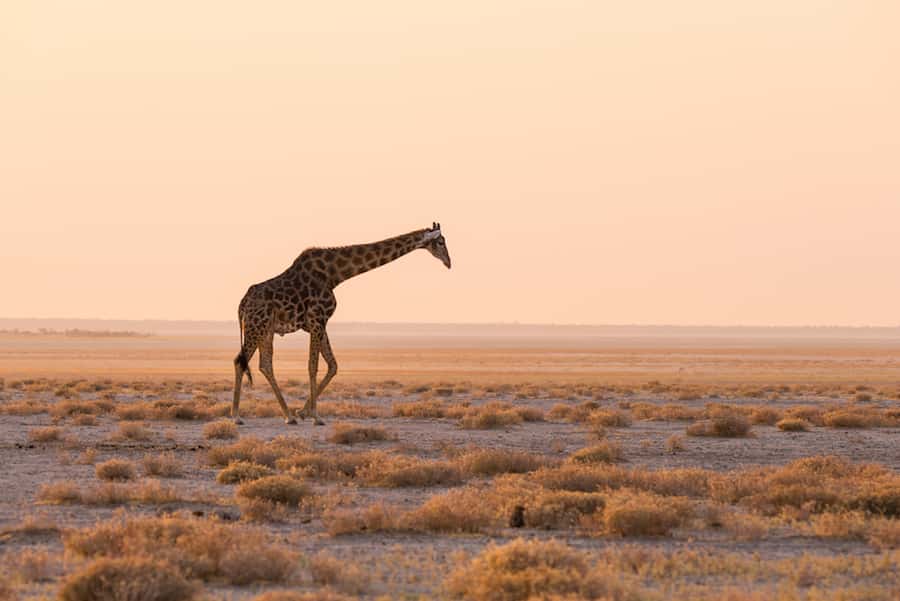
After lunch, the safari continues through the afternoon. The guide again adjusts the route to match animal sightings and conditions rather than simply repeating the morning circuit.
Afternoon light can be pleasing for photographs, and the second drive increases your total viewing time. It also gives you another chance if the morning was quiet. Some sightings may require patience, and having several hours available helps the guide wait rather than hurry from place to place.
The activity ends in the late afternoon, returning to Anderson Gate or to your lodge if that arrangement was made in advance. For a full-day booking, confirm the return plan before departure, especially if your lodge is outside the usual pickup area.
Is $123 good value?
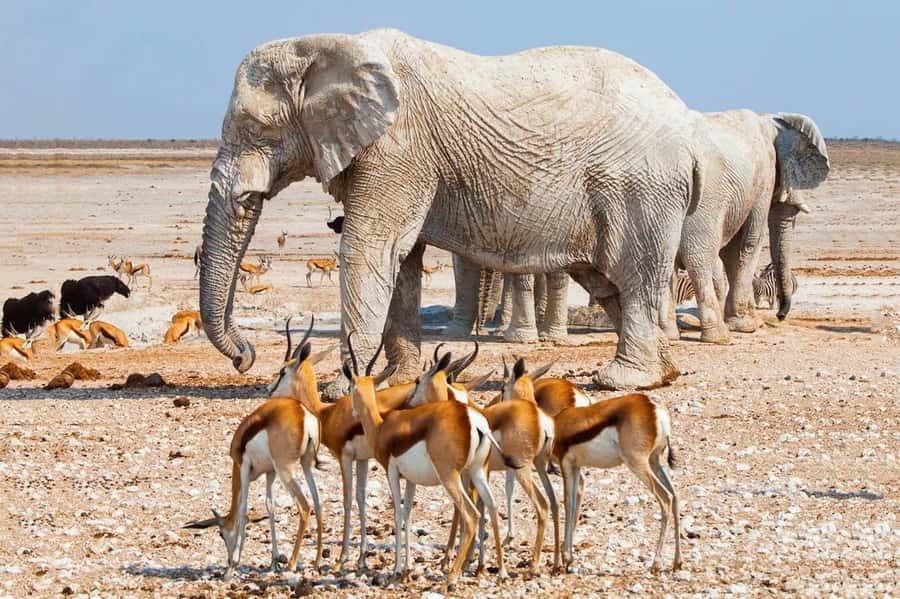
At $123 per person, this is not the cheapest way to enter Etosha, but the price covers more than transport into the park. You are paying for an open 4×4, fuel, a full guided day when selected, local wildlife expertise, shared binoculars, and the effort involved in tracking fresh sightings.
The value looks strongest if you want someone else to handle the wildlife search. A self-drive visit gives you freedom, but you may miss animals, spend time searching without useful information, or fail to know where the latest sightings are. Here, the guide’s communication with other vehicles and ability to spot hidden animals can make a real difference.
The cost is less attractive if you only want a brief look at Etosha or already feel confident planning your own game drive. You must also add the NAD 150 park entrance fee in cash, plus lunch and drinks. Pickup is included only in the applicable full-day arrangements, and departures from other parts of the park cost extra.
Departures from Halali require at least 48 hours’ notice and carry a NAD 1,500 surcharge paid directly to the guide. Departures from Namutoni Gate also require 48 hours’ notice, with a NAD 3,000 surcharge. These additions make the Anderson Gate option the clear budget choice.
Full day or half day?
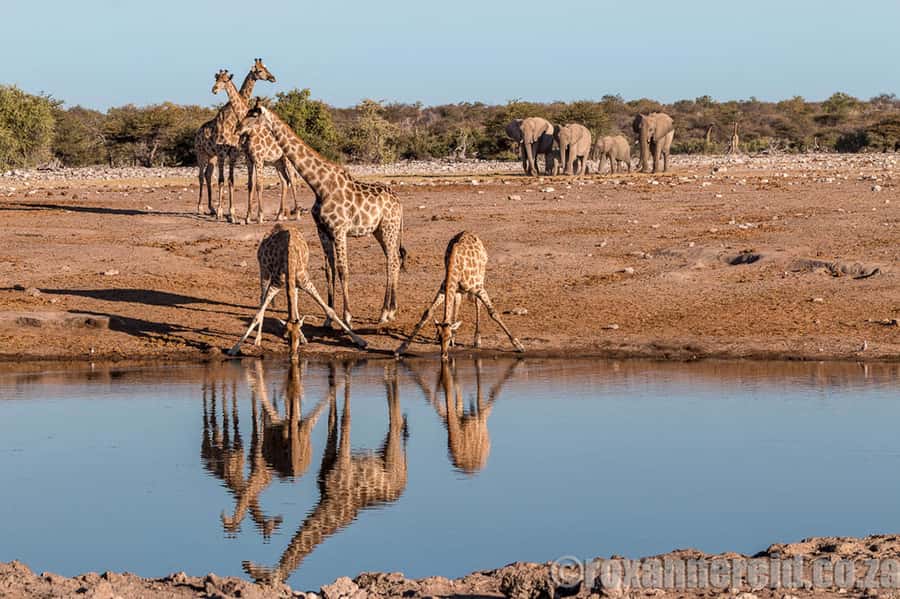
Choose the full-day safari if wildlife is your main reason for visiting Etosha. You get a morning drive, a lunch break, and an afternoon search, giving the guide more time to respond to sightings. The long format also improves your chances of seeing several species rather than relying on one short window.
Choose the half-day option if you have limited time, a tight itinerary, or a lower tolerance for a long outing. You still get the open 4×4 and a local guide, but you must meet at Anderson Gate and no pickup is available.
The half-day format may also suit families or anyone who prefers a shorter first look at the park. Still, you should not expect the same number of opportunities as a full day. Wildlife can appear at any time, and extra hours matter in a place where the animals decide the schedule.
What to pack for a comfortable safari
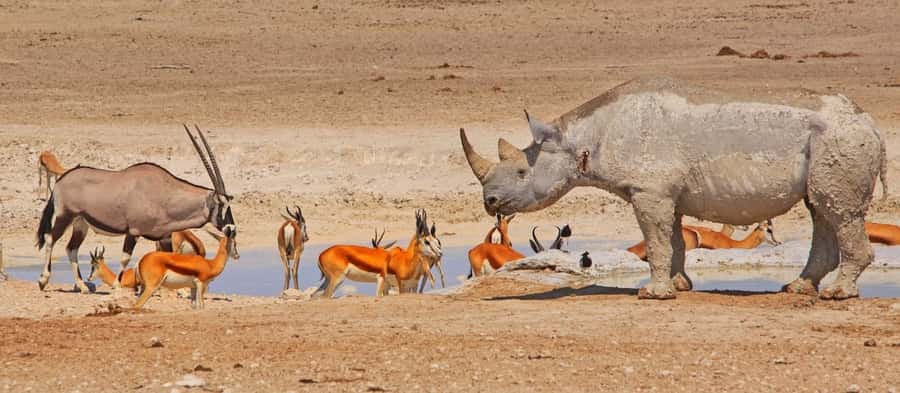
Pack for a cold, windy start even if the forecast later looks warm. The most useful items are:
- Warm layers and a windbreaker
- Drinking water
- Cash for the park fee
- Lunch money, or food from your own supply
- Your own binoculars if you prefer not to share
- A camera with enough battery power
The fleece poncho is supplied, but it is not a substitute for a jacket. You will be sitting in an open vehicle, and the moving air can make the first hours feel much colder than expected.
Because lunch and water are not included, plan before reaching the gate. It is easy to focus on lions and forget basic supplies, then regret it several hours later.
Who will enjoy this Etosha safari most?
I would recommend this outing to anyone who wants a guided wildlife day without committing to a high-end private lodge safari. It suits first-time visitors, photographers, families with older children, and people who value local knowledge over a rigid schedule.
It is especially useful if you are staying near Okaukuejo and want an early start without arranging every part of the drive yourself. The experience also suits anyone nervous about identifying roads, reading animal behavior, or locating recent sightings.
You may want another option if you need a guaranteed private vehicle, included meals, or a fully enclosed vehicle. The open 4×4 is part of the appeal, but it exposes you to cold mornings and wind. You should also be comfortable with an itinerary that changes during the day and with the fact that some animals may remain unseen.
Should you book it?
I would book this safari if you want the best chance of finding wildlife with a guide who understands Etosha firsthand. The strongest reasons are the early start, flexible route, open viewing vehicle, and the guide’s ability to communicate with other safari drivers.
Book the full day if you have the time and want a serious wildlife outing. Choose half day for a shorter introduction, but arrange your own transport to Anderson Gate and do not forget the entrance fee, water, and warm clothes. At $123, the experience offers good value when you use the guide’s spotting skills and local contacts, but the extra costs should be part of your budget from the beginning.
FAQ
Where does the safari begin?
The main meeting point is Anderson Gate near Okaukuejo. Free parking is available at the gate.
Is pickup included?
Pickup and drop-off are available for selected lodges within about 30 minutes of Anderson Gate on applicable full-day bookings. Half-day tours have no pickup and require you to meet at Anderson Gate.
Can I join from Okaukuejo Lodge or Okaukuejo Camp?
You may need to drive to Anderson Gate yourself. Guests staying inside the park should not assume that collection from the lodge or camp is available without prior clearance.
How much is the Etosha entrance fee?
The park entrance fee is NAD 150 per person. It is not included in the safari price and must be paid on site in cash.
Is lunch included?
No. The full-day safari includes about a one-hour lunch stop at a restaurant inside the park, but you pay for your own meal or bring your own food. Drinking water is also not included.
What languages does the guide speak?
The live guide service is offered in English and Afrikaans.
What should I wear?
Bring warm clothing and a windbreaker. Morning drives in the open vehicle can be very cold, especially from May through August.
Just added around the world
- From Galway: Connemara, Kylemore Abbey or National Park Tour★ 4.7 · 7 reviews
- From Flores: Tikal National Park All Inclusive★ 5.0 · 5 reviews
- From Flores: Tikal National Park Private Day Trip with Lunch★ 5.0 · 2 reviews
- From Flagstaff: Grand Canyon National Park Tour★ 4.9 · 106 reviews
- From Ella: Udawalawe National Park Safari Tour★ 5.0 · 12 reviews
- From Ella – Yala National Park Leopard Safari Tour★ 3.8 · 5 reviews
- From Diani or Mombasa: Tsavo East National Park Day Trip★ 5.0 · 4 reviews
- From Ella: All Inclusive Udawalawe National Park Safari★ 4.8 · 19 reviews
National Park Safaris, compared.
From Johannesburg: Pilanesberg Nature Reserve Game Safari
Read our review →
East Coast National Park: Half-Day Caves Jeep Safari
Read our review →
Addo Elephant National Park All Inclusive Full-Day Safari
Read our review →
Yala National Park Safari Tours: Morning/Evening/Full Day
Read our review →
Full Day Ultimate Pilanesberg National Park Safari from Johannesburg or Pretoria
Read our review →
Udawalawe National Park: Elephant Safari with Expert Guide
Read our review →Browse the lists this tour appears in