
REVIEW · AUSTRALIA
Hobart: Maria Island National Park Active Full-Day Tour
Wombats make excellent island guides. This full-day trip pairs wildlife encounters with easy-to-moderate walks, convict history, painted sandstone, and ancient fossils on Maria Island. I especially like the small-group format and the way the guides, including Heather, Hannah, Trevor, Ben, Nick, and Lucas, bring the island’s animals and stories to life.
The ferry ride and quiet roads of eastern Tasmania add to the sense of escape. The main caution is simple: this is not a relaxed sightseeing bus trip. You will walk about 10 kilometres over unpaved ground, hills, beaches, and exposed coastal paths, and lunch and drinks are your responsibility.
Quick points to know
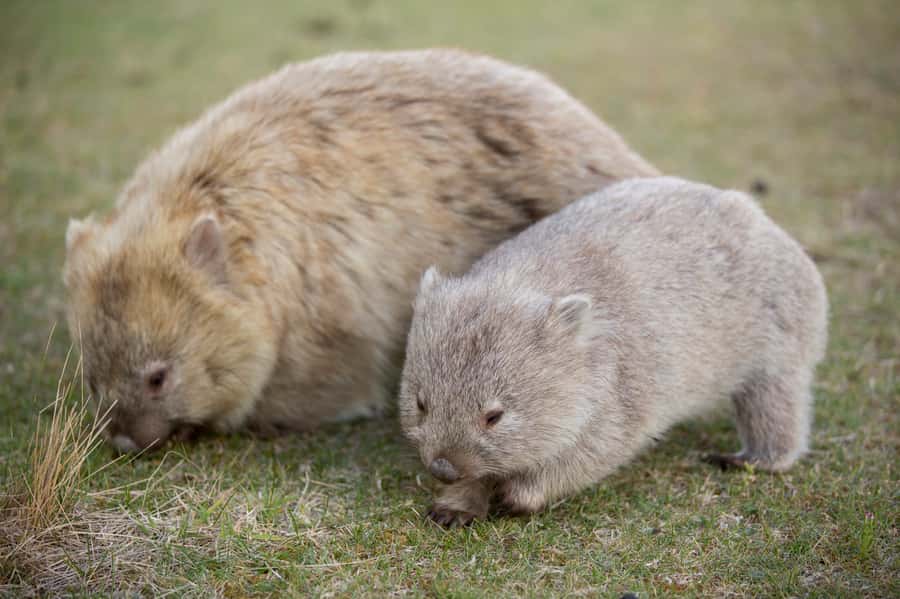
- Wombat sightings are a major draw: You may also see wallabies, kangaroos, pademelons, Cape Barren geese, possums, birds, and possibly Tasmanian devils.
- Two 4.5-kilometre walks shape the day: One visits the Painted Cliffs, and the other follows the Fossil Cliffs.
- Darlington adds real historical weight: Its preserved convict buildings form part of a UNESCO World Heritage site.
- The early departure matters: The summer bus leaves Hobart at 6:45 AM, helping fit in the full walking program.
- Bring your own food and water: Meals and drinks are not included, and large bags are not allowed.
- The tour suits active visitors aged eight and over: It is not suitable for wheelchair users or people with mobility impairments.
Why Maria Island feels different from Hobart
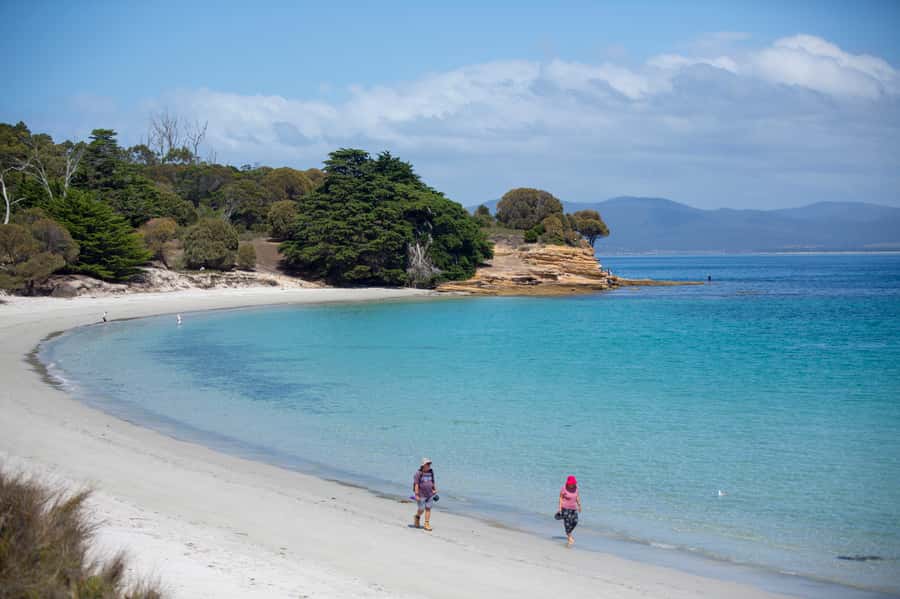
Maria Island is only about an hour from Hobart by road, followed by a 30-minute ferry ride, but it feels far removed from city routines. There are no vehicles on the island, and that absence changes the mood immediately. You hear your own footsteps, wind, birds, and the occasional shuffle of a wombat.
The island’s appeal comes from its unusual mix. You are not choosing between nature and history here. In one day, you can inspect former convict buildings, look across quiet beaches, study fossils exposed in coastal cliffs, and watch wallabies move through the bush.
The trip has earned a rating of 4.8 from 166 bookings, and the strongest praise centres on three things: the guides, the wildlife, and the variety of the day. The transport also receives a high score, with 88 percent of participants giving it a perfect mark. That matters because this outing involves an early start, a ferry connection, and a tightly timed return to Hobart.
More National Park Day Trips in Australia
- Port Arthur Full-day Guided Tour with Harbour Cruise and Tasman National Park
★ 4.5 · 585 reviews - Grampians National Park Small-Group Eco Day Tour
★ 4.8 · 577 reviews - From Darwin: Kakadu Wilderness Escape & Rock Art Day Tour
★ 4.5 · 403 reviews
The early Hobart start and road to the ferry
From October 1 to April 30, you meet at the Tasmanian Travel and Information Centre on 20 Davey Street at 6:40 AM. The bus leaves at 6:45 AM sharp. From May 1 to September 30, the meeting time moves to 7:55 AM, with an 8:00 AM departure.
Do not cut this close. The bus cannot wait for late arrivals because the ferry schedule controls the day. There is also no parking at the general meeting point, so plan to arrive by foot, taxi, or another suitable city transport option.
The one-hour drive gives you a pleasant start before the island walking begins. One particularly nice detail from the journey is the view of Tasmanian farmland, including green fields, waterways, and sheep with lambs. You are already seeing a quieter side of the state before reaching the national park.
Summer’s early departure is useful rather than punishing. It allows more time in daylight for the full walking program and helps the group get ahead of busier periods. In winter, the shorter days mean the guide can adjust the plan to the group’s pace and the weather.
The 30-minute ferry crossing
The ferry is short, straightforward, and part of the experience rather than a mere transfer. It gives you a clear transition from the mainland to an island where vehicles are absent and the pace is slower.
You should keep your daypack compact. Large bags and luggage are not allowed, and there is no reason to bring them for a day outdoors. A small pack with water, food, sunscreen, a jacket, and spare layers is the practical choice.
Tasmanian weather can shift quickly, particularly in spring and along exposed cliffs. Bring a hat and closed-toe walking shoes, but also carry warm and weather-appropriate clothing. A sunny start does not guarantee calm conditions later.
Darlington, where convict history meets island quiet
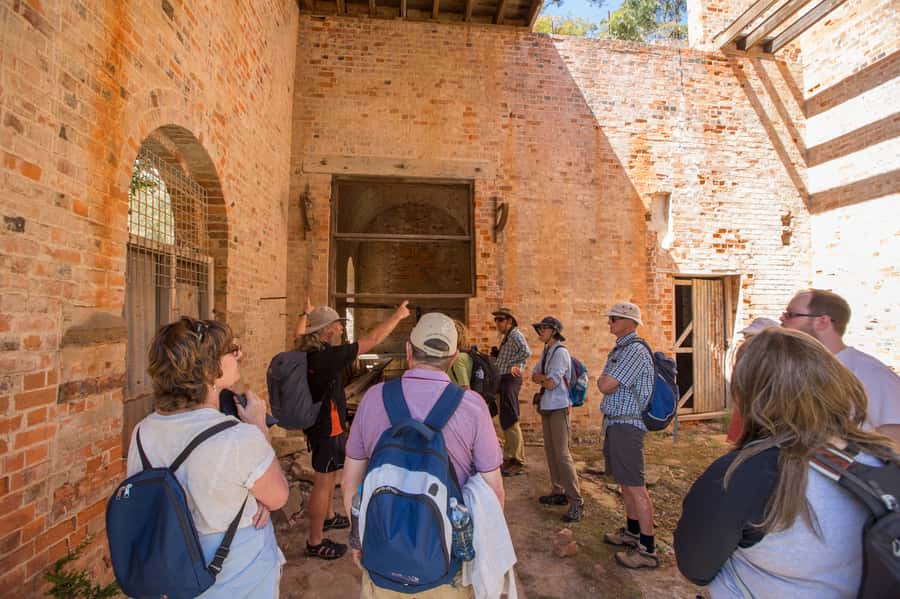
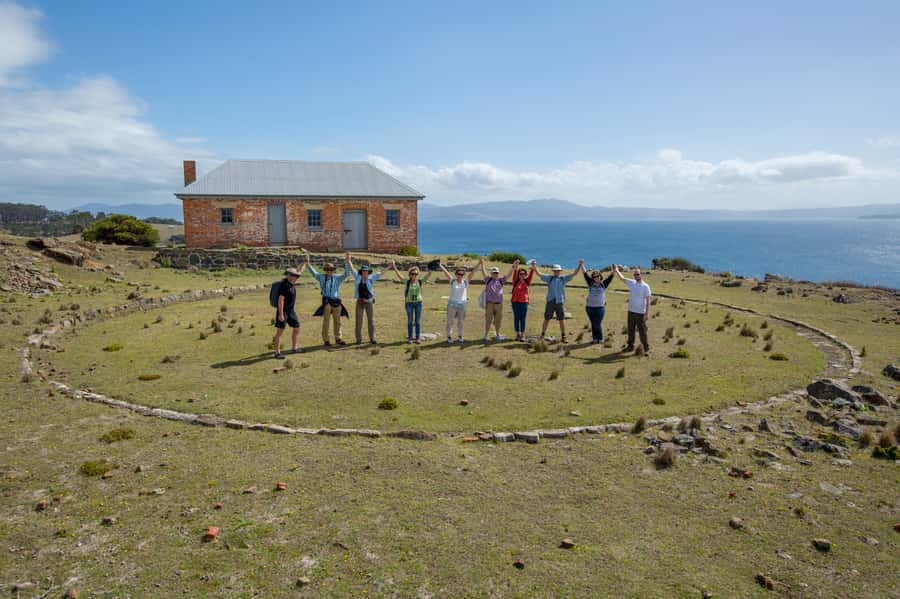
Darlington is one of the first major stops and gives the day its historical backbone. This preserved settlement was a probation station for convicts and is part of a UNESCO World Heritage site. The buildings are not presented as a distant museum display. They sit within the island’s open setting, where history and wildlife share the same paths.
Your guide interprets the buildings and explains how the settlement functioned. This is where a good guide makes a real difference. Trevor, Lucas, Heather, Nick, and others have been praised for explaining the island in an accessible way, answering questions, and linking the site to wider Tasmanian history.
I like this stop because it prevents the day from becoming only a scenic walk. The former settlement gives you a sense of the human effort and hardship tied to Maria Island, while the surrounding quiet makes the past feel close at hand.
The amount of time available can depend on the group’s pace and conditions. One older participant felt the lunch break became short after some delays, so you should keep moving when the guide asks. The schedule has several important pieces to fit together.
Same corner of the map, a different park:
- Litchfield National Park and Jumping Crocodile Cruise
★ 5.0 · 2,119 reviews - Grampians National Park Small-Group Eco Tour from Melbourne
★ 5.0 · 761 reviews - From Port Arthur: Tasman Island Wilderness Cruise
★ 4.9 · 704 reviews - Sydney: Blue Mountains National Park Tour with River Cruise
★ 4.6 · 701 reviews
The Painted Cliffs walk, 4.5 kilometres round trip
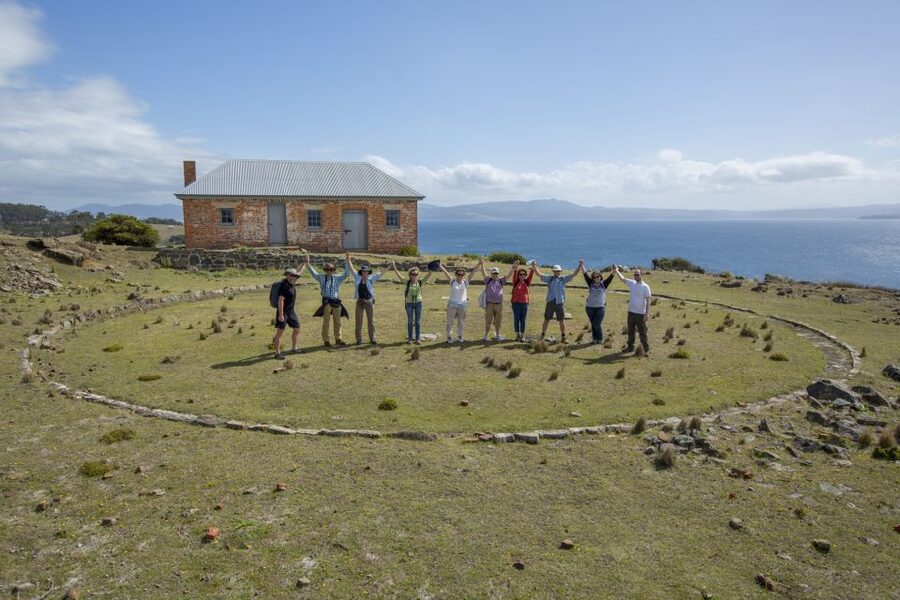
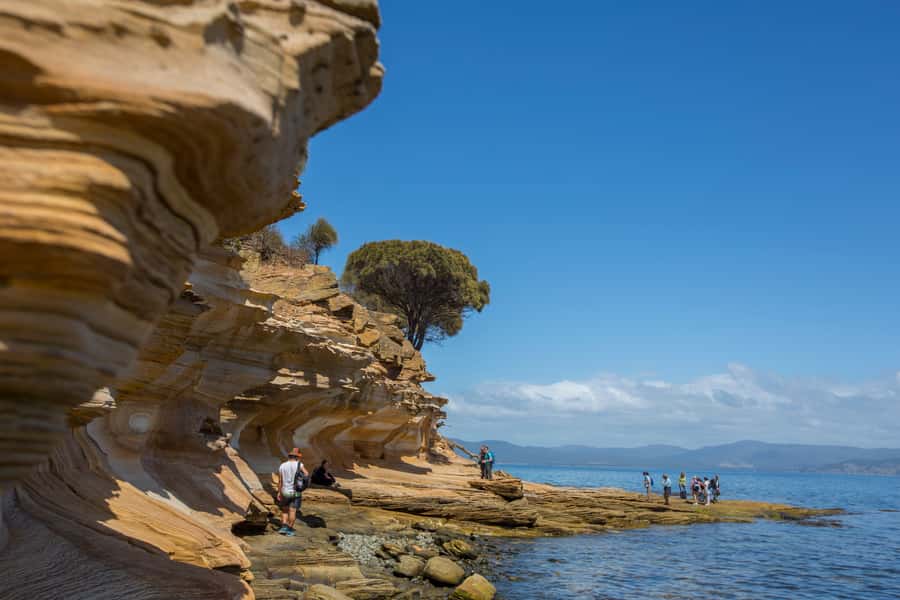
The Painted Cliffs are one of the visual highlights of the tour. The sandstone is marked with unusual colours and bands, creating patterns that look almost too neat to be natural. The walk is described as easy, but it still covers 4.5 kilometres and includes uneven ground.
You will have time to examine the rock formations close up and take photographs. The changing light can bring out different tones in the stone, while the coastal setting adds sea views and open space.
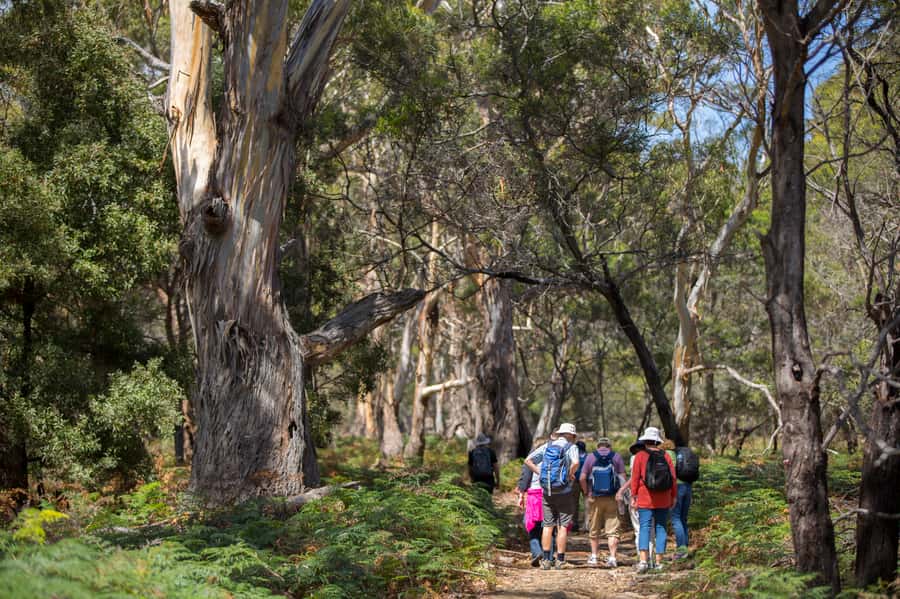
The path is not a paved promenade. Wear comfortable, closed-toe shoes and expect some small hills. Several participants describe the walking as achievable, but the repeated advice is clear: be ready for a full day on your feet.
The coast also offers chances to pause at rockpools or relax briefly on the beach. These moments depend on the schedule, tide, conditions, and the group’s speed. If you want time for close photography, do not assume every stop will be long. The guide is balancing the ferry, both cliff walks, Darlington, and the return bus.
The Fossil Cliffs and 300 million years of geology
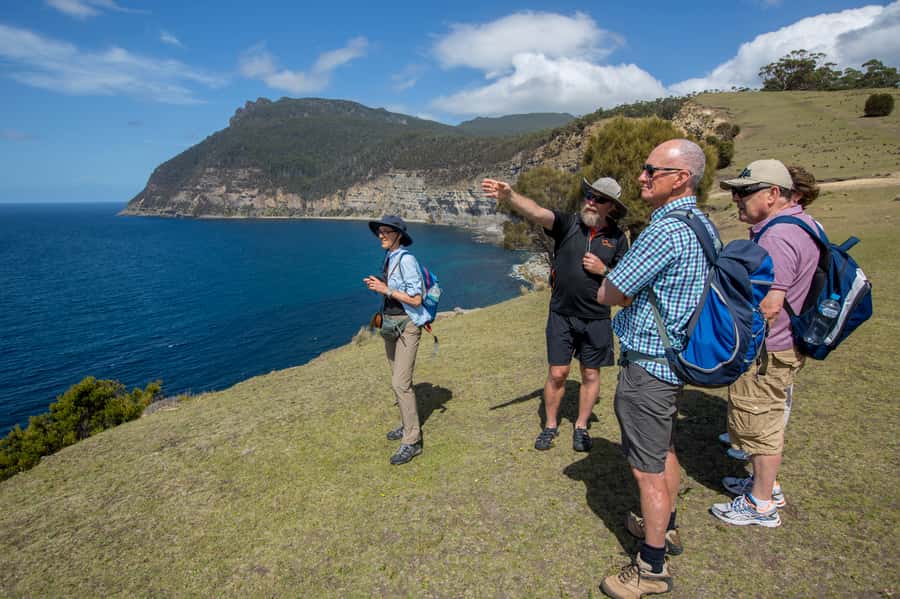
The second major walk follows the Fossil Cliffs along the western side of the island. This is another circuit of about 4.5 kilometres, crossing windswept hills and cliff country where fossils from roughly 300 million years ago are exposed.
This stop is valuable because it lets you see geology rather than simply hear about it. Fossils are part of the cliff face and help explain how the area changed over vast stretches of time. Your guide provides interpretation along the route, pointing out what you are seeing and placing it in a wider geological story.
The Fossil Cliffs section may feel more exposed than the Painted Cliffs walk. Wind can affect comfort, and the scenery may seem less immediately colourful. One participant felt the second part of the tour was less spectacular and would have preferred more beach time. That is a fair point if your ideal day includes long, unplanned pauses beside the water.
For me, the contrast is useful. The Painted Cliffs offer colour and shape, while the Fossil Cliffs show age and weathering. Together, they make the island more than a pretty place for photographs.
Wildlife is the day’s greatest surprise
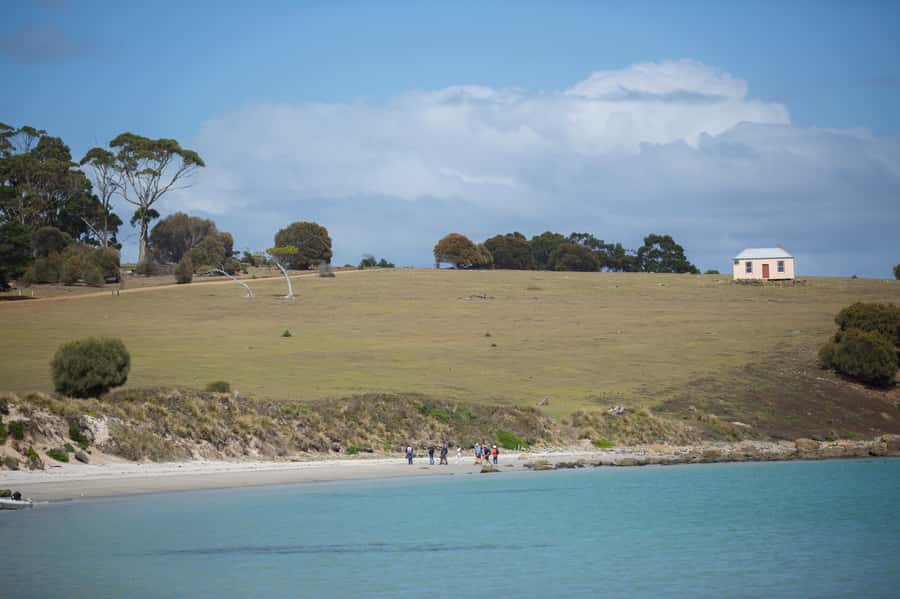
Maria Island is famous for its wildlife, and the animals are one of the strongest reasons to choose this tour. Wombats are the stars. Several people saw two, three, or even four during the day, sometimes at close range. Baby wombats have also been spotted.
You might also see kangaroos, wallabies, pademelons, possums, Cape Barren geese, and many kinds of birdlife. Guides such as Ben and Lucas are praised for spotting animals and encouraging respectful behaviour around them. That matters. The best encounter is one where the animal remains undisturbed.
Wildlife is never guaranteed, so do not book this expecting a checklist. Some days bring several wombats, while another may offer wallabies and kangaroos but no wombats. Weather, timing, and animal movement all matter.
The absence of vehicles helps the experience. You are not looking from a moving bus window. You walk through the animals’ setting and have time to stop, listen, and scan the trees, rockpools, and open ground. Keep your camera ready, but do not let it replace the moment itself.
The tour description also identifies Tasmanian devils as part of the island’s wildlife. Seeing one is not promised, and the supplied experiences focus more often on wombats, wallabies, kangaroos, and birds. Treat any devil sighting as a lucky extra, not the purpose of the day.
How the small-group format affects the experience
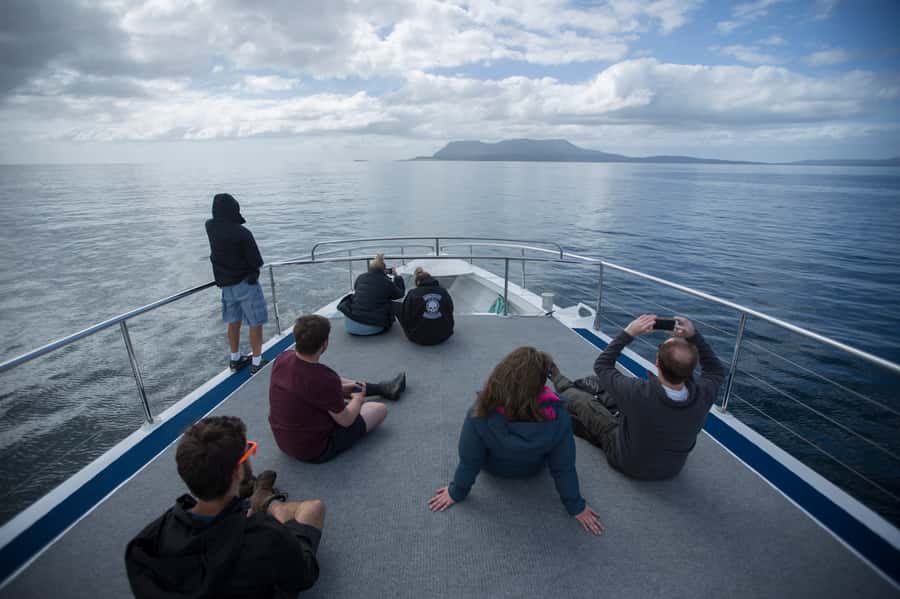
This is a small-group tour, and that is one of its biggest practical strengths. A group of six was described as feeling almost like a private outing. A smaller group also makes it easier to pause for wildlife, hear explanations, and keep a comfortable walking rhythm.
The guides are repeatedly praised for being friendly, relaxed, and attentive. Hannah gave her group several choices during the day, while Ben continued looking for wombats despite windy conditions. Nick was praised for managing time well, and Trevor for storytelling and taking good care of the group.
That flexibility is especially useful in winter. From May through September, the guide adjusts the day for shorter daylight hours, weather, and the group’s pace. You should still expect the key Maria Island sights, but the exact balance of stops may change.
There is a trade-off. A group moves at the pace of its slowest member, and one delayed couple once shortened the lunch period for everyone else. If you need a completely private timetable, this is not that. If you value company, local explanation, and help finding wildlife, the format works well.
What to eat, drink, and pack
Meals and drinks are not included. Bring enough food for the day, plenty of water, and a reusable bottle. One participant specifically wished water had been supplied in the van, since carrying enough for a long walking day can be inconvenient.
You need practical outdoor clothing rather than stylish travel clothes. Pack:
- Comfortable walking shoes with closed toes
- Water and food
- Sunscreen and a hat
- A jacket and warm layers
- Weather-appropriate outdoor clothing
- A small daypack
- A reusable water bottle
Avoid large bags and luggage. You will carry everything during the walks, so keep it light.
The route includes unpaved terrain, small hills, beaches, and exposed coastal sections. You do not need an extreme level of fitness, but you should be comfortable walking about 10 kilometres in one day. The tour is not suitable for wheelchair users or people with mobility impairments, and the minimum age is eight.
Is the $152 price good value?
At $152 per person, the cost covers the national park fee, return ferry tickets, transport from central Hobart, a small-group setting, an English-speaking guide, guided walks, and interpretation. Buying each part separately would require more planning and would not give you the same help with wildlife spotting or timing.
I see the value most clearly if you have limited time in Tasmania. You can visit Maria Island without arranging the bus, ferry, park entry, walking plan, and return connection yourself. The guide also adds the context that can turn a cliff walk or old building into something memorable.
The price is less attractive if you already have independent transport, prefer to set your own pace, or want a long beach break with no schedule. Food and drinks are extra, and the early start may require planning the night before.
With a 10-hour day and two substantial walks, this is a full outing rather than a quick attraction visit. You are paying for access, structure, local interpretation, and the chance to see a large amount of the island in one day.
Who should book this Maria Island tour?
I would choose this trip if you want nature, history, and active walking in equal measure. It is a strong fit for wildlife fans, photographers, first-time visitors to Tasmania, and people who prefer a guide to explain what they are seeing.
It also suits families with children aged eight and over, provided the children are comfortable walking for much of the day. Older walkers can enjoy it too if they are steady on uneven ground and honest about their stamina. One group aged between 69 and 71 completed the outing but felt an extra half-hour and a longer lunch would have helped.
I would choose another option if you want a slow beach day, have mobility limitations, dislike early departures, or do not want to carry lunch and water. The island may look peaceful, but the day itself is active and carefully timed.
Final verdict: book it for wildlife and walking
You should book the Maria Island National Park Active Full-Day Tour if you want to see the island through several lenses: wombat country, convict history, painted sandstone, ancient fossils, and open coastal paths.
The most convincing reason to go is the combination of wildlife and guide support. Wombats are never guaranteed, but the small groups and attentive guides improve your chances of noticing them without disturbing them. Add the ferry, Darlington, the two cliff walks, and the return to Hobart around 5:00 PM, and the day offers strong value for an active visitor.
Go prepared for distance, weather, and a packed schedule. Bring water, food, layers, and good shoes. If that sounds enjoyable rather than demanding, Maria Island could become one of the most memorable days of your Tasmania visit.
FAQ
How long is the Maria Island tour?
The tour lasts about 10 hours and returns to the Tasmanian Travel and Information Centre in Hobart at around 5:00 PM.
Where does the tour meet in Hobart?
The meeting point is the Tasmanian Travel and Information Centre at 20 Davey Street, Hobart.
What time does the tour leave in summer?
From October 1 to April 30, you should be ready at 6:40 AM. The bus departs promptly at 6:45 AM.
What time does the tour leave in winter?
From May 1 to September 30, you should be ready at 7:55 AM. The bus departs promptly at 8:00 AM.
How long is the ferry ride?
The ferry ride to Maria Island takes about 30 minutes, with another 30-minute ferry ride for the return journey.
How much walking is involved?
The tour includes approximately 10 kilometres of walking over varied, unpaved terrain. The Painted Cliffs and Fossil Cliffs walks are each about 4.5 kilometres.
What wildlife might I see?
Possible sightings include wombats, wallabies, kangaroos, pademelons, Cape Barren geese, possums, birds, and Tasmanian devils. Wildlife sightings are not guaranteed.
Are meals and drinks included?
No. You need to bring your own food and drinks, including enough water for the walking day.
Is the tour suitable for children?
The minimum age is eight. Children should be comfortable spending a full day outdoors and walking about 10 kilometres over uneven ground.
Can wheelchair users join the tour?
No. The tour is not suitable for wheelchair users or people with mobility impairments.
What should I wear and bring?
Bring comfortable closed-toe shoes, a hat, sunscreen, water, food, a jacket, weather-appropriate outdoor clothing, and a small daypack.
Is parking available at the meeting point?
No. There is no parking at the general meeting point if you arrive by car.
What language is the tour conducted in?
The tour is conducted in English with a live guide.
Can I cancel for a refund?
You can cancel up to two days in advance for a full refund.
More Full-Day Trips in Australia
- Litchfield National Park: Full-Day & Lunch from Darwin
★ 4.6 · 205 reviews - Darwin: Kakadu National Park & Wildlife Full Day Tour
★ 4.5 · 200 reviews - Tenerife: Teide National Park Full-Day Tour with Pickup
★ 4.5 · 1,613 reviews - Montenegro: Full-Day Tour to Lovcen National Park & More
★ 4.9 · 992 reviews
Just added around Australia
- Darwin: Nitmiluk National Park Tour & Katherine Gorge Cruise★ 4.5 · 60 reviews
- Eurimbula National Park Tour: Picnic on the Beach★ 4.5 · 8 reviews
- Dolphin Kayak Tour & Beach 4X4 National Park Tour (Private)★ 5.0 · 4 reviews
- Darwin: Litchfield National Park Waterfalls & Wildlife Tour★ 4.6 · 43 reviews
- Darwin: Kakadu National Park Day Trip★ 4.7 · 35 reviews
- Darwin: Kakadu National Park, Yellow Water River Cruise★ 4.4 · 4 reviews
- Cradle Mountain National Park by Coach from Launceston★ 4.4 · 35 reviews
- Coffin Bay National Park: Highlights and Off-Road 4WD Tour★ 5.0 · 11 reviews
National Park Day Trips, compared.

Yosemite Highlights & Giant Sequoias Day Tour from San Francisco
Read our review →
Plitvice Lakes National Park Guided Day Tour from Split
Read our review →
From Manapouri: Doubtful Sound Wilderness Day Trip
Read our review →
Tenerife: Teide National Park Full-Day Tour with Pickup
Read our review →
Split: Krka National Park Day Trip with Boat Ride & Swimming
Read our review →
Canyonlands National Park Half-Day Tour from Moab
Read our review →
Best of Olympic National Park from Seattle: All-Inclusive Small-Group Day Tour
Read our review →
Montenegro: Full-Day Tour to Lovcen National Park & More
Read our review →Browse the lists this tour appears in