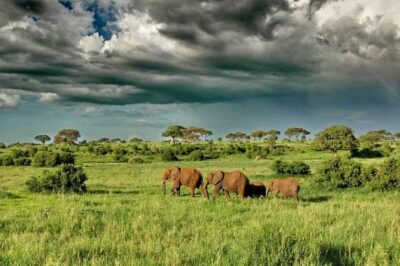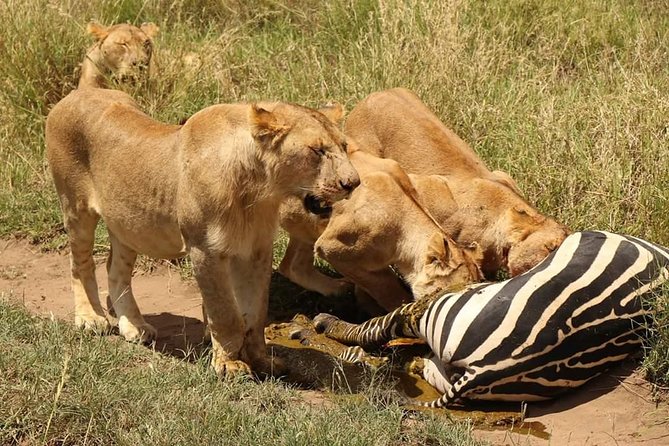
REVIEW · TANZANIA
4 Days Joined Group Safari Serengeti,Ngorongoro and Tarangire National Parks
Wild animals are only part of the adventure. This four-day safari links Tarangire, Serengeti, and Ngorongoro in a small group of up to six, using a pop-up-roof 4WD Jeep for long game drives and wide views. I like the mix of habitats, from Tarangire’s baobabs to Serengeti’s open plains, and I like that airport transfers, camping equipment, meals, and three nights of accommodation are included. The main drawback is the pace: you spend many hours driving, and the route leaves limited time for rest.
The advertised price of $974.36 per person is appealing for a safari covering three major parks, especially with park fees, food, a guide, and transfers included. You should still expect basic camping rather than polished lodge comfort. The schedule is full, but that is the trade-off for seeing so much of northern Tanzania in four days.
Key things to know before you book
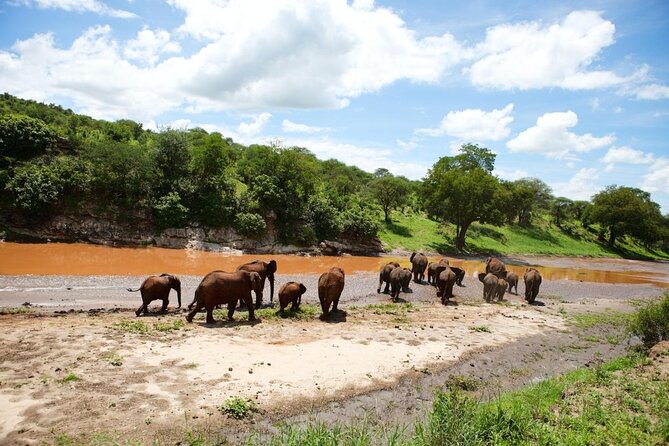
- Tarangire begins the wildlife story: Expect baobab trees, acacias, elephants, and a six-hour game drive on the first day.
- Serengeti gets the most time: You have a half-day drive on Day 2, then a long central Serengeti game drive on Day 3.
- Seronera is the leopard focus: The valley’s kopjes give predators good lookout points and offer one of the best chances for leopard sightings on this route.
- Ngorongoro packs animals into one crater: The six-hour crater drive can produce a very strong Big Five day, though sightings are never guaranteed.
- The group is capped at six: That is a useful balance between sharing costs and keeping the Jeep fairly manageable.
- Airport transfers add real value: Pickup and drop-off are included, with Arusha as the start and end point.
Three parks, four days, and a lot of road time
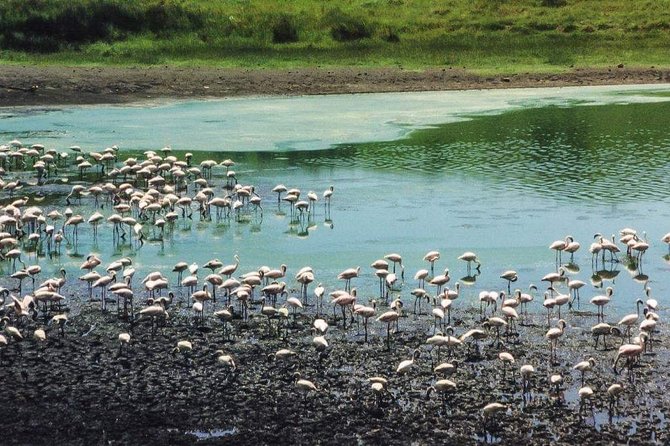
This is a classic northern Tanzania circuit, but it is not a gentle holiday with long mornings beside a swimming pool. You leave Arusha early, spend much of each day in the vehicle, and sleep in camps along the route.
That effort pays off because the three parks feel different. Tarangire is wooded and dramatic, with giant baobabs and a strong elephant presence. Serengeti opens into huge grasslands and gives you more time to search for predators. Ngorongoro compresses a wide range of wildlife into a volcanic crater.
The safari uses a pop-up four-wheel-drive Jeep. You can raise the roof for game viewing and keep your camera at a useful height. The vehicle is shared, so the experience depends partly on how well the group cooperates with seating, viewing space, and stop times.
The maximum group size is six. I consider that one of the strongest features of the trip. A larger vehicle can make a budget safari feel crowded, while six people gives you a better chance of seeing through the roof and discussing sightings without too much commotion.
English, French, and Spanish guiding is offered. The named guides connected with this operator include Bernard, David Simba, Cheddy, Max, and Lu, with several direct accounts praising punctual pickups, friendly service, and help with changing plans. Guide quality matters enormously on safari, since the driver is also the person reading animal behavior, choosing routes, and explaining what you see.
More National Park Safaris in Arusha
- 7 Days Tanganyika Wilderness Safari
★ 5.0 · 159 reviews - 3 Day Serengeti National Park & Ngorongoro Crater Camping Safari
★ 5.0 · 142 reviews - Arusha National Park Private Safari
★ 5.0 · 59 reviews
Day 1: Tarangire’s baobabs and elephant country
The first morning begins with breakfast at Tourist Inn Hotel at 7:00 am. Pickup follows at 8:00 am, then you drive for about two hours to Tarangire National Park.
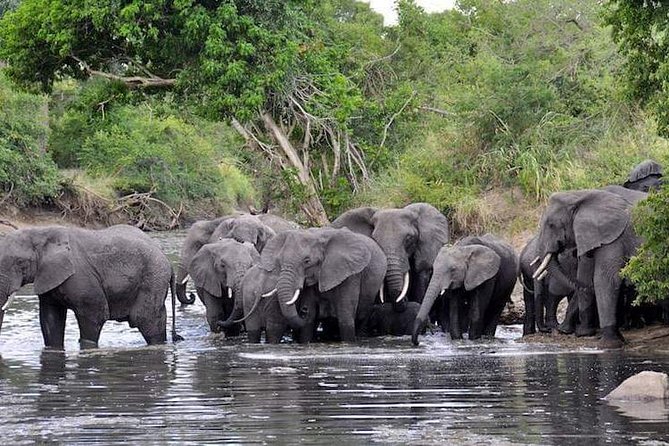
Tarangire covers about 2,850 square kilometers and lies roughly 118 kilometers southwest of Arusha. Its scenery differs from the open Serengeti. You pass through a mix of acacia woodland, sparse vegetation, and large baobab trees that give the park a distinctly African silhouette.
The park is known for having one of the highest concentrations of wildlife outside the Serengeti ecosystem. That makes it a sensible first stop. You can start seeing animals without waiting until the long Serengeti transfer, and the six-hour game drive gives your guide time to search rather than simply pass through.
Lunch is served at a picnic site around 1:00 pm. After lunch, the game drive continues before you head toward Fig Big Tree at about 6:00 pm for dinner and overnight accommodation.
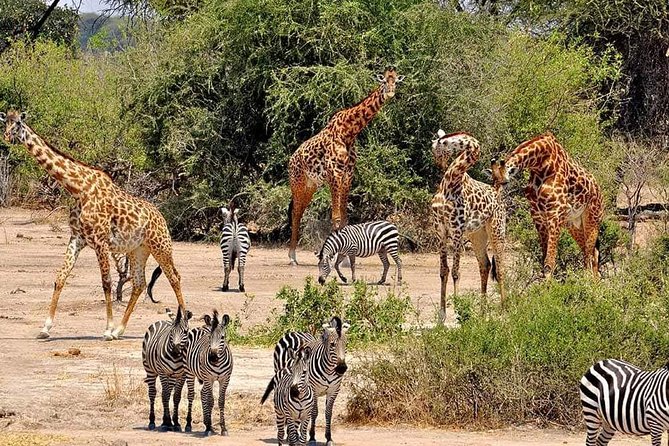
Tarangire is especially appealing if you like scenery as much as animal checklists. The baobabs create memorable photographs, while the combination of trees and open areas gives you changing views from the Jeep. You might see elephants, giraffes, zebras, wildebeest, and other plains animals, but exact sightings depend on the season and the animals’ movements.
The practical point is simple: this is a long opening day. You leave early, drive two hours, spend six hours on safari, and then continue to camp. Bring water, sun protection, and patience. Drinking water is included, but a reusable bottle and personal snacks can still be useful during long stretches in the vehicle.
Day 2: The long road into southern Serengeti
Breakfast comes early at Fig Big Tree. At about 8:00 am, you set off on a four-hour drive toward the southern Serengeti, followed by a three to four-hour game drive and picnic lunch around 1:00 pm.
The Serengeti name refers to endless plains, and the first impression is exactly that: broad grassland with very little to block your view. This open country supports wildebeest, zebra, Coke’s hartebeest, waterbuck, and Grant’s and Thomson’s gazelles. It also gives predators a wide hunting ground.
The itinerary describes the southern, central, and Seronera areas across the Serengeti portion of the trip. That is important because the park is enormous. You are not seeing it all in any literal sense. Instead, the route gives you a sample of its southern and central zones, with the second Serengeti day focused more heavily on the Seronera Valley.
A four-hour transfer before the game drive is the cost of reaching this famous park by road. If you want to avoid long drives, this is not the right style of safari. If you want to keep the price below a private luxury itinerary, the road journey is part of the bargain.
By about 6:00 pm, you reach Seronera campsite for dinner and overnight accommodation. Camping adds atmosphere, but it also means you should prepare for a simple night. Sleeping bags, camping equipment, and bath towels are supplied. The trip includes three nights of accommodation overall, though the exact mix can include camping and lodge-style accommodation depending on the arrangement.
Day 3: Seronera, kopjes, and the leopard search
Day 3 starts before sunrise. You have a light breakfast at 5:30 am and begin an early game drive at 6:00 am toward central Serengeti. The early start is not just a punishment for anyone who enjoys sleep. Morning is a useful time for wildlife viewing, and the cooler hours can be productive before the heat of the day.
A heavier breakfast is served at camp around 10:00 am. Lunch follows at a picnic site at 1:00 pm, with at least six hours of game driving scheduled in total. At about 6:00 pm, you leave for Simba Campsite near Ngorongoro.
The central Serengeti’s Seronera Valley is the strongest section of this itinerary for a leopard search. The area has scattered acacia trees and rocky kopjes, small raised outcrops that provide lookout points for predators. Those rocks also offer shelter for hyraxes, pythons, lizards, and other reptiles.
Leopards are commonly associated with the Seronera Valley, but you should keep expectations sensible. No guide can promise a leopard, rhinoceros, or any other specific animal. The value of having a full game-drive day here is that your guide has more time to watch, listen to radio reports if used, and follow promising areas rather than rushing through.
The Serengeti is also connected to the great annual migration, when huge herds move between Tanzania and Kenya’s Masai Mara. The exact route and timing change with rain and grazing conditions. The trip introduces the movement between the Serengeti and Masai Mara and explains the role of large crocodiles in regulating animal numbers along the rivers.
The itinerary specifically highlights the Mara and Grumeti Rivers. Their importance is tied to the movement of migrating herds and the dangers animals face when crossing water. The schedule does not promise a migration crossing, so book this for the wider Serengeti experience rather than one dramatic river scene.
More National Park Safaris in Tanzania
- 6 days 5 nights safari Ngorongoro, Serengeti and Tarangire National Parks
★ 5.0 · 39 reviews - 3 Days Safari to Serengeti National Park & Ngorongoro Crater in Tanzania
★ 5.0 · 34 reviews - 3days Serengeti National park and Ngorongoro Crater Tanzania Safari
★ 5.0 · 21 reviews - 3 Days Safari Ngorongoro Crater and Serengeti National Park
★ 5.0 · 21 reviews
Day 4: Ngorongoro Crater from the rim to the floor
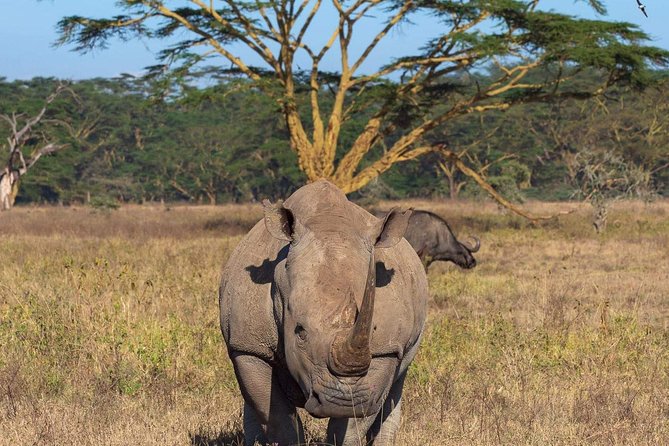
After breakfast at Simba Campsite at 7:00 am, you begin the descent into Ngorongoro Crater around 8:30 am. The crater drive lasts at least six hours, with a picnic lunch around 1:00 pm. At 4:00 pm, you begin the exit toward Arusha, where dinner and overnight accommodation at Tourist Inn are scheduled.
Ngorongoro is a powerful final act because the volcanic crater creates a compact setting for wildlife. Fertile volcanic soil supports several habitats, and Lake Makat, a soda lake whose name means salt in the Maasai language, attracts birdlife.
The crater is often regarded as one of the better places in Tanzania to search for several major species in one day. Lions, buffalo, hippos, zebras, and many other animals may be seen, while rhinoceros sightings remain possible but never certain. The setting itself is part of the reward. You look down from the rim, descend into the crater, and spend hours moving between grassland, water, and wildlife areas.
This is also the day with the clearest human-history angle. Ngorongoro connects the safari experience with early human evolution in the wider conservation area. If you want your trip to include more than animals and photographs, the guide’s explanation here can add useful context.
The timing is tight. Six hours in the crater is substantial, but the drive back to Arusha after a 4:00 pm departure makes Day 4 another long one. If your onward flight is soon after the tour, confirm the timing carefully. The listed end point is back at the Arusha meeting point, and airport drop-off is included, but flight schedules are not.
What is included, and what you still need to budget
The price of $974.36 per person covers a great deal for a four-day safari. Included items are:
- Professional driver-guide
- English, French, and Spanish guiding
- Airport pickup and drop-off
- Three nights of accommodation
- Sleeping bag and camping equipment
- Breakfast, lunch, and dinner
- Drinking water and wine
- Bath towels
- Park entry fees for Tarangire, Serengeti, and Ngorongoro
- Game drives and a walking safari if the itinerary specifies one
- A possible Arusha Village Experience entry
- Dietary requests on request
The value is strongest if you would otherwise need to arrange park fees, transfers, food, camping gear, and a guide separately. Those costs can mount quickly in Tanzania. Sharing the Jeep keeps the price lower than a private safari while still giving you a focused route through three major parks.
Tips for the driver-guide and safari cook are not included. International flights, travel insurance, and visas are also separate. I would treat gratuities as part of the real safari budget, not as an optional surprise at the end.
One detail deserves clarification before payment: the itinerary lists four breakfasts, four lunches, and four dinners, while the tour lasts four days and includes three nights. The schedule itself shows meals each day, but ask the operator to confirm exactly which meals are provided, especially if your arrival or departure timing changes.
Who will enjoy this safari most
I would recommend this trip to someone who wants a broad first look at northern Tanzania without paying for a private vehicle. The small group, included transfers, and three-park route make it a practical choice for a solo participant or a pair willing to share.
It also suits people who care more about wildlife time than luxury rooms. The camping element is central, not a minor detail. You should be comfortable with early breakfasts, long drives, picnic lunches, and changing accommodation.
This is less suitable if you want a slow schedule, high-end lodges, or a single park explored in depth. Four days gives you variety, but it also means frequent moves. Families, older participants, or anyone with mobility concerns should ask the operator for current details, since the provided information says most people can participate but does not give a detailed accessibility plan.
Communication is another strength. The included languages cover English, French, and Spanish, and the operator has arranged airport pickups from Arusha and, according to the service details, can help with airport transfers connected to nearby towns. Bernard is also noted for helping with unexpected itinerary changes and offering a city visit in one case. That flexibility is useful in a region where road and flight plans can shift.
Should you book the $974 safari?
Book it if you want three major parks, a maximum group of six, and a budget-conscious camping setup in one compact trip. The strongest features are the Serengeti game time, the Seronera leopard country, Tarangire’s distinctive trees, and Ngorongoro’s concentrated wildlife.
Before you commit, confirm the exact accommodation, meal count, final pickup point, guide language, and airport timing. Also accept that the Big Five are a goal, not a guarantee. The operator’s overall rating is 4.9 from 18 ratings, with all recommendation indicators positive, and the praise centers on prompt transfers, helpful coordination, friendly guides, food, and strong animal sightings.
I would choose this tour for value and variety, not comfort or spare time. If that sounds right, it is a sensible way to see a remarkable slice of Tanzania without building the whole safari yourself.
FAQ
Where does the safari start and finish?
The safari starts in Arusha, Tanzania, and ends back at the meeting point in Arusha. Airport pickup and drop-off are included.
How many people can join the group?
The tour has a maximum of six participants.
Which languages are available?
Guiding is offered in English, French, and Spanish.
Are accommodation and camping equipment included?
Yes. Three nights of accommodation, sleeping bags, bath towels, and camping equipment are included. The trip uses campsites, and the exact accommodation mix should be confirmed before booking.
Are meals included?
Breakfast, lunch, and dinner are included in the package. The supplied details list four of each meal, so you should confirm the precise meal schedule with the operator.
What is not included in the price?
Tips for the driver-guide and safari cook, international flights, travel insurance, and visas are not included.
More Four-Day Trips in Arusha
- 4 Days Private Arusha National Park, Serengeti, Ngorongoro Tour
★ 5.0 · 4 reviews - 4 Day Private Wilderness Safari in Arusha
★ 5.0 · 2 reviews - 4 days Join Group safari in Serengeti, Ngorongoro and Lake Manyara National Park
★ 5.0 · 2 reviews - 4 Day Joined Group Safari Ngorongoro, Manyara,Tarangire and Arusha National Park
★ 5.0 · 2 reviews
More Tarangire and Serengeti Safaris in Arusha
- 4 Day Ngorongoro Crater Tarangire and Serengeti National Park
★ 5.0 · 44 reviews - 3 Days Lake Manyara, Ngorogoro Crater, Tarangire National Park
★ 5.0 · 21 reviews - 2 Days Joined Group Tarangire and Ngorongoro Crater National Park
★ 4.5 · 17 reviews - 5days Tarangire,Serengeti,ngorongoro Crater and Lake Manyara National park
★ 5.0 · 11 reviews
Just added around Arusha
- 2 Days Tanzania Safari – Lake Manyara and Tarangire National Park★ 5.0 · 3 reviews
- Walking safari & game drive Day trip in Arusha National park★ 4.5 · 2 reviews
- Tarangire National Park Day Trip★ 5.0 · 4 reviews
- Private Group Serengeti Safari, Crater & Tarangire National Park★ 5.0 · 5 reviews
- Tarangire National Park★ 5.0 · 2 reviews
- Tarangire National Park Day Trip★ 5.0 · 3 reviews
- Private Wildlife Encounter at Tarangire National Park★ 5.0 · 3 reviews
- SERENGETI NATIONAL PARK Tour★ 4.5 · 5 reviews
Tarangire and Serengeti Safaris, compared.
3 Day Serengeti National Park & Ngorongoro Crater Camping Safari
Read our review →
4 Day Ngorongoro Crater Tarangire and Serengeti National Park
Read our review →
6 days 5 nights safari Ngorongoro, Serengeti and Tarangire National Parks
Read our review →
3 Days Safari to Serengeti National Park & Ngorongoro Crater in Tanzania
Read our review →
3 Days Safari Ngorongoro Crater and Serengeti National Park
Read our review →
3 Days Lake Manyara, Ngorogoro Crater, Tarangire National Park
Read our review →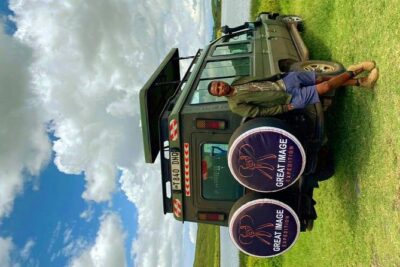
3days Serengeti National park and Ngorongoro Crater Tanzania Safari
Read our review →